
Reviewed · WALKING TOURS
Private Walking Tour in Dublin
Dublin gets moving fast, and this tour helps you keep up. You start in the historic core and walk between major landmarks in a way that makes the city feel easy to read. It is private, so you can ask questions and set the pace without fighting a crowd.
Two things I really like: you get a strong sense of the city’s layers, from Tudor-era Trinity to medieval cathedrals, and you finish with a tight hit list for what to do next in Dublin. I also like that admission isn’t blanket-included, so you can choose what you want to pay for instead of being forced into a checklist.
One consideration: a few stops require separate entry tickets, so if you want to go inside every building, your final spend will climb. Also, it depends on weather since it is a walking experience.
In This Review
- Why This Private Walking Tour Works for First-Time Dubliners
- Key Stops That Give You a Dublin Map in Real Time
- Trinity College Dublin: Your Official Starting Gun
- GPO Museum: Freedom, the Easter Rising, and Visible Scars
- The Spire: A Modern Landmark with a Built-in Story
- Ha’penny Bridge: The Half-Penny Name That Makes You Smile
- Temple Bar: Nightlife Energy with a Cultural Lens
- Wood Quay Amphitheatre: Where Viking Dublin Started to Take Root
- Christ Church Cathedral: Medieval Power, Tombs, and a Copy of the Magna Carta
- St Patrick’s Cathedral: Built in the Liberties, Dedicated to the Patron Saint
- Dublin Castle: The Seat of Viceroys and the Record Tower
- George’s Street Arcade and the Molly Malone Finish
- What Makes the Guides So Frequently Praised
- Timing and Walking Reality (So You Can Plan the Rest of Your Day)
- Price: Is $90.11 Worth It for This Route?
- Who This Dublin Tour Fits Best
- Should You Book This Private Dublin Walking Tour?
- FAQ
- How long is the private walking tour?
- How much does the tour cost?
- Is the tour private or shared with others?
- Where does the tour start and end?
- What language is the tour offered in?
- Are admission tickets included for all stops?
- What if I book close to my travel date?
- Is the tour good for families or kids?
- Is the tour affected by weather?
- Is free cancellation available?
Why This Private Walking Tour Works for First-Time Dubliners
This is a practical way to orient yourself quickly. Dublin can feel like a patchwork of eras, and the route is built to show you how those eras sit on top of each other. You begin at Trinity College, then move outward through the city’s most recognizable symbols, ending near the Molly Malone statue by Suffolk Street.
Because it is private, the experience is less about being herded and more about conversation. The guides highlighted in past bookings, including Francesca D’Angelo and guides named in feedback like John, Sinead, and Yvonne, are praised for answering questions and adjusting the tour to what you care about. If you like history, you will get plenty. If you care more about culture and street-level life, you still get a solid framework.
And you do all of it in roughly 2 to 3 hours, which is long enough to feel like you learned a lot but short enough to keep the rest of your day flexible.
Key Stops That Give You a Dublin Map in Real Time
- Trinity College Dublin sets the tone with a clear starting point and big-name alumni you can picture in your head.
- The GPO Museum anchors modern Irish history with the Easter Rising, including bullet marks visible on the pillars.
- The Spire, the Monument of Light, reframes Dublin’s skyline with its 120-metre scale and millennium-era purpose.
- Ha’penny Bridge explains Dublin’s walkability and why this crossing became a signature photo spot.
- Christ Church and St Patrick’s Cathedral add medieval depth with tombs, long-standing tradition, and priceless documents.
- Dublin Castle and the George’s Street Arcade tie power and daily life together in one compact route.
More of Dublin crossed at walking pace:
Trinity College Dublin: Your Official Starting Gun
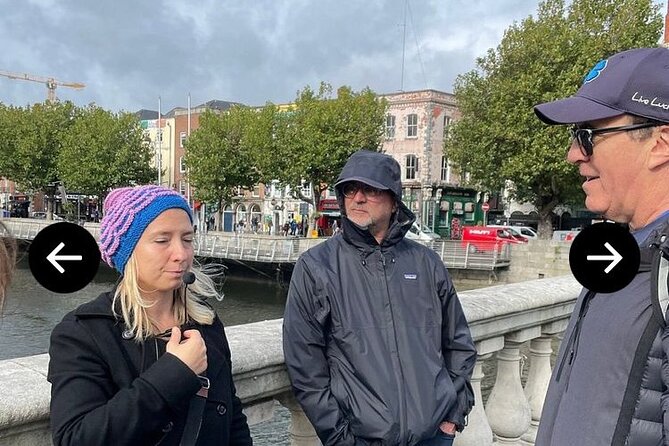
Your tour begins at Trinity College Dublin, at College Green. This is not just a pretty gate. It is an ideal first stop because it gives you a “city within a city” feeling from minute one. The university traces back to 1592, founded under Queen Elizabeth I, and today it is home to more than 20,000 people working and studying.
What makes this a great opener is how quickly it puts Dublin’s identity into focus. You get a sense of education, influence, and the way the city’s story ran through major institutions long before the modern streets you walk today. You also hear about world-famous graduates tied to the place, including Oscar Wilde, Bram Stoker, and Jonathan Swift. Even if you only recognize one or two names, you start seeing the city as part of a larger cultural machine.
Keep in mind: admission ticket is not included here. So you can either enjoy the outside and context, or you can choose to plan extra time (and a separate ticket) if you want more indoor access.
GPO Museum: Freedom, the Easter Rising, and Visible Scars
Next comes the GPO Museum in an elegant Georgian building. This spot works because it is dramatic without needing guesswork. The building is strongly linked to the 1916 Easter Rising, when members of the Irish Volunteers and Irish Citizen Army seized the building on Easter Monday.
Here is the detail that sticks: bullet marks from the battle are still visible on the front pillars. That kind of physical evidence turns history from a timeline into something concrete you can stand beside.
As with Trinity, admission ticket is not included at the GPO. If you want to go inside, plan on that as an add-on. If you skip entry, you still gain a clear understanding of why this building became a symbol of freedom from the British Empire.
The Spire: A Modern Landmark with a Built-in Story
Then you hit the Spire, officially called the Monument of Light. It is the tallest modern art monument in the world, rising 120 metres, with a base diameter of about 3 metres. It was created to celebrate the new millennium.
This stop is short, but it is useful. It gives you a Dublin that is not only medieval and Georgian. You start seeing the city as a place that keeps building its identity, not just preserving what it inherited.
Admission ticket is free at this stop, and the timing is light on purpose. It makes the tour feel paced, not rushed.
Ha’penny Bridge: The Half-Penny Name That Makes You Smile
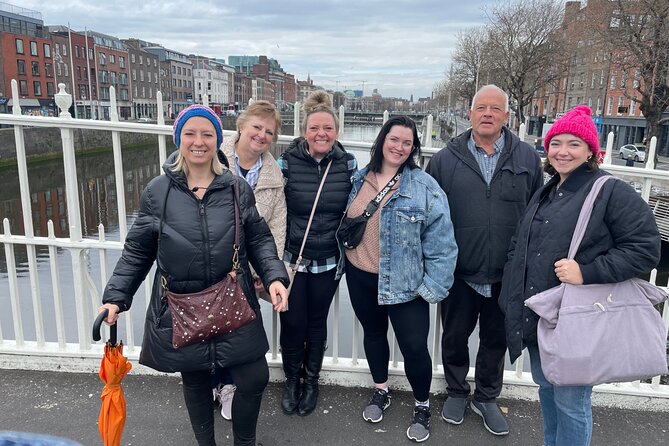
Next up is Ha’penny Bridge, officially the Liffey Bridge but famous by its nickname. It is Dublin’s first pedestrian bridge, built in 1816. For more than 100 years it was a tall bridge, and the name Ha’penny translates to half a penny.
If you are the type who likes to learn why landmarks have weird names, this is a nice payoff. Plus, you get a classic photo moment tied to how people actually move through Dublin.
Admission ticket is free, so this is an easy stop even if you are trying to keep costs under control.
A few other Liffey-side days to consider
- The Dublin Private Walking Tour
★ 5.0 · 701 reviews - Private Dublin Arrival Transfer – Airport to Hotel / Accommodation
★ 3.5 · 304 reviews - Private (Nearly!) All of Dublin in 5 hours (Walking Tour)
★ 5.0 · 281 reviews - Cliffs of Moher Private Award Winning Luxury Mercedes Car Tour
★ 5.0 · 176 reviews
Temple Bar: Nightlife Energy with a Cultural Lens
From there, the tour walks through the Temple Bar area. This is Dublin’s most famous cultural and nightlife district, and the point here is not just the vibe. You explore the old neighborhood character and get a guided look at what makes it tick.
You also see famous pubs connected with traditional Irish music played nightly, and you get suggestions for traditional Irish food where you can sample local classics. This part is valuable because it helps you avoid the common first-night mistake, which is picking somewhere randomly and hoping for the best.
This stop is timed to keep you moving. Admission is free, so it does not add cost, and it is an easy place to ask your guide what to do next that evening.
Wood Quay Amphitheatre: Where Viking Dublin Started to Take Root
One of the more surprising stops is Wood Quay Amphitheatre, at the feet of the hill leading to Christchurch. Archaeologists discovered what is described as the biggest Viking settlements outside Scandinavia here.
The Viking story in Dublin is often told as raids, but the key nuance you get on this stop is that the Vikings were also traders at first. Then they permanently settled in 841 AD. That is a shift from short-term danger to long-term change, and it helps you understand why Dublin became such a strategic location.
Admission is free here, and the stop is brief. Still, it is a strong reminder that Dublin’s roots are much older than the Georgian facades you might first notice.
Christ Church Cathedral: Medieval Power, Tombs, and a Copy of the Magna Carta
Christ Church Cathedral sits in the heart of Dublin’s medieval district. It is originally described as a Viking church site, and it has welcomed pilgrims and visitors for almost 1,000 years.
This stop is ideal if you like “wait, how old is this?” moments. You are shown hidden treasures in the cathedral’s corners, including Strongbow’s tomb and a copy of the Magna Carta. That last detail is a great conversation starter because it connects Dublin to an important European history track, not just local stories.
Admission ticket is not included here. If you want to go inside, you may need to plan extra time around opening hours. If you do not, you can still get a lot out of the guide’s explanations and the setting.
St Patrick’s Cathedral: Built in the Liberties, Dedicated to the Patron Saint
Next is St Patrick’s Cathedral, in the Liberties area. The building was completed between 1225 and 1270, honoring Ireland’s patron saint, St Patrick. The tour context frames this as a major early moment in the religious history of Ireland, when St Patrick is described as baptizing the Irish Gaelic people.
You also get mention of Jonathan Swift’s tomb here, along with other treasures inside the cathedral. If you liked Trinity’s famous writers, this feels like an alternate route into the same literary Ireland.
Admission ticket is not included, so again, decide in advance whether you want to add the cost of entry to your day.
Dublin Castle: The Seat of Viceroys and the Record Tower
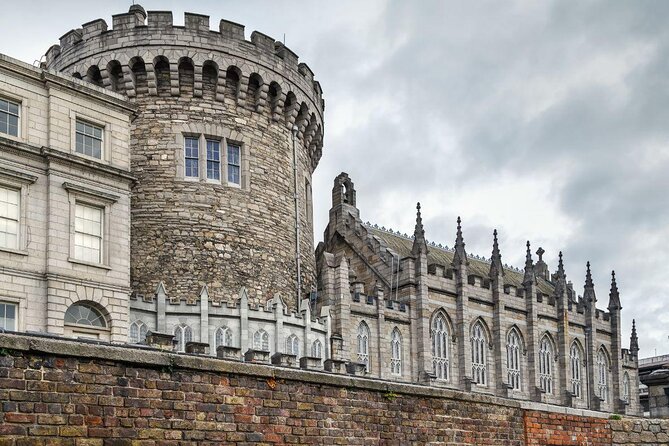
Dublin Castle is a big one. The tour explains that it served as the seat of the viceroy, the representative of the English monarch in Ireland, ruling for more than 700 years.
What you learn here is how political power shows up in architecture. The Record tower is described as the only remaining piece of the original medieval castle. Everything else connected to the castle you might see is tied to state apartments built in the 18th century.
Admission ticket is not included. If you love government history or like seeing how the past was staged for authority, you will probably want to pay for entry. If you prefer to keep spending controlled, you can still get the meaning from the outside and the guide’s framing.
George’s Street Arcade and the Molly Malone Finish
Toward the end, you pass through George’s Street Arcade, described as Dublin’s oldest shopping centre and a fine example of Victorian-era architecture. It has been open for almost 140 years, part of South city market buildings, with shops and stalls inside.
This stop is brief, but it is a useful change of pace. After the big history buildings, the arcade gives you a sense of everyday Dublin commerce, not only monuments.
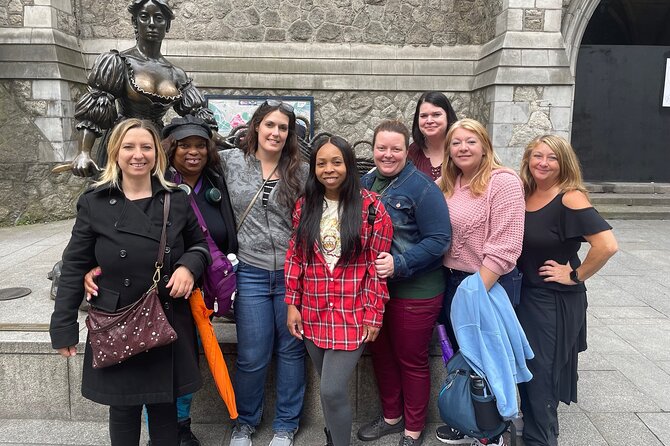
Then you end at the Molly Malone statue. The statue was unveiled in 1988 to celebrate Dublin’s first millennium, and it is tied to the famous song Molly Malone, which is treated as an unofficial Dublin anthem. The tour also brings up the uncertainty around Molly herself, including the theory that she was based on a real woman who died in Dublin in 1699.
Admission is free here and, importantly, this stop acts like a landing pad. You finish near Suffolk Street, so you can quickly connect to dinner plans or transit without feeling like you are stuck at the far edge of town.
What Makes the Guides So Frequently Praised
The biggest pattern in the feedback is not just facts, it is how those facts get delivered.
I like that guides are described as answering questions and keeping things flexible. In particular, names that show up with strong praise include John, Sinead, Yvonne, and Francesca D’Angelo. Multiple comments emphasize that guides tailor the tour, explain history clearly, and make it feel like a friendly conversation rather than a script.
If you are traveling with kids, that matters too. One set of comments explicitly mentions a guide who was accommodating for children ages 6 and 8, which is a good sign that the pacing and explanations can be adapted for families.
Timing and Walking Reality (So You Can Plan the Rest of Your Day)
The tour runs about 2 to 3 hours. In practice, that is long enough to cover a lot of ground from Trinity through major landmarks, but short enough that you can still do another activity after. The meeting point is at Trinity College Dublin, College Green, and the tour ends in front of the Molly Malone statue at Suffolk St.
This structure helps you. Starting at Trinity places you in the middle of downtown. Ending near Molly Malone gives you options for food and nightlife without needing a second trip across the city.
And since the experience depends on good weather, I suggest having a backup plan for light rain or wind. If weather forces a change, you will want to shift your sightseeing order rather than cancel the whole day.
Price: Is $90.11 Worth It for This Route?
At $90.11 per person, the best way to judge value is to think about what you get for the money: a private guide, a curated route through Dublin’s top “must-know” sites, and a chance to avoid dead-ends by getting suggestions for what to do next.
Because several stops require admission tickets that are not included, your final cost depends on your preferences. If you plan to go inside multiple sites like Trinity, the GPO Museum, and the cathedrals, you will pay more. If you treat this as an orientation tour, enjoying outside views and choosing just one or two entries later, you can keep the total reasonable.
In other words, this feels like a guide-led best-of route with built-in flexibility. For many first-time visitors, that is exactly what makes it worth it.
Who This Dublin Tour Fits Best
This tour is a strong choice if:
- You want a first-pass orientation to central Dublin.
- You like blending big landmarks with smaller context details.
- You want a guide who can answer questions and tailor the flow to your interests.
- You are traveling with kids and need explanations that keep attention.
It might not be the perfect match if:
- You only want outdoor stops and cannot or do not want to pay for any indoor admissions, since some major sites here have tickets not included.
- You prefer a slower walk with long indoor stays. The structure is designed for moving, not for spending hours inside cathedrals.
Should You Book This Private Dublin Walking Tour?
If your goal is to understand Dublin fast, while still having time to roam on your own later, I think you should book it. The route hits the city’s biggest story beats, and the private format makes it feel personal, not generic.
If you want the best outcome, decide before you start which indoor sites matter most to you. Then you can let the guide help you see the rest without turning your day into a ticket line marathon.
And if you care about getting good ideas for later, this is the kind of tour that ends with you knowing where to go next, not just what you saw.
FAQ
How long is the private walking tour?
The tour lasts about 2 to 3 hours.
How much does the tour cost?
The price is $90.11 per person.
Is the tour private or shared with others?
It is a private tour. Only your group participates.
Where does the tour start and end?
It starts at Trinity College Dublin, College Green, Dublin 2, and ends in front of the Molly Malone statue at Suffolk St, Dublin 2.
What language is the tour offered in?
The tour is offered in English.
Are admission tickets included for all stops?
No. Some stops have admission ticket not included, while others like The Spire and Ha’penny Bridge are free. The Temple Bar area, Wood Quay Amphitheatre, George’s Street Arcade, and the Molly Malone statue are also free.
What if I book close to my travel date?
You will receive confirmation at time of booking unless you book within 12 hours of travel, in which case confirmation is received as soon as possible, subject to availability.
Is the tour good for families or kids?
The information provided includes an example of accommodation for children ages 6 and 8, and it says most travelers can participate.
Is the tour affected by weather?
Yes. The experience requires good weather. If it is canceled due to poor weather, you will be offered a different date or a full refund.
Is free cancellation available?
Yes. You can cancel up to 24 hours in advance for a full refund, and cancellations less than 24 hours before the start time are not refunded.
Just in from the Liffey side





Walking Tours, compared.
Dublin Highlights and Hidden Gems Guided Walking Tour
Read our review →
90 Minute Dublin Walking tour and Sightseeing tips
Read our review →

Historical 2-Hour Guided Walking Tour of Dublin
Read our review →
Dublin Traditional Irish 3 Course Meal Walking Tour with Local
Read our review →
Browse the lists this tour appears in