
Reviewed · WALKING TOURS
The Dublin Private Walking Tour
Dublin can feel big on day one, but this walk keeps you oriented. I like the private, your-group-only format, which means the guide can slow down, speed up, and answer your questions without losing the thread. I also love that the route hits music history, politics, and everyday street life in one flowing afternoon, starting at Temple Bar and ending at Merrion Square.
The only real drawback is that it is still a 3-hour walking tour on cobblestones and city pavements, with stops that are brief (often 10 to 15 minutes). If you are traveling with very young kids or anyone with limited walking stamina, plan for sensible pacing, and use the break option if you need it.
In This Review
- Key highlights worth getting excited about
- Starting at Temple Bar, ending by Oscar Wilde in Merrion Square
- Private guide energy, and how it changes the whole day
- Claddagh Records and the Wall of Fame: music Dublin, up close
- Temple Bar Pub and Ha’penny Bridge: the city’s stories in motion
- College Green and Trinity College Dublin: where Ireland thinks and studies
- Molly Malone, Grafton Street, and St Stephen’s Green for real Dublin rhythm
- The Great Famine Memorial, Wolfe Tone, and parliament buildings
- Oscar Wilde in Merrion Square: closing with style and memory
- Price and value for a 3-hour private Dublin orientation
- How to get the most from the guide’s tips
- Should you book this Dublin Private Walking Tour?
- FAQ
- How long is the Dublin Private Walking Tour?
- What is the price per person?
- Is this tour private?
- Where do we meet and where does the tour end?
- What language is the tour offered in?
- Are umbrellas and breaks included?
- Is free cancellation available?
Key highlights worth getting excited about
- Music-focused Dublin, with stops like Claddagh Records and the Wall of Fame featuring U2 and Sinéad O’Connor
- Temple Bar history on foot, including a look at the Temple Bar area since 1840
- Classic photo stops, from Ha’penny Bridge to Trinity College, plus built-in time for pictures
- A quick contrast day, with busy shopping streets and a central park break at St Stephen’s Green
- Honest history, including Edward Delaney’s Famine Memorial and monuments tied to Irish politics
- End in Georgian Dublin, finishing at the Oscar Wilde Monument in Merrion Square
Starting at Temple Bar, ending by Oscar Wilde in Merrion Square
This is a “get your bearings” Dublin route, without wasting time on far-off neighborhoods. You meet at Travelling Ireland Viaggiare in Irlanda at 8 Cecilia St in Temple Bar, then you walk across central sights and finish at the Oscar Wilde Monument on Merrion Square North.
The overall feel is practical and compact. You spend small blocks of time at each landmark, which works well when you want an overview and also want the freedom to return later to what grabs you.
More of Dublin crossed at walking pace:
Private guide energy, and how it changes the whole day
A private tour is not just fewer people. It changes how the story lands.
In the reviews, guides like Pasquale, Conor, Sharon, and Seamus come up again and again for the same reason: the pace stays friendly, and the guide connects details to what you are actually seeing. I like that you are not stuck with a scripted monologue. You get room for questions, and the tour can flex around your interests, including family pace and photo stops.
It also helps that this tour is built for real city weather. Umbrellas are provided, and there are rest and toilet breaks if needed. That sounds small, but on a rainy Dublin day it can be the difference between a pleasant afternoon and a slog.
Claddagh Records and the Wall of Fame: music Dublin, up close
You start with music and Irish identity, which is a smart trick for travelers who want Dublin to feel more than just buildings.
At Claddagh Records, you get a quick intro to Ireland alongside a music lover’s landmark. The stop also connects to the famous Irish Claddagh ring, a symbol you will see again and again in Irish life and souvenir shops.
Right after that is the Wall of Fame, where Dublin nods to the artists who put Irish pop culture on the map. Expect names like U2, Phil Lynott, Van Morrison, Sinéad O’Connor, and The Cranberries. Even if you only know a few songs, this wall helps you understand why Dubliners talk music so easily, like it is part of everyday weather.
A consideration here: these are short stops. If you want to read everything slowly, bring a little patience and plan to follow up later on your own.
Temple Bar Pub and Ha’penny Bridge: the city’s stories in motion
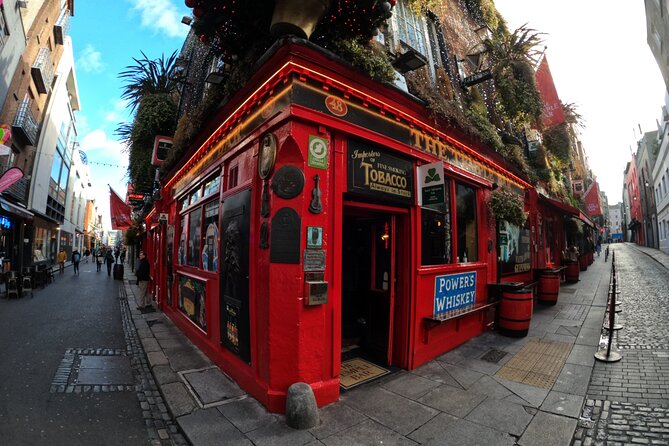
Temple Bar is one of those places people either love or feel annoyed by, depending on how they experience it. This tour helps you experience it with context, starting with the Temple Bar Pub, established in 1840.
You do a walk through the iconic cobblestoned area. That matters because Temple Bar is not only nightlife, it is also old Dublin texture, narrow streets, and the sense that the city keeps reinventing itself around the river.
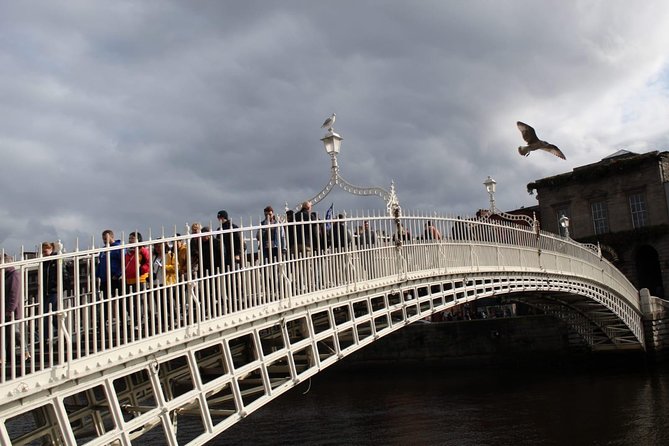
Then you cross to Ha’penny Bridge. This is a bridge people use without thinking, but the guide gives you the historic details and the way the River Liffey ties into Dublin’s socioeconomic story. It is one of those “stand here, look, and suddenly it makes sense” moments.
Practical tip: cobblestones can be slippery when wet. Even with umbrellas, wear shoes with decent grip, and take your time on the bridge approach.
College Green and Trinity College Dublin: where Ireland thinks and studies
After the river crossing, the walk shifts from street life to institutions. College Green is a three-sided plaza that acts like a crossroads of Irish power and education.
You will look at the Bank of Ireland building, which until 1800 was Ireland’s Parliament House. To the east is Trinity College Dublin, one of the oldest colleges in Ireland. To the south you see 19th-century architecture, which gives you a visual sense of how Dublin layered new styles onto old roles.
Then you move into Trinity College Dublin itself. This is your chance to stroll the campus and hear how it shaped the city, not just how it looks in photos. If you like landmarks with a pulse, Trinity is the kind of place where the history feels present.
A drawback to know: campus time is still limited, so you are mostly getting orientation and key highlights. If you want a deeper look, treat this stop like your “choose what to return for later” moment.
A few other Liffey-side days to consider
- Private Dublin Arrival Transfer – Airport to Hotel / Accommodation
★ 3.5 · 304 reviews - Private (Nearly!) All of Dublin in 5 hours (Walking Tour)
★ 5.0 · 281 reviews - Cliffs of Moher Private Award Winning Luxury Mercedes Car Tour
★ 5.0 · 176 reviews - Dublin Private Custom Tour with a Local, Highlights & Hidden Gems
★ 5.0 · 163 reviews
Molly Malone, Grafton Street, and St Stephen’s Green for real Dublin rhythm
Then the tour switches to Dublin as you would experience it in daily life: people, performers, shopping, and a breather of green.
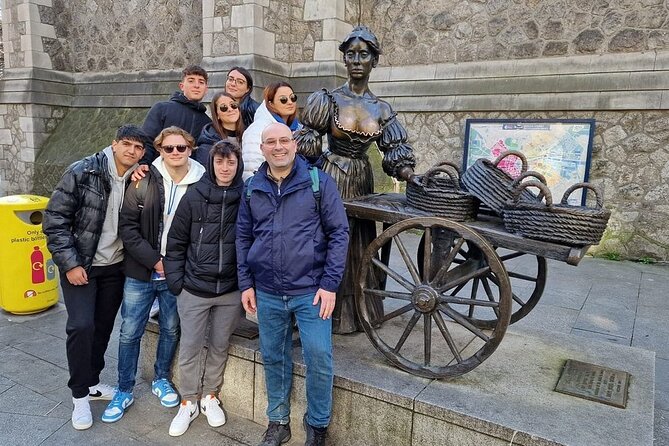
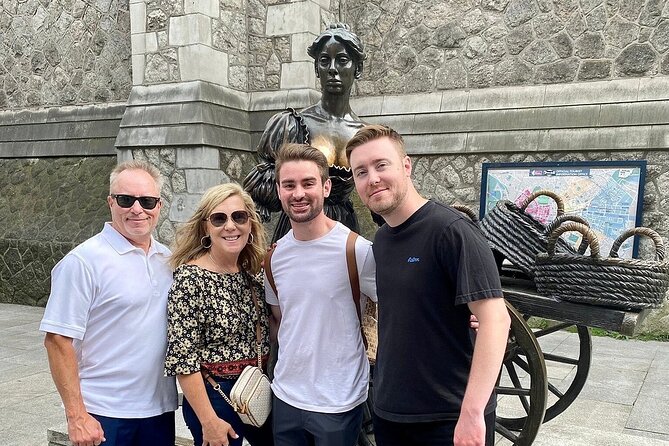
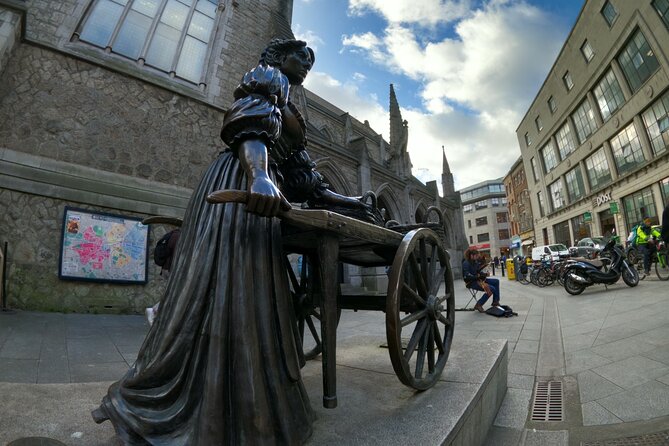
At the Molly Malone statue, you get the folklore and the story behind the famous Dubliners song. It is a small statue stop, but it works because it explains why certain characters stick in Dublin’s collective memory.
Next is Grafton Street, one of Europe’s busier shopping streets. You will also see street performers and musicians, plus poets who show up regularly. Brown Thomas is part of the street scene, and the guide’s commentary helps you separate the tourist image from the real street culture.
Then you top out toward St Stephen’s Green. The park stop is more than a view break. It is a central park where you might see wildlife like swans and ducks, which gives you a reset before the heavier history ahead.
If you are short on time later in your trip, this section is also useful because you learn where the city’s “walkable entertainment zones” are clustered.
The Great Famine Memorial, Wolfe Tone, and parliament buildings
This part of the walk shifts gears. It is still approachable, but it is where Dublin stops being postcard Dublin and becomes national story Dublin.
Edward Delaney’s Famine Memorial is the first major emotional pivot. The sculpture uses thin, struggling figures to represent hunger and hardship from the Irish Great Famine. If you want to understand why famine still echoes in Ireland’s public memory, this is a strong stop for that.
Next you see the Theobald Wolfe Tone statue. He is widely regarded as the father of Irish Republicanism, and the guide connects the monument to the political story of the country. You are also looking at it from an urban context, since it sits in front of the Shelbourne Hotel, which adds that “history in the middle of life” feeling.
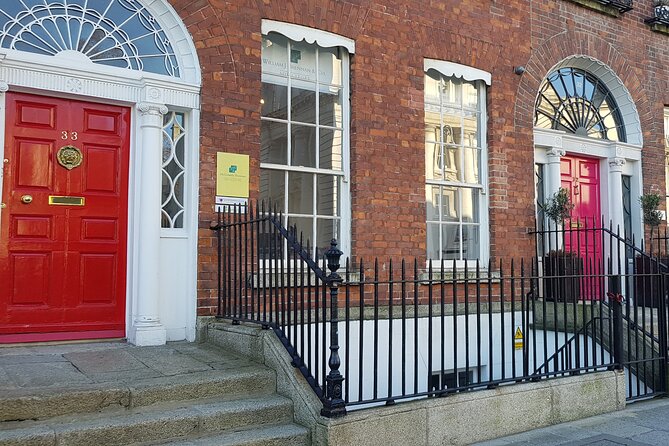
Then come government buildings. You visit the Department of the Taoiseach area, with Georgian architecture in view. After that is Leinster House, which began as the ducal residence of the Duke of Leinster, and since 1922 has served as the parliament building of the Irish Free State.
These stops are useful because they explain Irish politics without turning the tour into a lecture. One of the reviews notes how a guide even explained Irish politics today, which tells you the tour can meet you where you are, whether you want basic orientation or a little more context.
Consideration: this section may feel heavier if you prefer lighter sightseeing. Still, it is handled in small chunks, which helps you keep moving.
Oscar Wilde in Merrion Square: closing with style and memory
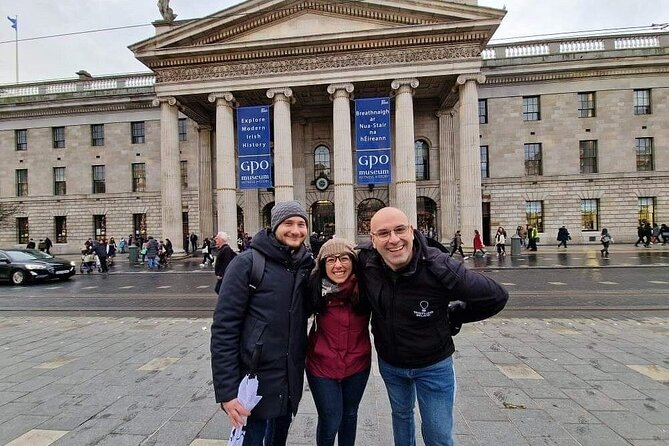
You end at the Oscar Wilde Monument in Merrion Square North, finishing the walk on a quieter, more architectural note. Merrion Square Park is known for Georgian urban design, and this area gives you a sense of how Dublin built elegance into everyday streets.
The stop ties Wilde’s memorial to his 18th-century home. Even if you have not studied Wilde closely, you will likely recognize the cultural importance once you see the setting and hear the connections the guide makes.
Ending here works well because you can continue your day easily. You are in a central area where you can grab food, browse shops, or simply slow down after the walking pace.
Price and value for a 3-hour private Dublin orientation
At $163.26 per person for about 3 hours, this is not a bargain-bin tour. It is a premium “save time and reduce guesswork” option, and it is priced for a private experience.
Here is why that can still feel like good value:
- You get an experienced, licensed guide and your private group.
- Stops on the route show free admission for the listed highlights, so you are not constantly paying again.
- You get umbrellas, photo opportunities, and built-in recommendations for restaurants, pubs, and shops.
- You have the option for rest and toilet breaks, which matters more than people think on a walking tour.
Timing also plays a role. The tour is commonly booked about 55 days in advance, so if you want a specific departure time, plan ahead. Being early also gives you a smoother trip schedule and fewer last-minute compromises.
How to get the most from the guide’s tips
I think the real payoff of a guided overview comes after the tour, when you use the knowledge to choose what to do next.
Ask your guide for food and drink suggestions while you are still fresh on the route. If you are into music, it helps to ask where Dubliners go for that vibe beyond the big names on a wall. If you care about history, ask what you should return to for more time, since this tour is designed as an orientation run.
Also, take advantage of the photo opportunities at each stop. One of the reviews specifically mentioned guides taking pictures at every stop and sending a link afterward, which can turn a good day into a tidy memory set you can share later.
Finally, wear your best walking shoes. This tour is built for movement, and you will enjoy it more if you are not thinking about your feet every ten minutes.
Should you book this Dublin Private Walking Tour?
Yes, if your goal is to learn Dublin fast and leave with a clear sense of where to go next. The mix of music landmarks (Claddagh Records, Wall of Fame), classic city frames (Temple Bar, Ha’penny Bridge), education and institutions (College Green, Trinity), and honest memorials (Famine Memorial, Wolfe Tone) gives you a balanced first-day view without feeling chaotic.
I would especially recommend it if you:
- Want a private, flexible experience rather than a rigid group schedule
- Appreciate stories tied to places, not just facts
- Like walking for a few hours and then branching off on your own
Skip it or adjust expectations if you dislike walking long distances, or if you only want the “lightest” sightseeing possible. It is a three-hour walk with many quick stops, and some of the content is emotionally heavy.
If you book, show up ready to move, bring comfortable shoes, and lean into the guide’s local tips. This tour is at its best when you use it like a launchpad, not a finish line.
FAQ
How long is the Dublin Private Walking Tour?
It is approximately 3 hours.
What is the price per person?
The price is $163.26 per person.
Is this tour private?
Yes. It is a private guided tour with only your group participating.
Where do we meet and where does the tour end?
You start at Travelling Ireland Viaggiare in Irlanda, 8 Cecilia St, Temple Bar, Dublin, D02 RW82, Ireland. The tour ends at the Oscar Wilde Monument, Merrion Square North, Dublin.
What language is the tour offered in?
The tour is offered in English.
Are umbrellas and breaks included?
Umbrellas are provided, and rest or toilet breaks are available if needed.
Is free cancellation available?
Yes. You can cancel up to 24 hours in advance for a full refund. If you cancel less than 24 hours before the experience start time, the amount paid is not refunded.
Just in from the Liffey side



Walking Tours, compared.
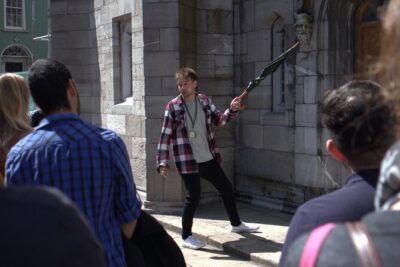
Dublin Highlights and Hidden Gems Guided Walking Tour
Read our review →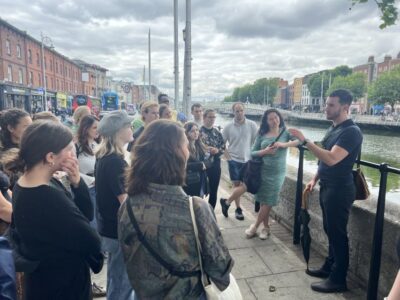
90 Minute Dublin Walking tour and Sightseeing tips
Read our review →

Historical 2-Hour Guided Walking Tour of Dublin
Read our review →
Dublin Traditional Irish 3 Course Meal Walking Tour with Local
Read our review →
Browse the lists this tour appears in