
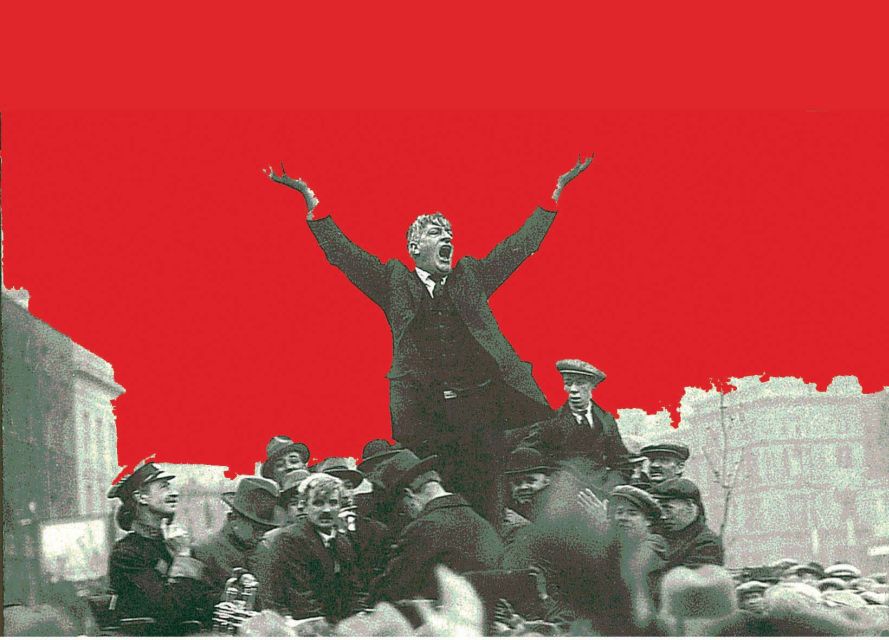
Reviewed · HISTORICAL TOURS
Historical 2-Hour Guided Walking Tour of Dublin
Two hours, and Dublin clicks into place. I love the way guides from Trinity College Dublin and University College Dublin turn serious Irish history into stories with wit, and I love the tight route that hits Temple Bar as well as Dublin Castle and City Hall.
The only real catch is the pace, you will hear a lot of names and dates, so this is best if you want facts and context, not a slow stroll. If you like your history in chronological order, this format works.
Meet your guide at the Henry Grattan Statue opposite Trinity College’s front gate, and the tour ends back at the same spot. It’s a live English walking tour, and it’s listed as wheelchair accessible.
In This Review
- Key things I’d circle before you book
- A 2-hour Irish history storyline that actually fits
- Starting at Trinity, then walking like you mean it
- Dublin Castle: power, planning, and why the city matters
- Temple Bar and City Hall: history you can feel in public space
- The Medieval City lanes, plus the small clues most tours skip
- Revolutions, famine, 1916 Rising, and how the guide keeps it chronological
- War of Independence, then the Northern Ireland Peace Process in context
- What you pay for, and what you need to plan on separately
- Should you book this Dublin walking tour?
- FAQ
- How long is the Historical 2-Hour Guided Walking Tour of Dublin?
- How much does the tour cost?
- Where do you meet the guide?
- Where does the tour end?
- What sites are included during the walk?
- Is entrance to the State Apartments in Dublin Castle included?
- What is included in the ticket price?
- Is the tour wheelchair accessible?
- What language is the tour conducted in?
- Can I reserve now and pay later, and is there free cancellation?
Key things I’d circle before you book
- Trinity and UCD-trained guides: history graduates lead the storytelling, not just casual tour hosts
- A high-impact 2-hour loop: Dublin Castle, Temple Bar, City Hall, plus Medieval City streets
- Focused Irish turning points: American and French revolutions, Potato Famine, 1916 Rising, War of Independence
- Modern context too: the Northern Ireland Peace Process gets covered in a real city-walk way
- Humor and performance style: guides have been praised for comedy timing, and some include song verses
- Small-group feel: reviews mention groups that stay engaged and can ask questions
A 2-hour Irish history storyline that actually fits
This tour works because it is built like a story with scenes. In just two hours, you move through the center of Dublin while the guide connects major events to the places you are standing in front of. The result is not just sightseeing, it’s a mental map of how Irish history unfolds.
I like that the tour is not afraid of big topics. You’ll hear about the influence of the American and French revolutions, the Potato Famine, the 1916 Rising, and the War of Independence. Then, the guide brings it into more modern life with the Northern Ireland Peace Process, so the story ends where current Ireland actually lives.
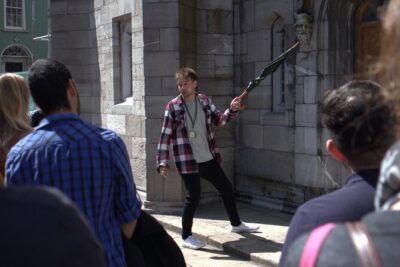
One more thing: guides on this tour have real academic grounding. The experience is led by history graduates of Trinity College Dublin and University College Dublin, and that shows in how they explain cause and effect. Reviews also call out that guides can answer questions easily, which matters when you have gaps you want filled fast.
More of Dublin crossed at walking pace:
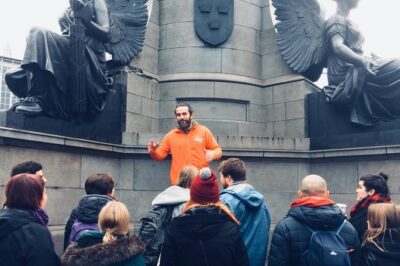
Starting at Trinity, then walking like you mean it
The tour starts at the Henry Grattan Statue opposite Trinity College Dublin’s front gate. Your guide will be wearing a lanyard or badge marked Authenticity Tours, so it is easy to spot once you are there.
This is also a smart setup for your day. Trinity’s central location makes it practical, whether you’re arriving from the airport, hopping off public transit, or already exploring the city. Since the tour ends back at the meeting point, it is simple to connect to your next plan without needing a long walk to your final stop.
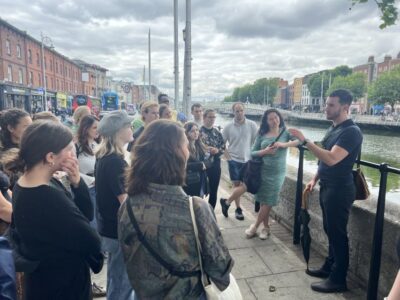
Real-world tip: bring shoes that can handle city stone and uneven pavement. Even though it’s only 2 hours, you are still roaming through multiple areas, and you stop often. People have also noted they could hear clearly even in Dublin’s louder streets, which helps a lot when you are following dense history in real time.
Dublin Castle: power, planning, and why the city matters
Dublin Castle is one of the most important anchors for understanding how authority and conflict shaped Ireland. Even without going into every room, you get the historical framing that explains why this site keeps coming up in Irish stories.
What you can expect here is a guide-led sense of the castle as a symbol. The guide ties it to the long struggle for influence and control, and they connect it to later uprisings and political change. The tour also positions Dublin Castle inside the bigger timeline you are hearing throughout the walk, including the 1916 Rising and the road toward the War of Independence.
A useful note for your expectations: entrance into the State Apartments at Dublin Castle is not included. That does not mean you miss the big picture. It just means you should not assume you will be touring those specific rooms during the walk.
Temple Bar and City Hall: history you can feel in public space
Temple Bar is often treated like a nightlife postcard, but on this tour it becomes something else: a clue to how Dublin developed its identity in layers. You are not just looking at buildings, you are learning why this area sits where it does in Dublin’s story.
City Hall adds a different flavor. It’s where civic life and government come into focus, which helps when you hear the guide connect revolution, famine-era hardship, and later independence movements to real political change. When you understand that connection, Dublin stops feeling random. It feels arranged.
Guides also bring personality into these stops. Reviews highlight guides like Colm and Daragh for weaving in humor and personal touches while staying on track. You might not remember every detail, but you will remember how the big events relate to the streets around you.
The Medieval City lanes, plus the small clues most tours skip
After you cover major landmarks, the tour spends time in the Medieval City. This is where you tend to get the most “how did people live here” effect. The guide uses the streets and architecture to explain why the city looks the way it does and how history left marks you can still read today.
One review specifically mentions hidden history like bullet holes. That’s a perfect example of the tour’s style: the guide does not only list dates, they point out physical remnants and explain why they matter. You might also notice other small details in corners you would normally walk past.
This is also where your guide’s performance skills matter. People have praised guides for humor, clear organization, and even song verses linked to events. Jody Fitzpatrick is called out in reviews for making a very fact-heavy range of topics feel more like story time than a lecture, which can be a relief when you’re processing the history of Ireland in a short window.
More of the rising and the years after:
- Dublin Historical Centre Food Tour with 8 Food Tastings & Drinks
★ 5.0 · 1,718 reviews - 2-Hour Historical Walking Tour from Dublin
★ 5.0 · 875 reviews - Dublin to Cork, Blarney Castle & Cóbh Heritage Centre by train
★ 4.5 · 510 reviews - Dublin: Jeanie Johnston Tall Ship Irish Famine History Tour
★ 4.8 · 431 reviews
Revolutions, famine, 1916 Rising, and how the guide keeps it chronological
The tour’s timeline is one of its biggest strengths. The guide starts by setting the stage with the American and French revolutions and then moves through the Potato Famine, the 1916 Rising, and the War of Independence. Doing that in order helps you build a cause-and-effect chain in your head.
Here’s what I think is valuable for you if you’re new to Ireland’s history: you do not just learn what happened, you learn what changed after each event. A revolution is not a single moment. A famine is not just tragedy. And 1916 is not only a date on a plaque. The guide connects them to the next chapter in the national story.
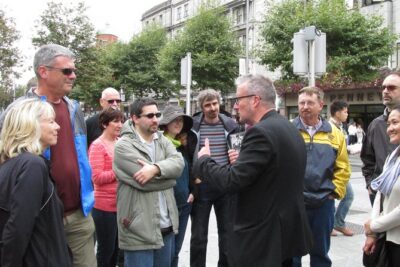
You’ll likely notice that guides avoid turning this into a dry recitation. Reviews mention that while there are lots of facts and dates, guides make it engaging with humor and good pacing. If you’re the type who likes to ask questions, this is also a good format because the guide answers in a way that stays connected to the sites you are walking past.
War of Independence, then the Northern Ireland Peace Process in context
A lot of Ireland-focused tours end after the independence story. This one keeps going, and that matters. The tour includes the effects of the Northern Ireland Peace Process and brings the story closer to modern life.
I like this approach because it helps you make sense of today’s Ireland without requiring extra background reading first. When you hear about political violence, negotiations, and long-term change, you can better understand why history is not just past tense in Dublin.
The guide’s job here is to connect modern context to the places you are seeing now. That is harder than it sounds. You can’t just name events, you have to explain why they influenced the city’s present. Reviews repeatedly mention that guides are engaging and answer questions with ease, which is exactly what you want when the history gets complicated.
Also, some guides add a fun human touch. One review mentions a guide even made an additional connection for AC/DC fans heading to Croke Park later that evening. That’s not essential, but it shows the guides pay attention to the moment, not just the syllabus.
What you pay for, and what you need to plan on separately
The tour price is $22 per person, and it includes a local guide plus entrance fees as per the itinerary. That matters because it reduces surprise costs while you’re trying to enjoy a tight schedule.
What is not included is entrance into the State Apartments in Dublin Castle. If you have a strong interest in those rooms specifically, plan either to visit them separately or to accept that this tour’s castle coverage is more about historical context than a full interior tour of everything.
If you want a quick way to judge value: two hours plus multiple major stops plus site access fees and a guide with strong academic credentials is a solid deal for central Dublin. It’s especially good on a first visit when you want the city’s history threaded through the buildings you plan to see again later.
Should you book this Dublin walking tour?
Book it if you want a 2-hour guided history loop that covers both the big turning points (Potato Famine, 1916 Rising, War of Independence) and modern relevance (Northern Ireland Peace Process), while walking to landmark stops like Dublin Castle, Temple Bar, and City Hall. It’s also a strong pick if you enjoy a guide who uses humor and keeps things organized, and several guides have been praised by name, including Jodie, Colm, Daragh, Eoin, Grace, Tommy, Nate, and Jody Fitzpatrick.
Skip it or think twice if you dislike fact-heavy tours. You will hear a lot of names and dates in a short time, so it’s not the best choice if you want mostly atmosphere and very light context.
If you fit the first group, this is one of the easiest ways to get your bearings in Dublin fast, with the history explained in plain language right where it belongs.
FAQ
How long is the Historical 2-Hour Guided Walking Tour of Dublin?
The tour lasts 2 hours.
How much does the tour cost?
It costs $22 per person.
Where do you meet the guide?
Meet your guide at the Henry Grattan Statue opposite the front gate of Trinity College, Dublin.
Where does the tour end?
The activity ends back at the meeting point.
What sites are included during the walk?
You will see Dublin Castle, Temple Bar, City Hall, and roam through the Medieval City.
Is entrance to the State Apartments in Dublin Castle included?
No. Entrance into the State Apartments in Dublin Castle is not included.
What is included in the ticket price?
The ticket includes entrance fees as per the itinerary and a local guide.
Is the tour wheelchair accessible?
Yes, it is listed as wheelchair accessible.
What language is the tour conducted in?
The tour guide provides the tour in English.
Can I reserve now and pay later, and is there free cancellation?
You can reserve now and pay later, and you can cancel up to 24 hours in advance for a full refund.
Just in from the Liffey side






Historical Tours, compared.

Dublin Historical Centre Food Tour with 8 Food Tastings & Drinks
Read our review →

Dublin to Cork, Blarney Castle & Cóbh Heritage Centre by train
Read our review →
Jeanie Johnston Tall Ship Irish Famine History Tour
Read our review →

Deliciously Dublin: The Artisan Donut Walking & History Tour
Read our review →
Hidden Dublin: Haunted History Walking Tour v2.0 2026
Read our review →
Dublin Private Highlights & History of 1916 Easter Rising Tour
Read our review →Browse the lists this tour appears in