
Reviewed · WALKING TOURS
Dublin: Mythology, Folklore and Legends Walking Tour
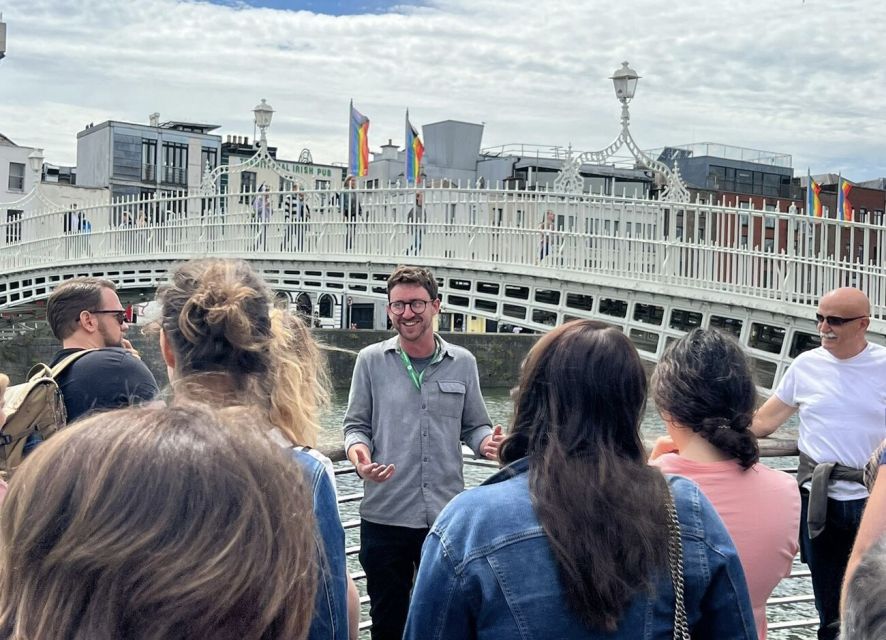
Dublin turns fairy tales into street maps. This walking tour uses Temple Bar as a myth origin point and then threads Irish legends, folklore characters, and storytelling habits through real Dublin streets. I like that it is led by a fully accredited local folklore expert, not a generic city guide, so the myths feel connected to place and people, not just random characters. One thing to consider: it is a story-first walk, so you will want comfy shoes and a light tolerance for standing and listening.
What really won me over is how the tour treats folklore as cultural context. You do not just hear names like banshee and púca, you learn how these figures fit into Irish belief systems and how that storytelling still shapes identity. The pace is built around comfort too, with multiple longer stops so you can rest while the stories unfold.
The main drawback is also the biggest reason it is memorable: you get history through legend, not through a museum-style timeline. If you want lots of dates, artifacts, and architecture lectures, you may want to pair this with a more conventional sights tour for balance. Still, at 2 hours, it is a practical way to add myth and language to your first or second pass through Dublin.
In This Review
- Key things that make this tour worth your time
- Getting Oriented: The Old Storehouse Meet-Up and a 2-Hour Story Pace
- Temple Bar as Your Myth Start Point, Not Just a Party Street
- Fairies, Banshees, Púcas, and Leprechauns on Dublin Streets
- Off the Beaten Path in the Georgian Quarter’s Darker Corners
- The Abbey Theatre’s Tragic Thread: Stories That Became Public Memory
- Ending on O’Connell Street with the Gaelic Revival and Street-Life Characters
- Why the Guide Style Makes the Difference (Helena, Lee, Dave, Emily)
- Price and Value: Getting a Specialist Story Guide for $27
- Who This Tour Fits Best in Your Dublin Plan
- Should You Book This Dublin Mythology, Folklore and Legends Walking Tour?
- FAQ
- How long is the Dublin Mythology, Folklore and Legends Walking Tour?
- What is the price per person?
- Where do I meet for the tour?
- Where does the tour end?
- Is the tour wheelchair accessible?
- What language is the tour guide?
- What’s included in the price?
- Is hotel pickup or drop-off included?
- Can I cancel for a refund?
Key things that make this tour worth your time
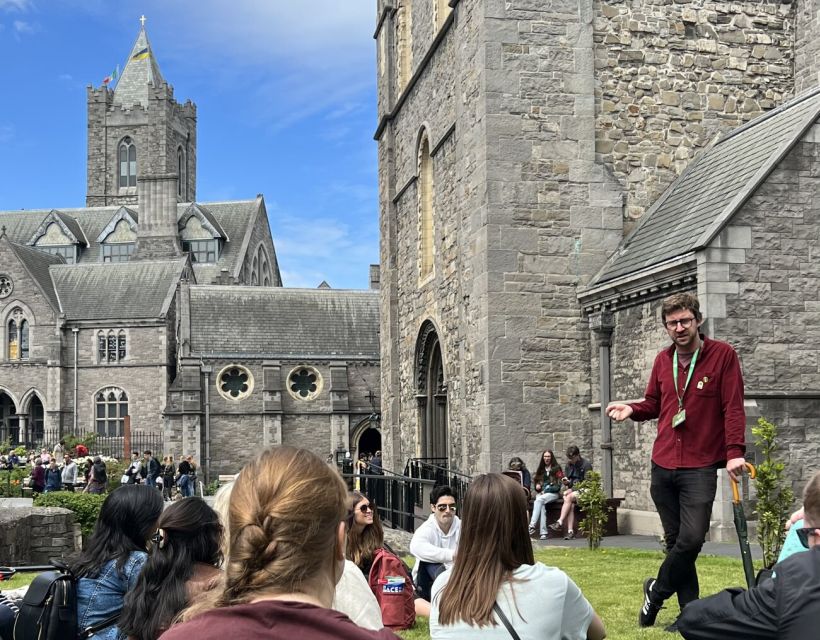
- Meet outside The Old Storehouse pub with a green umbrella, an easy landmark to find.
- Temple Bar as the launchpad for Celtic belief and mythical origins, not just the usual bar-hopping angle.
- Banshee, púca, fairies, and leprechauns mapped to Dublin corners, so the folklore sticks.
- A Georgian Quarter route with a macabre edge, including rebellions, grave robbing, and revolutions.
- The Abbey Theatre’s tragic history enters the story, showing how Irish tales become public memory.
- O’Connell Street ends the walk with the Gaelic revival, plus a look at contemporary street characters.
Getting Oriented: The Old Storehouse Meet-Up and a 2-Hour Story Pace
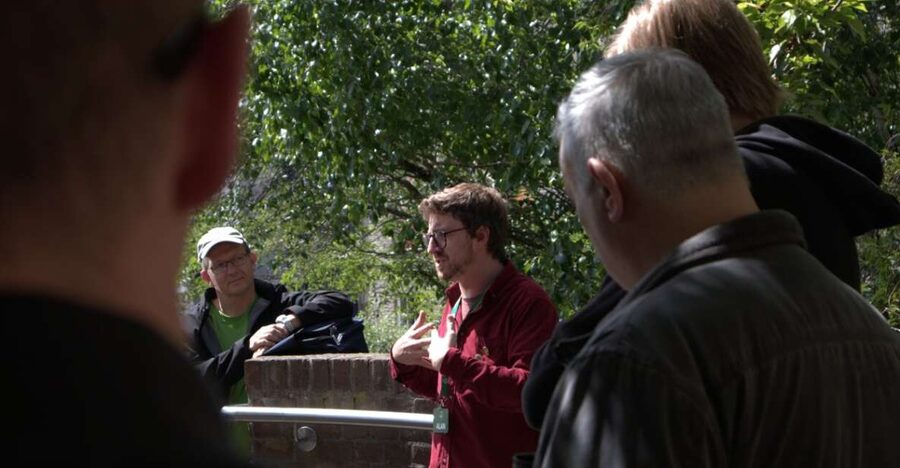
The tour starts outside The Old Storehouse pub, and you are looking for a green umbrella. That matters because walking tours live or die on first minutes. Once you spot the right group, you are set.
The experience runs for about 2 hours, with multiple starting times listed by availability. That short window is a plus for planning. You can fit it early in a day to add meaning to what you see later, or use it as a follow-up when you want stories to explain the city’s personality.
It is also built to be practical on your body. You are on foot the whole time, but the rhythm includes breaks, so you are not stuck doing nonstop moving-and-waiting. And since it is wheelchair accessible, the route is designed with mobility needs in mind.
One more practical note: there is no hotel pickup or drop-off. So plan on arriving on your own. If Dublin is new to you, give yourself extra time to get to the meeting point calmly.
More of Dublin crossed at walking pace:
Temple Bar as Your Myth Start Point, Not Just a Party Street
Most people experience Temple Bar as a landmark for drinks and photos. This tour gives you a different way in. You begin there because the guide uses it as a doorway into Ireland’s mythical origins and the beliefs tied to Celtic culture.
Why that works: Temple Bar is central and familiar, so you can anchor the stories fast. Instead of trying to memorize folklore while crossing random parts of town, you start with a place you can later point to, even if you only visit it once.
During this opening stretch, you should pay attention to how the guide frames the myths. It is not just, “Here is a creature.” The stories are explained as part of how people once made sense of the world, luck, danger, the natural world, and community life.
You will also be learning how this storytelling habit still echoes in modern Dublin. That theme follows you as the walk moves away from the typical tourist bubble.
If you like cultural context over checklists, Temple Bar as a starting point is a smart choice. It turns a familiar street into an entry portal.
Fairies, Banshees, Púcas, and Leprechauns on Dublin Streets
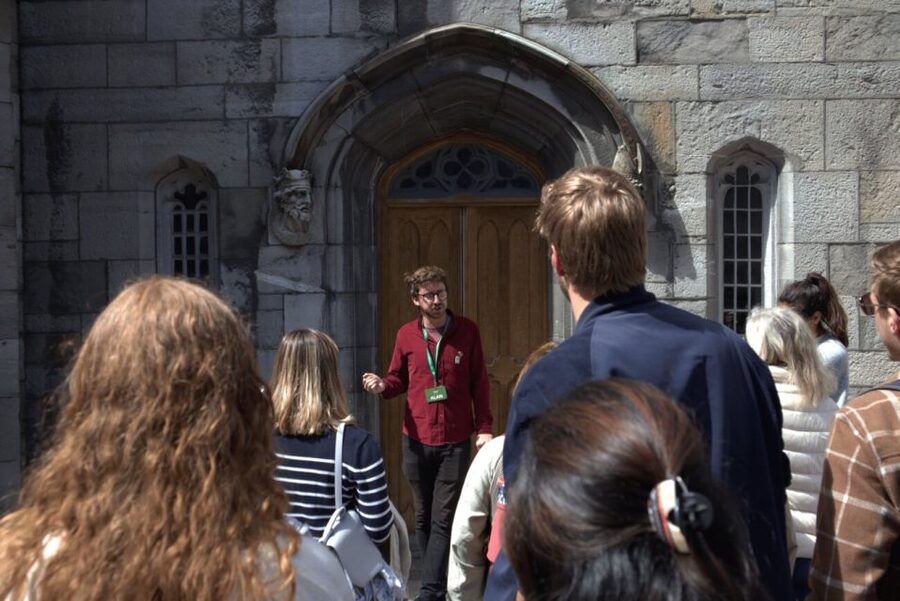
This is where the tour becomes genuinely fun. You learn about mythical creatures from Irish folklore such as the banshee, the púca, and fairies, and the stories connect to Irish national identity and long-standing belief.
What I like about this approach is that the guide treats folklore like a language. The creatures become shorthand for fears, warnings, hospitality, or the supernatural rules of everyday life. So when you later hear a myth name in conversation or on a pub wall, you are not starting from zero.
You should also expect a mix of character and explanation. For example, the tour does not only say the banshee is frightening. It helps you understand why a figure like that would matter to communities and what people were trying to explain with that belief.
And because this is a walking format, you are not stuck in one spot listening. You are moving, then pausing, then moving again as the guide links each story to what you can see around you.
If you enjoy mythology, this section is the payoff. If mythology is not usually your thing, this is still a good first taste because it connects the supernatural to real cultural patterns, not just random spooky entertainment.
Off the Beaten Path in the Georgian Quarter’s Darker Corners
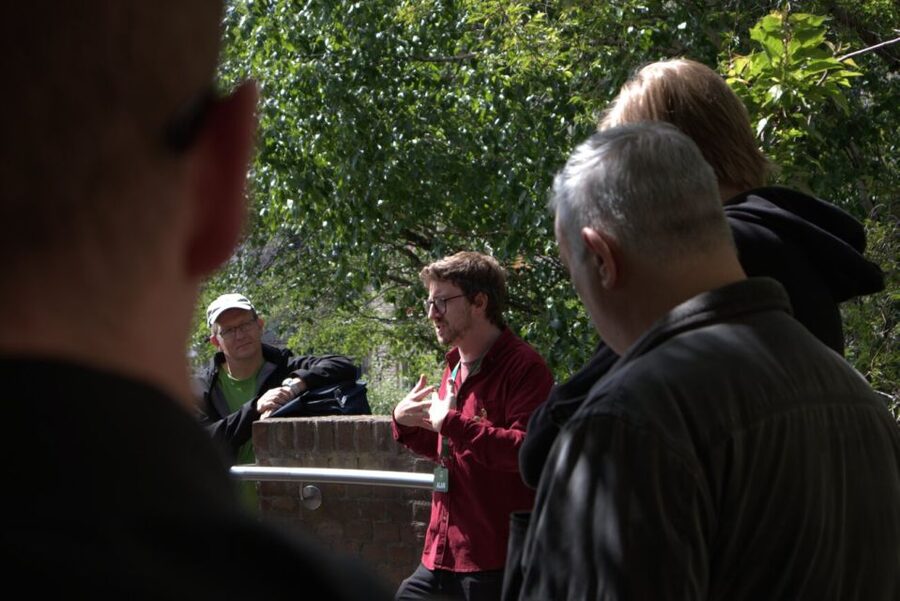
After the myth introduction, the walk shifts toward lesser-known locations and the darker edges of Dublin’s character. You leave the safest, most obvious tourist map and go toward the Georgian Quarter’s macabre side, where the guide tells stories that include rebellions, grave robbing, and revolutions.
This section is valuable because it gives you an alternate Dublin narrative. You get the sense that the city did not grow only through grand speeches and neat histories. It grew through conflict, survival, and people doing what they had to do in messy times.
Even if you only catch one or two of the specific stories, the takeaway is bigger. You start to see how Dublin’s identity is tied to struggle and how public space holds those memories.
A practical tip: bring your curiosity. In this part of the walk, the guide’s humor and energy help the mood. But you will still want to listen closely, because the meaning relies on how events connect to the myths and legends you heard earlier.
If you already know standard Irish history facts, this still helps because you are learning how storytelling reshapes what those events feel like in daily life.
The Abbey Theatre’s Tragic Thread: Stories That Became Public Memory
One of the more compelling stops is tied to the Abbey Theatre. The tour includes the tragic history of the Abbey Theatre, and it fits naturally into the larger theme: Ireland’s relationship with storytelling.
You learn how theatre and narrative work together in Irish culture. The guide uses the Abbey Theatre episode as proof that stories are not only for fantasy. They are tools for reflecting pain, identity, politics, and community.
Why this matters to you as a visitor: Dublin is full of art, pubs, posters, and phrases that hint at the past. When a tour explains how theatre helped carry those ideas, you start noticing connections everywhere. Even if you do not become a drama expert by the end, you will understand the “why” behind the cultural energy you see around the city.
There is also a balance here. You are not only hearing tragic talk. The walk format and guide style keep it moving, with pauses that give you a chance to absorb the emotional weight without feeling overwhelmed.
Another way the same day could go from Dublin:
- Dublin to Cliffs of Moher, including Wild Atlantic Way and Galway
★ 5.0 · 23,331 reviews - From Dublin: Cliffs of Moher, Burren & Galway City Day Tour
★ 4.8 · 18,888 reviews - Dublin: Guinness Storehouse Entry Ticket
★ 4.6 · 16,863 reviews - Dublin to Cliffs of Moher, Burren, Wild Atlantic Way, Galway Tour
★ 5.0 · 12,924 reviews
Ending on O’Connell Street with the Gaelic Revival and Street-Life Characters
The tour finishes on O’Connell Street with an introduction to the revival of the Gaelic language and culture. It also includes meeting some of Dublin’s contemporary street characters, which adds a nice modern counterpoint to the earlier myth material.
This ending section does two useful things. First, it ties folklore to language survival. You see that myth and culture are not locked in the past. Second, you get a sense of Dublin today, through the lens of what the guide has been teaching all along.
O’Connell Street can feel like just a busy corridor if you walk through it without context. With this tour, it becomes a bridge between old beliefs and new identity work.
Then you circle back to the meeting area to end the experience. So even if you are not a planner, you are not left wondering where you will be dropped off.
If you want your Dublin day to end with meaning, this is a strong way to land it.
Why the Guide Style Makes the Difference (Helena, Lee, Dave, Emily)
Walking tours can be hit-or-miss. This one gets praised for the human factor: charismatic delivery, good energy, and humor that keeps the stories moving. You will hear great storytelling from guides including Helena, Lee, Dave, and Emily, and the common thread is how they make Irish folklore feel lively and approachable.
I especially value guides who handle pacing and attention well. Several guides on this route are known for keeping a comfortable flow, with enough stops that you do not feel constantly “on.” The group size is often described as small enough to feel personal, which helps when you have questions.
Another strong point is interaction. Guides like this tend to answer questions and keep conversation going during walking time, not only during stops. That turns the tour from a lecture into a two-way experience.
And if you like practical extras, some guides are also known for offering recommendations after the tour, including places to go around Dublin that do not wreck your budget. That is worth something, especially if it is your first day and you need direction fast.
Price and Value: Getting a Specialist Story Guide for $27
At $27 per person for about 2 hours, the pricing makes sense for what you are buying. You are paying for a live, accredited local folklore expert and a guided walking route that connects several major Dublin touchpoints with off-beat corners.
This is not a “multiple attractions in one ticket” deal. It is a specialist experience. So the value depends on your interest in mythology, Irish folklore, and how stories shape culture.
What is included is simple: the guide and the walking tour. What is not included: hotel pickup and drop-off. That is typical, but it matters for value. You should plan to get yourself to the meeting point.
If you are trying to build a Dublin itinerary that feels more personal than standard sightseeing, this is a strong use of $27. You are not just visiting places, you are learning the narrative logic behind them.
Who This Tour Fits Best in Your Dublin Plan
This tour is a great fit if you:
- Want more meaning than a usual sights pass, especially for Temple Bar and O’Connell Street
- Love mythology or want your first entry into it, with banshees, fairies, and the púca explained in context
- Prefer a guide who uses humor and storytelling skills, so you stay engaged without rushing
- Like a route that includes lesser-known stops, not only the obvious postcards
It is also a reasonable choice if you are traveling with kids or you just do not want a long day of constant walking. The pacing includes breaks, so it tends to work even when your feet need a plan.
If you are the type who only wants dates, architecture diagrams, and museum-style detail, you might feel slightly underfed. This is a cultural story walk, not a textbook walk. Still, it is a good complement to a classic highlights tour.
Should You Book This Dublin Mythology, Folklore and Legends Walking Tour?
If your Dublin trip needs a fresh angle, I think this is an easy yes. Myths on real streets is the point, and the tour gives you a guided way to understand characters like the banshee and púca as part of Irish identity. The expert guide style, including the energetic storytelling associated with Helena, Lee, Dave, and Emily, is a major reason people love this experience and keep using it early in their trip.
Book it if you want:
- A story-first introduction to the city
- Off-beaten route segments beyond the standard tourist loop
- A finish that ties folklore to language revival on O’Connell Street
Skip it only if you hate walking, need a heavy dose of factual timelines, or want hotel pickup. Otherwise, this is one of the most memorable ways to see Dublin as something more than streets and buildings.
FAQ
How long is the Dublin Mythology, Folklore and Legends Walking Tour?
It lasts about 2 hours.
What is the price per person?
The price is $27 per person.
Where do I meet for the tour?
Meet outside The Old Storehouse pub, and look for the green umbrella.
Where does the tour end?
The activity ends back at the meeting point.
Is the tour wheelchair accessible?
Yes, it is listed as wheelchair accessible.
What language is the tour guide?
The live tour guide speaks English.
What’s included in the price?
The guide and the walking tour are included.
Is hotel pickup or drop-off included?
No, hotel pickup and drop-off are not included.
Can I cancel for a refund?
Yes. You can cancel up to 24 hours in advance for a full refund.
Just in from the Liffey side






Walking Tours, compared.
Dublin Highlights and Hidden Gems Guided Walking Tour
Read our review →
90 Minute Dublin Walking tour and Sightseeing tips
Read our review →

Historical 2-Hour Guided Walking Tour of Dublin
Read our review →
Dublin Traditional Irish 3 Course Meal Walking Tour with Local
Read our review →
Browse the lists this tour appears in