
Reviewed · WALKING TOURS
Dublin Highlights and Hidden Gems Guided Walking Tour
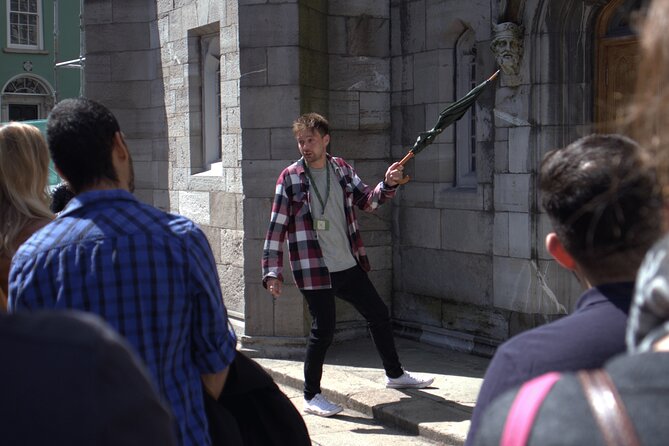
Dublin history, packed into two hours. This guided walk stitches together Temple Bar, Dublin Castle, Christ Church, classic river bridges, and Trinity College, so you see how centuries of Dublin line up as you walk.
I really like how the guide turns big landmarks into human stories, from the Viking beginnings of Dublin Castle to the characters tied to Christ Church Cathedral. I also love the value angle: the tour includes free admission tickets at major stops, so your time goes beyond outside photos.
One consideration: in holiday periods, some headline sights like Trinity College, Christ Church Cathedral, and Dublin Castle can be temporarily unavailable. If you are traveling over Christmas or New Year, it is worth mentally planning a flexible day.
In This Review
- Key Highlights You Should Know
- From Temple Bar to Trinity College, You Get the City Layout Fast
- Temple Bar: More Than a Nightlife Postcard
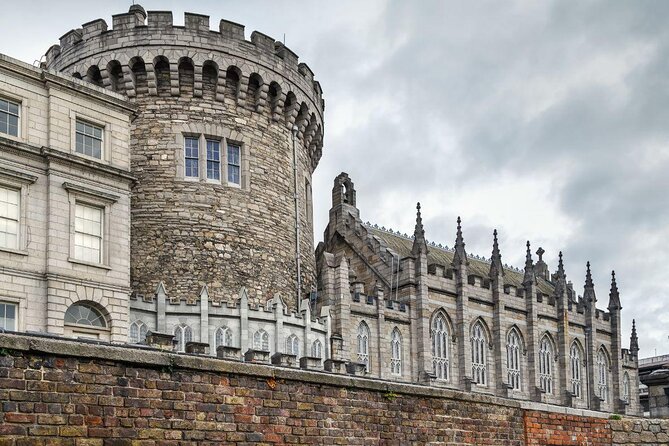
- Dublin Castle Grounds: From Viking Roots to Power in the Center
- Christ Church Cathedral: Strongbow, Lorcan O’Toole, and the Cat and Rat
- Smock Alley Theatre (1662): Dublin’s Oldest Stage Still Shines
- Temple Bar Pub Photo Stop: Quick, Familiar, and Useful
- Ha’penny Bridge: The River Liffey’s Postcard Moment (With Stories)
- O’Connell Bridge: Wider Than It Is Long, and Full of Sightlines
- College Green: Georgian Dublin With Odd Little Details
- Trinity College: The Finish Line for the Book of Kells and Brian Boru Harp
- Why This Tour’s $29 Price Feels Fair
- Pacing, Timing, and the Real-Life Limits of a Walking Tour
- Who Should Book This Dublin Walk
- Should You Book This Dublin Highlights and Hidden Gems Walk?
- FAQ
- How long is the Dublin Highlights and Hidden Gems Guided Walking Tour?
- Where does the tour start?
- Where does the tour end?
- Is this tour offered in English?
- Are there free admission tickets for the stops?
- How big is the group?
- Is the tour suitable for most travelers?
- Are service animals allowed?
- What happens if the weather is poor?
- What is the cancellation policy?
Key Highlights You Should Know
- Small-group feel with a max of 30, which usually keeps questions and pacing comfortable
- Free admission tickets at key stops, so you are not paying twice for entry
- A smart route from Temple Bar to Trinity, covering medieval, Georgian, and university Dublin in one loop
- Story-rich landmarks like Strongbow’s tomb and the Cat and Rat at Christ Church Cathedral
- Postcard bridges on the Liffey including Ha’penny Bridge and O’Connell Bridge
- Guide energy often mixed with humor, with names like Helena, Karl, Keith, Dave, and Barry frequently praised for making history easy to follow
From Temple Bar to Trinity College, You Get the City Layout Fast
If Dublin feels like a pile of great sights that are all close but not always easy to connect, this tour helps. Starting in Temple Bar and ending at Trinity College gives you a clean sense of where things sit, and how the river, the medieval core, and the Georgian city all relate.
The whole experience is about two hours of focused walking. That matters because Dublin’s best spots are spread out, and you can waste a half day hopping between them without context. Here, you get a guided thread through the city, with each stop adding a new layer.
You will also get something practical that I appreciate: a mobile ticket and a clear start and finish. The walk begins at the Old Storehouse Bar and Restaurant, 3 Crown Alley, Temple Bar, and it ends outside Trinity College at the front gate on College Green. It is a nice way to finish, because Trinity is a natural launching point for the rest of your day.
More of Dublin crossed at walking pace:
Temple Bar: More Than a Nightlife Postcard
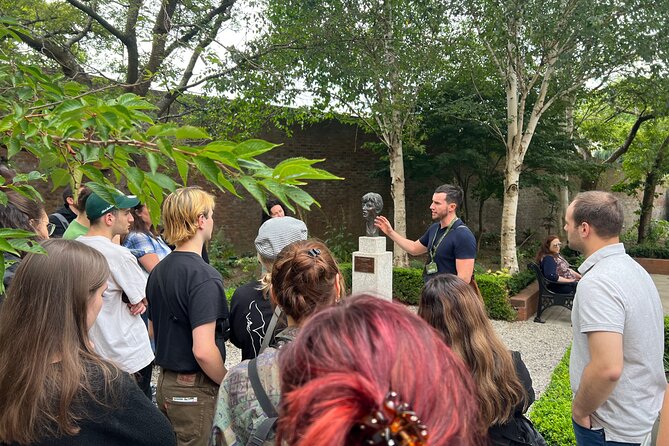
Temple Bar gets plenty of attention, and for good reason. This tour starts in the Temple Bar center and then loops through another slice of the area a bit later, so you see it as a cultural district, not just a line of bars.
You will get a bit of history on why Temple Bar became one of Dublin’s loudest cultural zones, plus tips on what to do nearby once the tour ends. The guide also walks you past the famous pub in the area, the kind that ends up in thousands of photos. That stop is short, but it helps you put the real-world scene to the famous images you have already seen online.
What I like about this approach is that Temple Bar is treated like a neighborhood. You do not just check a box. You get context for why this spot pulls artists, music lovers, and visitors into the same few blocks.
Dublin Castle Grounds: From Viking Roots to Power in the Center
Then you shift gears to Dublin Castle, and the contrast is immediate. Dublin Castle has a presence, even when you are just walking the grounds. The tour frames it as a place that has sat close to the center of power for a long time.
Expect a walk that connects multiple eras. The guide explains the castle’s arc from Viking origins through conquest and occupation, and then toward Ireland’s struggle for independence. You are not just hearing dates. You are seeing how one site can host different forms of authority across centuries.
A standout part of this stop is the way the guide points out “lesser-spotted” curiosities. That is where the castle stops feeling like a single monument and starts feeling like a working complex with details worth noticing. It is also a good place to ask questions, because the open grounds give you enough room to pause and look without getting rushed.
Christ Church Cathedral: Strongbow, Lorcan O’Toole, and the Cat and Rat
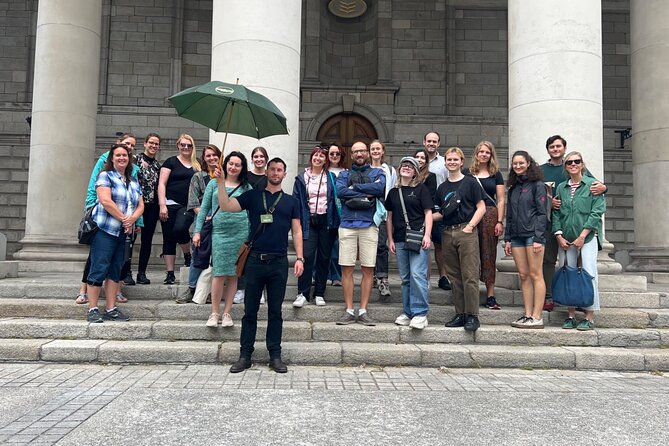
Next up is Christ Church Cathedral, right in the heart of Dublin for about 1,000 years. This is one of those places where the atmosphere does the heavy lifting, but the guide adds the key stories you might miss on your own.
You will hear about:
- the tomb of Strongbow
- the heart of Lorcan O’Toole
- and the famous Cat and the Rat legend tied to the cathedral
The time here is brief, so you need to decide what you want to focus on once you are inside or just outside. My advice: pick one “must-know” story for this stop, then let the rest fill in around it. If you try to absorb everything at once, your notes will blend together.
Still, even in a short visit, it is a satisfying stop because the cathedral is both a landmark and a storytelling machine. It ties together myth, local lore, and real historical figures in a way that feels built for a short guided window.
Smock Alley Theatre (1662): Dublin’s Oldest Stage Still Shines
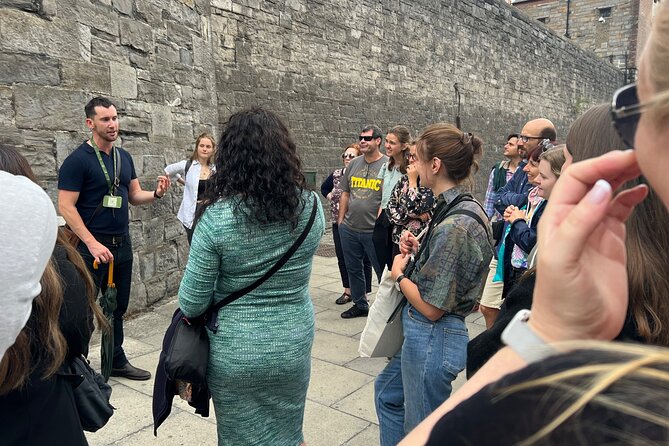
After the cathedral, you move toward Smock Alley Theatre, famously Ireland’s oldest theatre. This is a fascinating detour because it sits at the intersection of entertainment, politics, and changing social life.
You will learn that the building has been through multiple lives, including a shift from Theatre Royal to a Catholic church, and then back to a theatre again. The guide also covers the role it played in Irish arts over time, including patronage of writers, directors, and actors.
The time at this stop is short, but the payoff is big because the idea is simple: Dublin did not only produce history in battlefields and government buildings. It also created culture, and buildings like this are living proof.
It is also a nice contrast with the heavier stone and power of Dublin Castle and the cathedral. Theatre gives the tour a lighter rhythm while still staying grounded in the past.
A few other Liffey-side days to consider
- Dublin to Glendalough, Wicklow and Kilkenny Full Day Guided Tour
★ 5.0 · 4,895 reviews - Dublin Book of Kells, Castle and Molly Malone Statue Guided Tour
★ 4.5 · 3,825 reviews - The Little Museum of Dublin Famous Guided Tour
★ 5.0 · 2,948 reviews - Dublin Jameson Distillery and Guinness Storehouse Guided Tour
★ 4.5 · 2,608 reviews
Temple Bar Pub Photo Stop: Quick, Familiar, and Useful
After Smock Alley, the tour makes a quick stop near the Temple Bar pub. It is Ireland’s most famous and photographed pub, and yes, it is an Instagram magnet.
This stop is brief on purpose. It gives you a chance to photograph it in the context of the neighborhood you just walked through. It also acts like a mental checkpoint. You have already covered the medieval core and key cultural sites, so you can now shift your attention to the river views and the Georgian streets ahead.
If you are the type who loves famous places but hates long waits, this works. You get the moment without turning your afternoon into a line.
Ha’penny Bridge: The River Liffey’s Postcard Moment (With Stories)
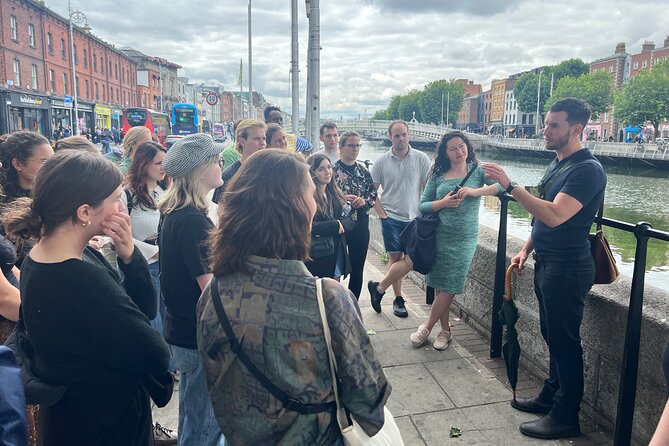
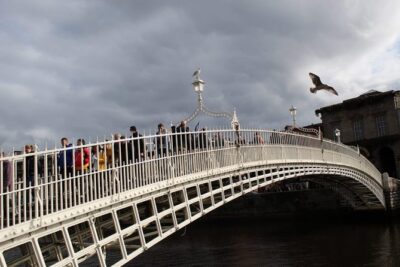
Now you get to walk along the River Liffey area, starting with Ha’penny Bridge. This is the Georgian footbridge that has been straddling the river since 1816, and it looks exactly like the postcards.
What makes it more than scenery is the kind of story your guide will share. You will hear history connected to the battle of Waterloo, and also a surprising link to Fender guitars. Whether you know those connections already or not, it is the sort of detail that makes you look twice at a simple bridge.
This is also a smart stop because it gives you a visual reset. After cathedrals and castle walls, the open river scene helps you breathe and enjoy Dublin at street level.
O’Connell Bridge: Wider Than It Is Long, and Full of Sightlines
From Ha’penny Bridge, you head toward O’Connell Bridge. The tour frames it as a bridge that is wider than it is long, which is a quick visual detail you will notice immediately.
The guide covers the historic things it has borne witness to, and the nation-defining events that happen only yards away. It is also named after a major figure with the name O’Connell, which gives you a key anchor for understanding why the bridge exists in this place and not somewhere else.
I like this stop because it shifts you from the postcard idea of Dublin into the real city rhythm. Standing here, you can sense how the river connects different eras and different crowds, all within a short walk.
College Green: Georgian Dublin With Odd Little Details
Then you arrive at College Green, the old center of Georgian Dublin. This is one of those areas that rewards walking slowly even if you are only here briefly.
The guide points out “lesser-mentioned oddities” of the thoroughfare. That phrasing matters. It means you are not just looking at the obvious landmark architecture. You are learning the small quirks and street-level details that make the city feel lived-in rather than staged.
This is a good place to take a quick breather and re-check your bearings before the final stop. College Green also sits right where you want to be if your next plan is exploring Trinity College grounds or heading toward other central attractions.
Trinity College: The Finish Line for the Book of Kells and Brian Boru Harp
The tour ends at Trinity College Dublin, outside the front gate. This is a fitting finish because Trinity is described as Ireland’s oldest and most famous college, and the campus carries that sense of importance the moment you arrive.
The big draw here is the library, famous for housing the Book of Kells and the Brian Boru Harp. Even if you do not go inside on the same day, knowing the library holds those objects helps you understand why Trinity matters beyond being a university.
This ending spot is also practical. Once you have the tour route in your head, you can decide what to do next with less guesswork. You will know how to move from the older city center toward the university quarter without backtracking.
Why This Tour’s $29 Price Feels Fair
At $29.02 per person for about two hours, this tour sits in the sweet spot between “too short to matter” and “too long to stay lively.”
Here is why it feels like value based on what you get:
- You cover multiple headline locations in a tight route, which saves time you would otherwise spend planning and walking.
- The tour includes free admission tickets at major stops, which reduces the usual cost creep of guided sightseeing.
- Group size is capped at 30, and you can end up with a smaller group than that, which typically makes conversation and questions easier.
Time is the real currency on city breaks. This tour respects that. You get meaningful context at each stop without spending the whole day on museum queues or slow transit.
Pacing, Timing, and the Real-Life Limits of a Walking Tour
The tour moves through stops that often run around 5 to 20 minutes each. That means you should expect a guided overview, not a deep, slow study.
This is not a fault. It is a feature. The goal is to connect the dots quickly and leave you with a shortlist of what to revisit. If you love cathedrals, you can return to Christ Church. If you love architecture, you can linger around Trinity’s campus area afterward.
Weather matters here. The experience requires good weather, so if rain is heavy, you might get a different date or a full refund. That is common for a walking tour, but it is still something to plan around. If your schedule is tight, consider booking this early in your stay so you have backup options.
Who Should Book This Dublin Walk
This tour works well for:
- first-time Dublin visitors who want a fast map of the city’s major eras
- travelers who like stories and legends, not just stone-and-signs sightseeing
- couples and small groups who want an organized route without committing to a long day
- anyone who wants a guided start, then freedom to explore after
It is also a good match if you are traveling with someone who gets bored on long museum days. You can keep moving, see a sequence of landmarks, and then choose your next stop based on what grabbed you.
Should You Book This Dublin Highlights and Hidden Gems Walk?
If you want a smart, story-led introduction to central Dublin, I would book it. It gives you a clean route from Temple Bar to Trinity, and it treats the landmarks as connected chapters rather than isolated photo stops.
The only reason to hesitate is timing around holidays or special closures. If you are visiting right over the busiest weeks, keep flexibility in your mind, especially for indoor stops. If you can work around that, you will likely finish the walk feeling like you understand Dublin’s layout and the major names that shaped it.
FAQ
How long is the Dublin Highlights and Hidden Gems Guided Walking Tour?
It lasts about 2 hours.
Where does the tour start?
The meeting point is the Old Storehouse Bar and Restaurant, 3 Crown Alley, Temple Bar, Dublin.
Where does the tour end?
The tour ends outside the front gate of Trinity College at 27 College Green, Dublin.
Is this tour offered in English?
Yes, the tour is offered in English.
Are there free admission tickets for the stops?
Yes, the listed stops include free admission tickets.
How big is the group?
The maximum group size is 30 travelers.
Is the tour suitable for most travelers?
Most travelers can participate.
Are service animals allowed?
Yes, service animals are allowed.
What happens if the weather is poor?
This experience requires good weather. If it is canceled due to poor weather, you will be offered a different date or a full refund.
What is the cancellation policy?
Free cancellation is available, and you can cancel up to 24 hours in advance for a full refund.
Just in from the Liffey side






Walking Tours, compared.
90 Minute Dublin Walking tour and Sightseeing tips
Read our review →

Historical 2-Hour Guided Walking Tour of Dublin
Read our review →
Dublin Traditional Irish 3 Course Meal Walking Tour with Local
Read our review →
Browse the lists this tour appears in