
Reviewed · WALKING TOURS
1916 Rebellion Walking Tour
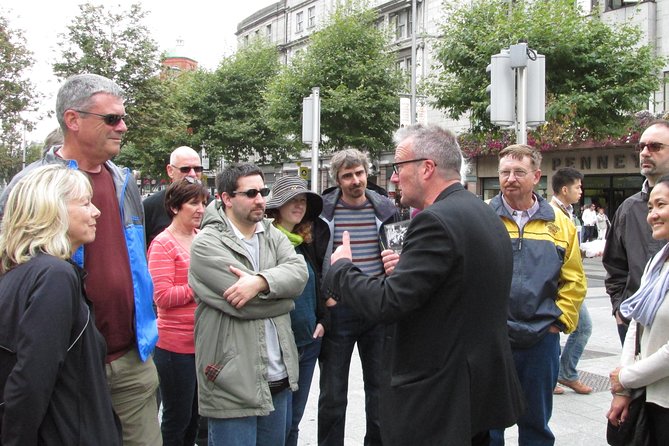
Rebellion history, right on Dublin street corners. This 1916 Rebellion Walking Tour is a story-driven walk that takes you from the Great Hunger roots of unrest to Easter Week 1916, then keeps going through the political shockwaves that followed.
I especially love the way the guide sets the context first, starting with the famine era and ending at the 1916 Rising, before you hit the landmarks. You also get real time for questions right from the start, which makes the whole thing feel like a conversation, not a lecture.
One possible drawback to plan for: the advertised time is about 2 hours, but a few people noted it can run closer to 3 hours, especially with a full group and lots of questions.
In This Review
- Key highlights you will care about
- Entering the International Bar, where the 1916 tour begins
- From the Great Hunger to Easter Week 1916, the story thread that clicks
- City Hall and Dublin Castle: the places British control shows up in plain sight
- Four Courts and the River Liffey: why it matters again in 1922
- O’Connell Monument, Jim Larkin, and Moore Street: street-level evidence and working-class ties
- The GPO as headquarters: where you hear the Proclamation story in context
- Bank of Ireland, the Old Parliament, and Trinity College nearby
- Timing and pace in a walk that can run long
- Group size, guide style, and why the tour feels like it works
- What you get for $27.81, and what costs extra
- Practical tips before you go
- Who should book this 1916 Rebellion Walking Tour
- Should you book it?
- FAQ
- Where does the 1916 Rebellion Walking Tour start?
- How long is the tour?
- What is included in the ticket price?
- Are alcoholic drinks included?
- Is the tour offered in English?
- Do children need to be accompanied?
- Is there a mobile ticket?
- What if the weather is bad?
- What is the cancellation policy?
Key highlights you will care about

- Start at the International Bar on Wicklow Street, with Lorcan Collins tied to the tour since 1996
- Context before corners, moving from the Great Hunger through Easter Week so dates make sense
- Visible evidence, including bullet holes you can still see at O’Connell’s memorial
- Landmarks up close, from the GPO headquarters to Dublin Castle and the Old Parliament area
- Route varies, so you are not stuck with the exact same sequence every day
- Some guides add performance touches, including rebel songs and poetry during the walk
Entering the International Bar, where the 1916 tour begins

You meet at 23 Wicklow St at the International Bar, which is famous in its own right and works as a perfect pre-walk warm-up. If you arrive early, you can grab a drink and settle in, and your guide will have introductory reading material available for a quick primer.
What makes this start work is the tone. You are not rushing out the door into facts. You’re getting the story frame first, then the streets become the textbook. And yes, alcohol is available to purchase, but you do not need to buy anything to enjoy the experience.
More of Dublin crossed at walking pace:
From the Great Hunger to Easter Week 1916, the story thread that clicks
Before you even reach your first major stop, the guide explains how Ireland got to the moment of the Rising. The walk begins with the Great Hunger in the 1840s and moves forward through the pressure-cooker decades that shaped Irish nationalism.
That timeline matters. If you only know 1916 as a headline, the tour helps you understand why people were ready to risk everything in 1916, not just what happened during the week itself. You learn the political atmosphere, the mindset of the time, and how earlier events fed directly into the rebellion.
This is also where you can ask questions without feeling rushed. I like this setup because it prevents the classic walking-tour problem, where you’re left trying to remember names and motives while you’re dodging traffic.
City Hall and Dublin Castle: the places British control shows up in plain sight
The first big stop on the street is City Hall, where the Irish Citizen Army was involved during the 1916 Rising. This matters because it is not just about one group and one plan. The guide helps you see how different forces moved through Easter Week and how control looked on the ground.
Then you head to Dublin Castle, the center of British administration in Ireland. Even if you’ve seen it in a movie about Michael Collins, it hits differently when you are standing in the setting where British authority operated and where events tied into both the 1916 Rising and the later War of Independence.
One practical benefit: these stops are close together, so you can absorb the bigger themes without losing momentum. You are building a map in your head as you go.
Four Courts and the River Liffey: why it matters again in 1922
Next is the Four Courts area. In 1916, it was occupied by the revolutionaries, and later it became central again as Ireland moved toward the Civil War period in 1922.
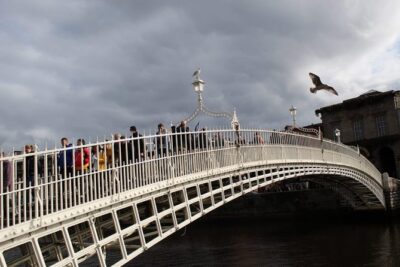
Here’s a smart detail: you do not push up to the building itself. Instead, you get the view from a bridge over the River Liffey, which is a more realistic way to see the relationship between the site and the river, plus it keeps the walk flowing. The guide explains the role of Four Courts in both 1916 and 1922, and it also helps you untangle the “how did we get from rebellion to civil conflict” question.
If you want the human story behind the politics, this is one of the most useful sections. It makes the 1916 Rising feel like the start of something bigger, not an isolated explosion.
O’Connell Monument, Jim Larkin, and Moore Street: street-level evidence and working-class ties
The tour keeps delivering those “wait, I can see that” moments. At O’Connell Monument, you stop for a look at bullet holes from the Rising. That is the kind of detail that turns history from a paragraph into something physical. The guide also explains how the British and Irish positions played out in 1916, based on where people stood and what the landscape allowed.
Then you continue to the Jim Larkin Statue. Big Jim Larkin was a union leader from Liverpool and a comrade of James Connolly, with a strong connection to Dublin’s working-class movement. This stop adds a layer that many casual history walks skip. You get the sense that the Rising was not only about elite politics, it was also tied to labor, community pressure, and organizing.
Depending on time, the tour may also include Moore Street, where the GPO garrison made their last stand during Easter Week. This is one of the stops that makes the walk feel like you are moving through the actual routes and moments of the uprising, not just observing monuments from far away.
Another way the same day could go from Dublin:
- Dublin to Cliffs of Moher, including Wild Atlantic Way and Galway
★ 5.0 · 23,331 reviews - From Dublin: Cliffs of Moher, Burren & Galway City Day Tour
★ 4.8 · 18,888 reviews - Dublin: Guinness Storehouse Entry Ticket
★ 4.6 · 16,863 reviews - Dublin to Cliffs of Moher, Burren, Wild Atlantic Way, Galway Tour
★ 5.0 · 12,924 reviews
The GPO as headquarters: where you hear the Proclamation story in context
The biggest anchor stop is the An Post General Post Office (GPO), where the revolutionaries set up their Dublin headquarters. The guide spends about 30 minutes here, because this is where the Easter Week narrative reaches its clearest turning point.
This is also where P.H. Pearse read the Proclamation, and it is easy to see why the GPO sits at the center of Irish national memory. Even if you’re not from Ireland, you can feel why this building matters as a symbol, not just as a location.
What I like here is the approach. You are not only told events. You’re shown how the GPO represents the public face of the Rising, and how that connects to the years that followed.
Some guides also add performance touches here or along the way, including rebel songs and poetry, which can make the emotion of the week click faster than dates alone.
Bank of Ireland, the Old Parliament, and Trinity College nearby
Depending on the day’s pacing and route choice, you may also stop near the Bank of Ireland, which is often called the Old Parliament. The guide may examine the building and discuss its role in Irish history, and you get context about nearby Trinity College too.
This section can feel slightly more interpretive than the O’Connell and GPO stops, because you are tying architecture and institutions to political change. But if you want to understand how Dublin’s power structures evolved, it’s a helpful capstone.
And because the route varies, you might see the full “core” set of sites one day, while another day favors slightly different stops. Either way, you should expect the main themes to stay consistent.
Timing and pace in a walk that can run long
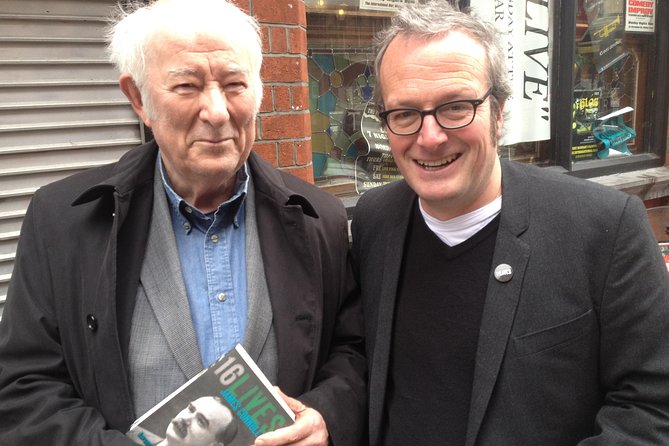
The tour is listed as about 2 hours, but I’d plan for up to 3 hours if you like to ask questions and actually listen to the details. One review flagged the time estimate issue, and that tracks with how these narratively heavy walks tend to run, especially with groups of around 30.
Good news: the tour is set up for a manageable pace. Stops are timed in small chunks, often around 15 minutes, with the GPO as the longer concentration point. That rhythm keeps the walk from dragging, even though it is history-heavy.
Also, routes can vary. That helps keep the tour from feeling repetitive, but it also means you should bring a flexible attitude if you were hoping to see a single very specific alleyway moment.
Group size, guide style, and why the tour feels like it works
This tour caps at 30 travelers, which is a sweet spot for walking tours in busy Dublin. It means you’re not stuck in a huge cattle line, and the guide can still manage the group without turning everything into shouting.
Guide quality is clearly a big part of what people love. Lorcan Collins is specifically tied to running the 1916 tour since 1996, and his name comes up repeatedly as a reason to book. I also saw multiple guide names in the mix, including Liz, Phelan, Fallon, Donal, Elaina, Adam, Phil, and Phelim. The common thread is delivery: clear explanations, time for questions, and story energy that keeps the subject human.
Some guides also bring in extras like rebel songs, and there are examples of guides weaving in social context, including the role of women in Irish history. That matters if you feel history tours sometimes focus only on leaders and battles.
What you get for $27.81, and what costs extra
At $27.81 per person, this is priced like a solid, focused city walking experience. The big value element is that you are paying for the guide and the narrative structure that connects each site to Easter Week and what came after.
The listed stops are marked as admission ticket free in the tour flow, so you’re not paying separate entrance fees to stand at key historic places and learn what happened there. The one clear extra is that alcoholic drinks are available for purchase at the bar, if you want to add that to the experience.
If you’re trying to travel on a tight budget, this is the type of tour where you can do it with zero extra spending beyond the ticket, as long as you bring comfortable shoes and basic city stamina.
Practical tips before you go
- Wear shoes you can walk in without complaining. Dublin cobblestones have a way of making “just a short walk” feel longer.
- If you care about seeing everything, arrive a little early at International Bar. It gives you a chance to get oriented and start the story before you move.
- Bring a question or two. The best parts of the tour tend to happen when the guide has time to answer.
- Expect serious content, but not a stiff museum vibe. The guide tone can include humor, while still treating the subject with respect.
- If the weather is rough, the experience can be canceled. You’ll be offered another date or a full refund if it’s weather-related.
Who should book this 1916 Rebellion Walking Tour
You’ll likely love it if you:
- Want a Dublin 1916 Rising walking tour that explains why the Rising happened, not only what happened
- Like your history connected to real places, including the eerie feeling of bullet holes you can see
- Enjoy guided storytelling, with time for questions and occasional songs or poetry
- Want a walk that works for beginners, since prior knowledge is not required
You might skip it if you:
- Want a quick stop-and-see highlights tour only
- Get irritated by crowds and prefer very quiet experiences
- Can’t handle a history-focused route that covers political conflict up through the early 1920s
Should you book it?
If you’re in Dublin and you have even a mild interest in the 1916 Easter Rising and the years right after it, I think this is a smart use of time. The GPO stop anchors the whole narrative, Four Courts explains the later ripples, and O’Connell Monument brings home the physical reality of the events.
Book this tour if you want context, visible landmarks, and a guide who can turn a dense topic into a walk you remember. I’d book it soon enough that you get the time slot you want, then plan your schedule with a little extra breathing room in case the walk runs past the 2-hour target.
FAQ
Where does the 1916 Rebellion Walking Tour start?
It starts at 23 Wicklow St, Dublin, D02 VH59, Ireland, at the meeting point, and it ends back at the same place.
How long is the tour?
The tour is approximately 2 hours.
What is included in the ticket price?
A professional guide is included.
Are alcoholic drinks included?
No. Alcoholic drinks are available for purchase.
Is the tour offered in English?
Yes, it is offered in English.
Do children need to be accompanied?
Yes. Children must be accompanied by an adult.
Is there a mobile ticket?
Yes. The tour uses a mobile ticket.
What if the weather is bad?
This experience requires good weather. If it is canceled due to poor weather, you will be offered a different date or a full refund.
What is the cancellation policy?
You can cancel for free up to 24 hours in advance for a full refund. If you cancel less than 24 hours before the start time, the amount you paid will not be refunded.
Just in from the Liffey side



Walking Tours, compared.
Dublin Highlights and Hidden Gems Guided Walking Tour
Read our review →
90 Minute Dublin Walking tour and Sightseeing tips
Read our review →
Historical 2-Hour Guided Walking Tour of Dublin
Read our review →
Dublin Traditional Irish 3 Course Meal Walking Tour with Local
Read our review →
Browse the lists this tour appears in