
Reviewed · WALKING TOURS
Irish Republican Army, Civil War Dublin Private Walking Tour
IRA streets tell a story fast. On this Irish Republican Army walking tour in Dublin, you follow the lead-up to the 1916 Easter Rising, with stops tied to names like Tom Clarke, Michael Collins, and James Connolly. I love that it uses real city corners and monuments to keep the political story grounded as you move.
I also like the option that adds skip-the-line GPO Museum tickets with a multilingual audio guide. One thing to consider is the price, since you will pay a premium, and the 2-hour option keeps the GPO Museum itself off the menu.
In This Review
- Key Points That Matter Before You Go
- Following the IRA in Dublin, Step by Step
- Where You Meet and How the Tour Flows
- Stop 1: Molly Malone Statue, St Andrew’s Church, and the Revolution’s Dublin Core
- Stop 2: St Andrew’s Church and the Names You Came For
- Stop 3: The River Liffey and the Custom House, Occupied and Burnt in 1921
- Stop 4: Famine Memorial and the James Connolly Memorial
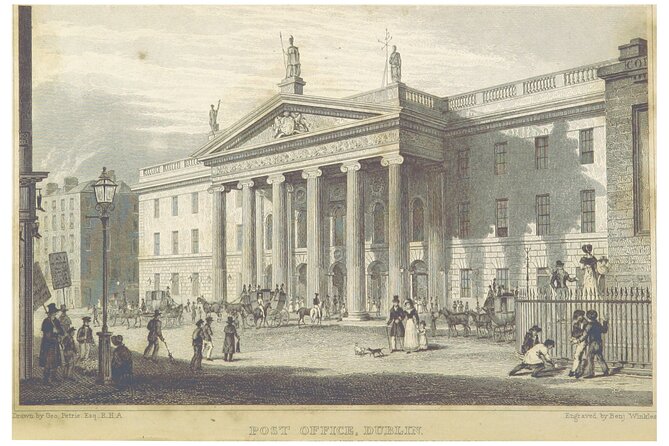
- Stop 5: An Post and the General Post Office, Then the GPO Museum Option
- If you book the 2-hour IRA tour
- If you book the 3-hour option with GPO Museum tickets
- What you are likely to see inside the GPO Museum
- The Real Value: What This Tour Adds That Self-Guided Tours Often Miss
- Price and Fit: Who Should Choose 2 Hours vs 3 Hours?
- Pickup, Meeting, and the Small Practical Details
- FAQ
- How long is the Irish Republican Army Dublin private walking tour?
- Where do we meet for the tour?
- Does the tour include pickup from my hotel?
- What is included in the 2-hour option?
- What is included in the 3-hour option?
- Do I get to skip the line at the GPO Museum?
- What languages is the GPO Museum audio guide available in?
- What is the group size limit for the guide?
- Should You Book This IRA Dublin Walking Tour?
Key Points That Matter Before You Go

- Private, guide-led route through 1916-era Dublin so you get context right where the events unfolded
- Two tour lengths lets you match time, from GPO outside viewing to museum entry
- Optional skip-the-line GPO Museum tickets with an audio guide (not a guided museum walk)
- Street stops tied to IRA actions like the Custom House occupied and burnt in 1921
- Compact route in the city center with most stops set up for easy viewing from the sidewalk
- Limited group size per guide (up to 25) for clearer commentary and questions
Following the IRA in Dublin, Step by Step
If you have ever wished your Dublin sightseeing had a sharper edge, this Irish Republican Army (IRA) private walk does that job. You are not just seeing buildings. You are walking the geography of political conflict, from the symbols and meeting places tied to the revolutionaries, to the big public-facing stage of the Easter Rising.
What makes this tour work well is the way it links people to places. Tom Clarke, Michael Collins, and James Connolly are not treated like trivia. The guide connects their roles to the streets around you, so the story feels less like memorizing dates and more like understanding how a movement built momentum in plain sight.
You also get flexibility based on how much museum time you want. The 2-hour option focuses on the walk and key external landmarks. The 3-hour option adds reserved-entry tickets to the GPO Museum, which is where the Easter Rising story shifts from street context to inside exhibits.
More of Dublin crossed at walking pace:
Where You Meet and How the Tour Flows
You start at the Molly Malone Statue on Suffolk St, outside St Andrew’s Church (Dublin 2). The tour ends back at the meeting point, so you do not have to figure out how to reconnect with transit at the end. That round-trip setup is especially helpful if you are pairing this with a pub stop or another timed visit.
The overall duration is about 2 to 3 hours, depending on which option you choose. It is a private tour, meaning only your group participates. Even with that private format, the operator limits group size to help the guide manage questions and keep audio clear, with a cap of 25 guests per guide.
Pickup is available only for accommodations in Dublin City Center, within 1.5 km of the meeting point. If you are staying just outside that range, plan to meet at the Molly Malone Statue by public transportation.
A small but real practical plus: most stops are outside with no ticket lines. That means you spend your time listening and looking instead of constantly waiting.
Stop 1: Molly Malone Statue, St Andrew’s Church, and the Revolution’s Dublin Core
The tour opens near the Molly Malone Statue, outside St Andrew’s Church. The meeting point might feel like a classic Dublin photo spot, but it also sets the tone: the guide gets you oriented in the city center and points your attention toward the historic districts where revolutionary planning and communication mattered.
This start works because it is a clean way to begin a walking story. You are not immediately dropped into a “random monument.” The guide uses the first segment to frame what you will see next, including how later sites connect to the lead-up to 1916.
If you are coming in from another part of town, this location is convenient. It is near public transportation, and it is easy to find. Dublin can be walkable, but having a solid fixed start is a relief.
Stop 2: St Andrew’s Church and the Names You Came For
From the first stop, the tour moves into the historic city center, with St Andrew’s Church as a key point of reference. This is where the guide ties the revolutionary figures to the places they would have been associated with, including Tom Clarke, Michael Collins, and James Connolly.
As you walk, you also pass landmarks such as Trinity College and the Talbot Memorial Bridge. Those are not just “nice scenery” moments. They help you understand Dublin’s layout, where important institutions sit alongside the neighborhoods that fueled political change.
This stop is strongest if you like biographies with context. If you only want dramatic headlines and dates, you might feel the pace is more explanatory than cinematic. But if you want to understand why specific people matter, this part does the heavy lifting.
Stop 3: The River Liffey and the Custom House, Occupied and Burnt in 1921
Next comes a shift across the River Liffey. You are in position to see the Custom House, a building tied to the IRA’s actions during the Irish conflict. The key detail here is that the Custom House was occupied, then burnt in 1921 by the IRA.
This is a good example of the tour’s street-level style. You are not learning about buildings in the abstract. You are standing at the kind of urban landmark that would have been hard to miss, even for someone who did not follow politics closely.
Why I think this stop is valuable: it shows how the conflict was not only about secret meetings. It also touched major civic space. That detail helps explain how the revolutionaries gained attention and how state institutions became targets.
A practical note: this is a riverside area. Dublin weather can change fast, so dress accordingly. Even if it is not cold, wind off the water can make a quick walk feel longer than you expect.
A few other Liffey-side days to consider
- The Dublin Private Walking Tour
★ 5.0 · 701 reviews - Private Dublin Arrival Transfer – Airport to Hotel / Accommodation
★ 3.5 · 304 reviews - Private (Nearly!) All of Dublin in 5 hours (Walking Tour)
★ 5.0 · 281 reviews - Cliffs of Moher Private Award Winning Luxury Mercedes Car Tour
★ 5.0 · 176 reviews
Stop 4: Famine Memorial and the James Connolly Memorial
After the Custom House, the tour heads toward Docklands area viewpoints where you will see the Famine Memorial and the James Connolly Memorial. The Famine Memorial grounds the story in national hardship, reminding you that Irish political conflict did not arise in a vacuum. The James Connolly Memorial focuses your attention back on the IRA and the Easter Rising, including the execution connected to Connolly’s role.
This pairing matters. Connolly represents the revolutionary phase of the story. The Famine Memorial represents the wider pressures that shaped Ireland’s long-term social and political tensions. Even if you already know the basic facts, it helps to see that the guide is connecting the dots across different eras.
Time-wise, this stop gives you about half an hour. That is usually enough to read key plaques and absorb what you are seeing without the tour feeling rushed.
Stop 5: An Post and the General Post Office, Then the GPO Museum Option
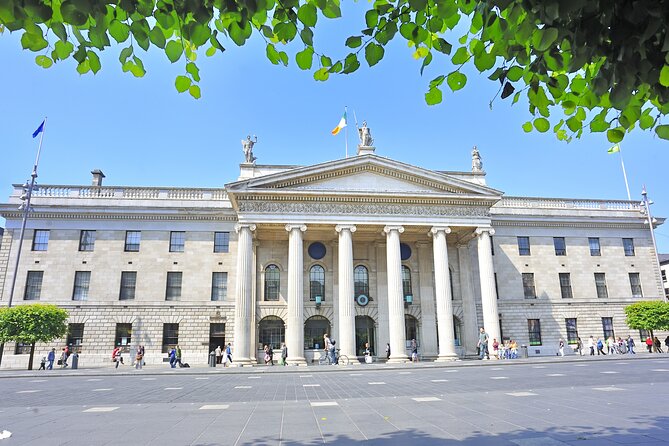
The final stop is at An Post, the site of the General Post Office (GPO). This is the emotional center of the Easter Rising story, and the way the tour handles it depends on your chosen duration.
If you book the 2-hour IRA tour
You will see the GPO outside only. You still get the context and street framing, but you do not get museum access. If you are short on time, this is a smart way to get the key locations without adding a museum visit that can change your schedule.
If you book the 3-hour option with GPO Museum tickets
You receive skip-the-line tickets to the GPO Museum with a reserved time slot for entry. The museum has an audio guide in multiple languages, including English, French, German, Italian, and Spanish.
Important detail: the guide will not accompany you inside the museum. You will enjoy the exhibitions using the official audio guide. That can be a downside if you love live Q and A while you walk, but it can also be a benefit. You can move at your own pace inside, and you are not stuck listening to a fixed script while you wait for the group.
What you are likely to see inside the GPO Museum
You will see the original copy of the Proclamation. The museum also presents the Easter Rising through videos and audiovisual booths, with sound, memorabilia, and perspectives from bystanders.
From a value perspective, this option is best when you care about the artifacts and the way the story is presented. One more thing to keep in mind: the GPO Museum can feel compact. If you are expecting a large, multi-hour museum, you might want to keep your expectations in check and focus on the highlights.
The Real Value: What This Tour Adds That Self-Guided Tours Often Miss
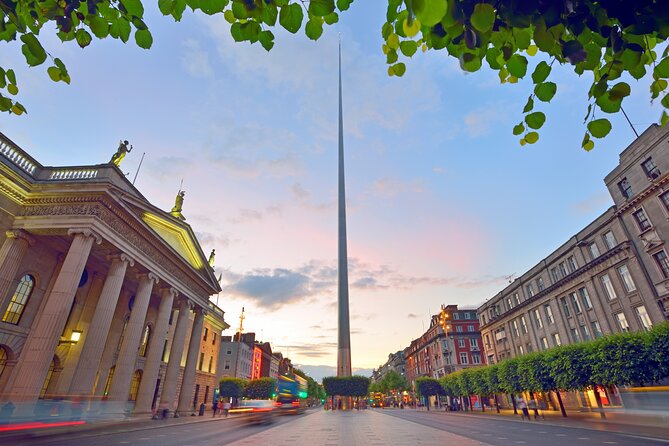
A self-guided walk can get you to famous names and buildings. This tour does something different. It gives you a narrative thread in motion.
Here are the “value points” I would prioritize:
- Context fast: Instead of reading every plaque alone, you get the story shaped into a walking route.
- IRA focus without whitewashing: The tour frames political conflict around real locations, including major events tied to the revolutionary period.
- Two levels of depth: You can choose street context only (2-hour) or add museum artifacts and interpretation (3-hour).
Because it is private and guided, you also have a better chance of getting your specific questions answered. And since the operator limits group size per guide, you are less likely to get lost in a big crowd listening problem.
Price and Fit: Who Should Choose 2 Hours vs 3 Hours?
At $191.99 per person, this is not a budget impulse buy. For a couple, it can feel like a bigger spend than you might expect for a walking tour plus (possibly) a museum visit.
So I would think about it like this:
- Choose the 2-hour option if you want the key IRA and Easter Rising streets, and you are comfortable skipping the museum ticket cost. This works best when you have limited time or you plan to use that time for another activity later.
- Choose the 3-hour option if GPO Museum exhibits and the audio guide experience are part of what you came for. The skip-the-line and reserved entry time slot reduces the most stressful part of museum days, which is waiting.
If you do the 2-hour walk and then regret not going in, you will feel that mismatch. If you do the 3-hour option, you get more interpretive material and the Proclamation artifact, which makes the higher price easier to justify.
Pickup, Meeting, and the Small Practical Details
You meet at the Molly Malone Statue on Suffolk St, outside St Andrew’s Church. The tour is near public transportation, so you should be able to get there even if you are not using pickup.
Pickup is limited to hotels and accommodations in Dublin City Center within 1.5 km of the meeting point. If your lodging is farther out, you will need to plan your own way to Suffolk St.
One last tip: check your email the day before the tour for important information. That matters for meeting confirmations and any time slot changes tied to museum entry.
FAQ
How long is the Irish Republican Army Dublin private walking tour?
The tour is listed as approximately 2 to 3 hours, depending on the option you choose (2-hour IRA tour, or 3-hour tour with GPO Museum tickets).
Where do we meet for the tour?
You meet next to the Molly Malone Statue (outside St Andrew’s Church), Suffolk St, Dublin 2, D02 KX03, Ireland.
Does the tour include pickup from my hotel?
Pickup is available only for accommodations in Dublin City Center within 1.5 km of the meeting point next to the Molly Malone Statue. You need to provide your full address when booking.
What is included in the 2-hour option?
The 2-hour option includes the private guided walking tour with expert commentary and visits to related sites. It also includes free admission at stops, but it does not include GPO Museum skip-the-line tickets.
What is included in the 3-hour option?
The 3-hour option includes the private guided walking tour plus skip-the-line GPO Museum tickets with an audio guide and a reserved time slot for entry.
Do I get to skip the line at the GPO Museum?
Yes, in the 3-hour option you get skip-the-line tickets to the GPO Museum with a reserved time slot. The guide does not accompany you inside.
What languages is the GPO Museum audio guide available in?
The audio guide is available in English, French, German, Italian, and Spanish.
What is the group size limit for the guide?
The operator limits group size to 25 guests per guide so everyone can ask questions and hear commentary clearly. This is a private tour, with only your group participating.
Should You Book This IRA Dublin Walking Tour?
If your Dublin trip includes a serious interest in the Easter Rising and the lead-up to 1916, I think this is a strong, practical way to see the story in place. The walking route keeps you oriented, and the optional GPO Museum add-on is where you get the artifact and exhibit interpretation.
Book the 2-hour option if you want the street stops and context and you have a tight schedule. Book the 3-hour option if you want the GPO Museum experience too, especially the Proclamation display, and you want to avoid museum entry stress with reserved, skip-the-line tickets.
Just be honest with yourself about expectations. At this price, you are paying for a guided narrative plus an optional museum visit. If you mainly want casual photos and can read on your own, it may feel pricey. If you want guidance tied to key sites and a clear storyline, it is a solid use of your time in Dublin.
Just in from the Liffey side




Walking Tours, compared.
Dublin Highlights and Hidden Gems Guided Walking Tour
Read our review →
90 Minute Dublin Walking tour and Sightseeing tips
Read our review →
Historical 2-Hour Guided Walking Tour of Dublin
Read our review →
Dublin Traditional Irish 3 Course Meal Walking Tour with Local
Read our review →
Browse the lists this tour appears in