
Reviewed · WALKING TOURS
Small Group-Dublin Walking Tours
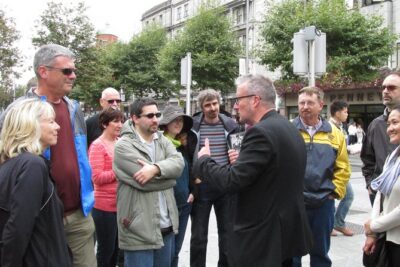
Dublin makes a lot more sense when someone points. This 2-hour small-group walking tour strings together big-city landmarks and smaller, lesser-known stories, with a local guide from Damian Dublin Tours. I love the way the tour mixes famous stops with the kind of background you usually only get from chatting with a Dublin local.
You’ll also appreciate the max 8 people format, which keeps it lively but still personal, plus the quick pace makes it ideal for a first day in town. The only real catch is the walking itself, including cobblestone stretches, so comfy shoes matter if you’re not used to city-center pavement.
In This Review
- Key things to know before you go
- A small-group Dublin intro that hits the city center fast
- Where the walk begins: Chester Beatty Library and Dublin Castle
- Christ Church Cathedral: Vikings, faith, and Handel’s Messiah
- Temple Bar and Ha’penny Bridge: trade, travel, and nightlife street energy
- O’Connell Bridge and the Liffey: 1916 context without the slog
- Trinity College Dublin: the courtyard, famous alumni, and Parliament House views
- St Anne’s Church and Bram Stoker’s Dublin links
- Leinster House, Kildare Street, and the National Museum pass-by moment
- St Stephen’s Green and Grafton Street: city-center views with breathing room
- Powerscourt Townhouse Centre: finish strong and keep exploring
- Price and pacing: is $60.47 worth it?
- Who this Dublin walking tour is best for
- Should you book this Dublin walking tour?
- FAQ
- How long is the Dublin walking tour?
- What is the meeting point for the tour?
- Where does the tour end?
- What is the maximum group size?
- Is admission required for the stops?
- What language is the tour offered in?
- Do I need a printed ticket?
- Are service animals allowed?
- What is the cancellation policy?
Key things to know before you go
- Max 8 people keeps questions easy and the guide’s attention on-point
- Music and short skits add a fun beat to the history stops
- 10 to 15 minute site views give you a fast orientation without eating your whole day
- Ticket-free stops mean you can focus on the walk and the stories
- Central end point at Powerscourt Townhouse Centre makes it easy to keep exploring
A small-group Dublin intro that hits the city center fast
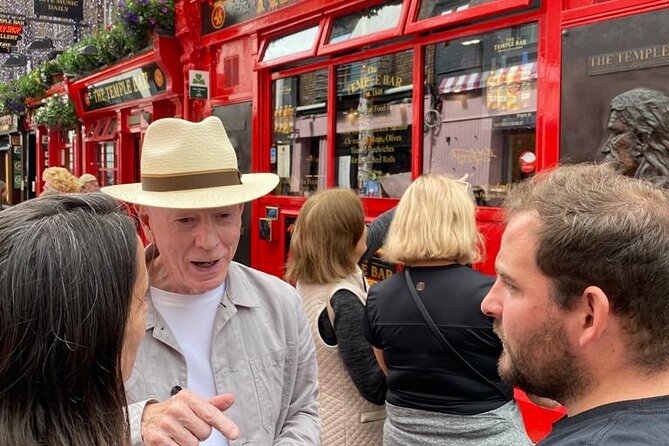
This is the kind of tour I recommend when you want Dublin to click into place quickly. In about two hours, you cover the core walking areas where most visitors spend time anyway. The difference is that someone is explaining what you’re seeing, not just pointing it out.
The small-group size is a big part of the value. With a cap of 8 people, you’re not stuck whispering questions at the back of the line. The guide, Damian McGrath, also comes across as personable and flexible, and that shows up in how people describe the experience: engaging, entertaining, and willing to tailor the pace to the group.
One practical note: it’s “walking tour” walking, not “sit and listen” walking. You’ll cover cobblestone streets and do repeated short transfers between stops. If you hate being on your feet, you’ll feel it by the end. If you like efficient sightseeing, you’ll feel like you got your money’s worth.
More of Dublin crossed at walking pace:
Where the walk begins: Chester Beatty Library and Dublin Castle
The start point is convenient and easy to locate: Dublin Castle and the Chester Beatty Library area (Dubh Linn Garden behind Dublin Castle). It’s a smart opening because it’s historical without requiring you to jump straight into ticket lines.
At the Chester Beatty stop, you’re set up with an outline of how the tour will flow, then you head into the garden setting behind Dublin Castle. One of the key themes here is the origin story behind the name Dublin, plus how the ground and setting shaped early life in the area. You get context early, so later stops land with more meaning.
Right after that, the route continues around Dublin Castle’s grounds. The focus stays on place and beginnings, not on a long lecture. You’re getting that “this is why the city is laid out like this” feeling, which is exactly what makes the rest of the walk easier to enjoy.
A small perk of this start: the areas here are naturally scenic. Even if you’re not a hardcore architecture fan, the garden surroundings help the first 20 minutes feel calmer than a typical city-center scramble.
Christ Church Cathedral: Vikings, faith, and Handel’s Messiah
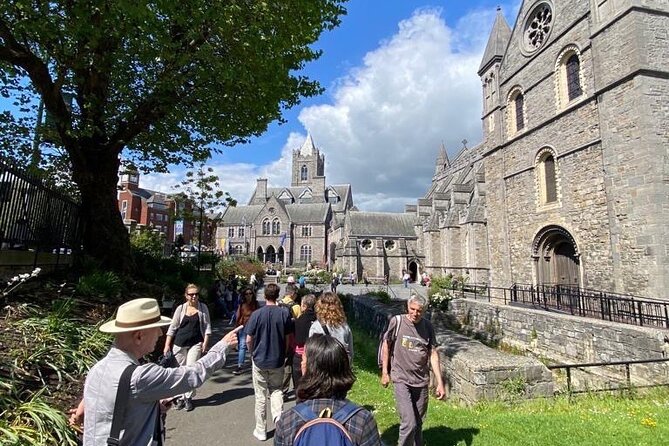
From Dublin Castle, the tour moves toward Christ Church Cathedral, with the guide talking through the deeper layers of Dublin’s development. This is one of those stops where you’ll hear how Ireland’s religious history shaped the city, alongside a more cultural highlight.
The tour also includes a mention of Handel’s Messiah. According to the tour description, you get a view of the place where the work was first performed. That’s a quick, memorable cultural hook, and it helps the cathedral stop feel more than just a photo moment.
Another thread you’ll hear is the story of Dublin reaching back to Viking invasions from the north and the lasting legacy that followed. Even though the walk segments here are short, the guide ties the city’s identity to what you see on the ground, so you’re not just learning dates.
The likely drawback is time. You’re not going inside and spending an hour. This stop works best if you want orientation and story, not if you’re hoping for long, in-depth cathedral time on your schedule.
Temple Bar and Ha’penny Bridge: trade, travel, and nightlife street energy
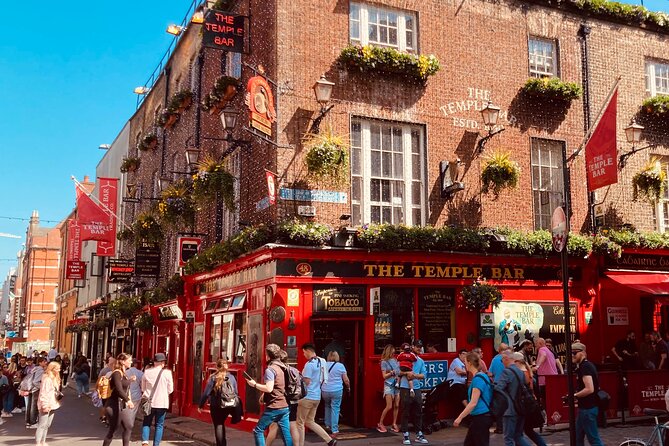
Temple Bar is the next big shift in vibe. You’ll walk through the lively nightlife quarter and learn what it is known for today, including why the area attracts crowds for drinks, conversation, and live music.
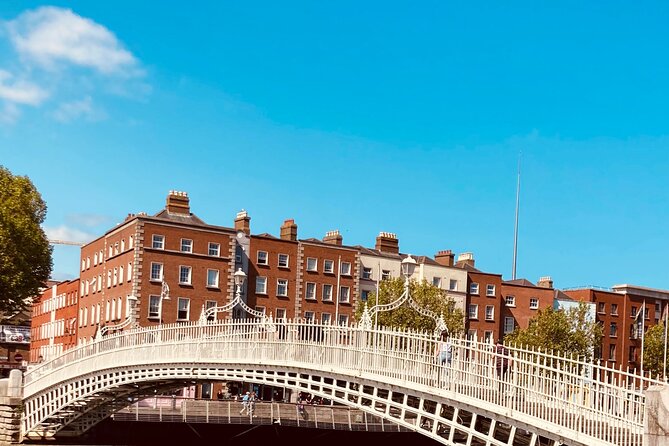
You also get the Ha’penny Bridge moment, described as a key crossing that ties into the city’s foundations. The guide links the pedestrian experience to the bigger history of trade and travel in central Dublin. That’s a good combo because it pairs a landmark you can instantly recognize with an explanation that makes it feel relevant, not random.
Two things I’d highlight here for your planning:
- This is where the tour helps you “find Dublin later.” You’ll know the route and why these streets matter, so your next self-guided walk feels confident.
- It’s also where you might notice crowds. If you prefer quiet, consider going slower when Temple Bar is busy, and use the guide’s story time to stay engaged while people watch.
No matter your style, Ha’penny Bridge is one of those classic Dublin crossings that becomes easier to interpret once you know the city’s older trade logic.
O’Connell Bridge and the Liffey: 1916 context without the slog

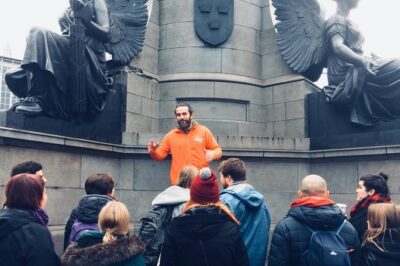
Next comes a very Dublin combo: the river, major political memory, and a bridge you’ll pass anyway. The tour crosses O’Connell Bridge and focuses on the statue of Daniel O’Connell, the Irish parliamentarian associated with that area.
From there, the river Liffey takes center stage. The guide talks about its history and references the famous Liffey Swim. It’s a lighter touch than pure war-history, but still tied to real places and real changes in the city.
The 1916 Easter Rising connection is also part of the framing here. The tour description notes you’re approaching the epicenter of the rebellion, so you get that “this matters” context as you walk by. It’s not a heavy, all-day history commitment, just enough to anchor what later you might read or hear in Dublin.
Practical tip: this is a good time to ask your own questions if anything sparked your interest at earlier stops. Since the tour moves in short segments, your questions can steer what you remember most.
Another way the same day could go from Dublin:
- Dublin to Cliffs of Moher, including Wild Atlantic Way and Galway
★ 5.0 · 23,331 reviews - From Dublin: Cliffs of Moher, Burren & Galway City Day Tour
★ 4.8 · 18,888 reviews - Dublin: Guinness Storehouse Entry Ticket
★ 4.6 · 16,863 reviews - Dublin to Cliffs of Moher, Burren, Wild Atlantic Way, Galway Tour
★ 5.0 · 12,924 reviews
Trinity College Dublin: the courtyard, famous alumni, and Parliament House views
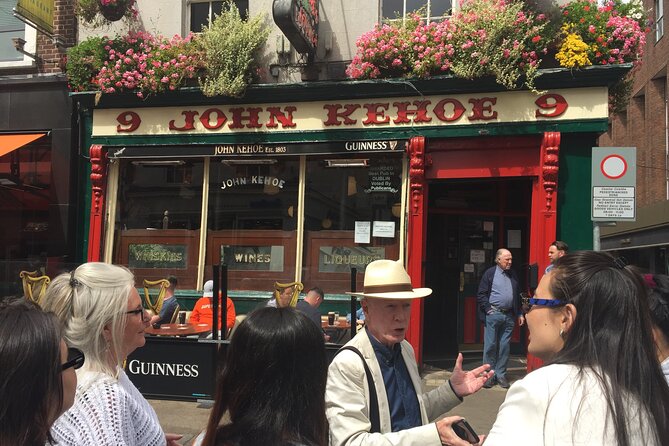
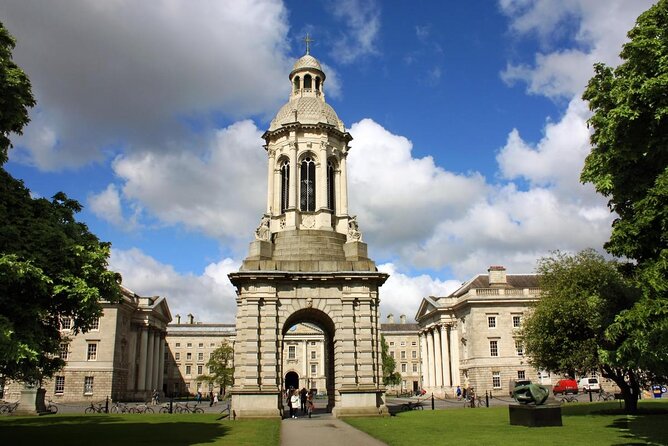
Trinity College Dublin is where the tour gives you a taste of academic prestige without turning into a long campus tour. You’ll view the university as one of the world’s best-known places of learning and hear about notable historical figures who studied there.
A nice detail is that the tour allows you to enter the courtyard of the university grounds and view the original architecture for a few minutes. That’s a sweet spot. You get a real sense of the space, and you get photos, but you’re not trapped for hours.
You’ll also catch a view of Parliament House along Dame Street, referenced as the House of Lords. That adds a politics-and-power layer to the walk without requiring extra museum time.
If you’re planning your days in Dublin, this Trinity stop is useful. It helps you decide whether you want to go back later for a deeper look, or whether a short courtyard taste is enough. For many people, a two-hour orientation like this prevents over-scheduling.
St Anne’s Church and Bram Stoker’s Dublin links
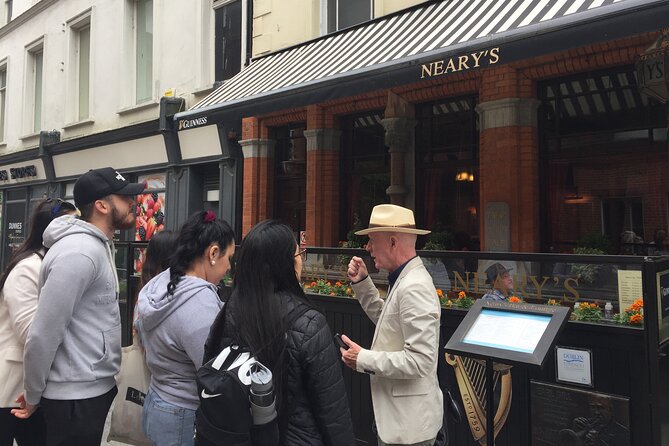
The route then shifts to Dawson Street and St Anne’s Church. Here, the guide highlights a Bram Stoker connection, specifically describing the wedding of the famous Irish writer at this church.
That’s a fun pivot because Dublin isn’t just about one genre of history. You get politics, religion, and major events, and then you get literature and personal story. It’s also the kind of detail that makes Dublin feel specific. Not just old buildings, but old lives.
After that, the tour moves toward Bewley’s Cafe on bustling Grafton Street. Even if you don’t plan to stop for coffee right then, the walk sets you up for an easy self-guided break later, since Grafton Street is a major hub.
One consideration: this section is more about passing through recognizable streets than standing still. If you love long photo sessions, you’ll likely want to return on your own later for deeper time.
Leinster House, Kildare Street, and the National Museum pass-by moment
Leinster House is next, approached via Kildare Street. The tour description frames it as the Irish houses of parliament, and you’ll also hear about its connection to the White House in Washington, DC, along with some of its history.
That comparison angle is smart for visitors because it gives you a mental model. When you understand how one building type influenced another, you start noticing details faster on your own.
You’ll also pass along the National Museum of Archaeology. Even though you’re not spending time inside here, it helps you file away the museum as a place to visit if your interests lean toward objects and material culture.
If you’re short on time in Dublin, these “pass and learn” moments are valuable because they keep you from missing major institutions just because you didn’t plan perfectly.
St Stephen’s Green and Grafton Street: city-center views with breathing room
Then you get St Stephen’s Green, with time tied to a broader stretch that includes Grafton Street and the Royal College of Surgeons.
The tour description also mentions a glance at Georgian-era architecture. That’s a useful phrase for what you’re doing here. You’re not taking a deep architecture course. You’re learning how to spot the look of a period, so when you later walk on your own, you can recognize what you’re seeing.
St Stephen’s Green is also the rare moment on a walking tour that gives you something closer to a breather. It’s a city park in the center, and that matters for pacing. After long stretches of streets and landmarks, having a park stop can make the city feel less like a checklist and more like a place you can live in.
Powerscourt Townhouse Centre: finish strong and keep exploring
The tour ends at Powerscourt Townhouse Centre, near South William Street and Clarendon Street. The description calls it an architectural highlight in the middle of the city, and it also points to the shopping and dining options housed within it.
This ending matters more than it sounds. A good tour doesn’t just dump you somewhere random. Powerscourt’s central location helps you continue your day easily, whether you want to browse shops, grab a café, or just keep walking in the same general area.
If you’re the type who likes to end early with a plan still in motion, this is a decent finish point. It gives you a mental “chapter ending” after you’ve learned how the main Dublin core pieces fit together.
Price and pacing: is $60.47 worth it?
At $60.47 per person for about two hours, you’re paying for a guided orientation plus a smart route through major Dublin sites. The value gets better because the stop list indicates ticket-free admissions for the points you visit. That means you’re not turning the tour into a budget spreadsheet of fees and lines.
You’re also getting structure that helps you see more without feeling exhausted in a single block. Many people like that it’s fast-paced but not chaotic, and that it works well on the first day of a trip to get bearings.
The small-group cap adds value too. With a maximum of 8 travelers, you spend less time waiting and more time asking. That’s not just a comfort perk. It also changes what you remember, because you can personalize the history to your own interests.
As for pacing, plan for a steady walk and short stops. If you like slow travel, you might feel rushed. If you like a concentrated overview that you can build on afterward, this format is a good match.
Who this Dublin walking tour is best for
This tour fits best if you want:
- A first-day Dublin orientation that covers the center clearly
- A guided narrative that connects landmarks to bigger stories like Vikings, Handel, the Easter Rising, and Bram Stoker
- A compact plan with short stops, so you can still do other things after
It’s also a strong choice for couples and small families who want everyone to stay engaged. People have described the guide as friendly and the pace as good, with enough room for questions and personalization.
If you have mobility concerns, this is a question worth taking seriously. The route includes cobblestones and multiple short walks. Still, one review specifically mentions Damian being considerate toward a person with a hip problem. That suggests the guide can adjust to real needs, which is reassuring.
Should you book this Dublin walking tour?
Yes, if you want a compact, story-led introduction to central Dublin in about two hours. The small group size, Damian McGrath’s engaging presentation style, and the mix of major sites with pointed “why it matters” context make it a solid use of time.
Skip it only if you want long stays at each landmark. This is built for walking, brief views, and learning on the move, not for slow, detailed museum-style exploration.
FAQ
How long is the Dublin walking tour?
It runs for about 2 hours.
What is the meeting point for the tour?
The tour starts at Dublin Castle, Chester Beatty Library, Castle St, Dublin 2, D02 AD92, Ireland.
Where does the tour end?
It ends at Powerscourt Townhouse Centre, 59 William St S, Centre, Dublin 2, D02 HF95, Ireland.
What is the maximum group size?
The tour has a maximum of 8 travelers.
Is admission required for the stops?
The listed stops show admission as ticket free.
What language is the tour offered in?
The tour is offered in English.
Do I need a printed ticket?
No, the tour uses a mobile ticket.
Are service animals allowed?
Yes, service animals are allowed.
What is the cancellation policy?
Free cancellation is available. You can cancel up to 24 hours in advance for a full refund. If you cancel less than 24 hours before the start time, the amount paid is not refunded.
Just in from the Liffey side






Walking Tours, compared.
Dublin Highlights and Hidden Gems Guided Walking Tour
Read our review →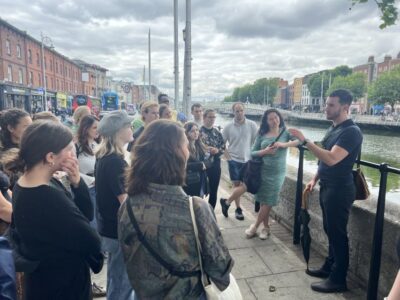
90 Minute Dublin Walking tour and Sightseeing tips
Read our review →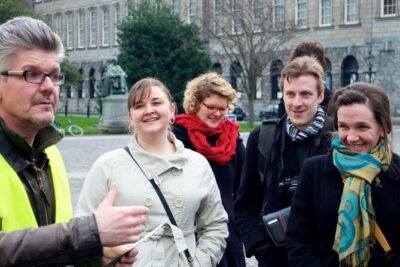

Historical 2-Hour Guided Walking Tour of Dublin
Read our review →
Dublin Traditional Irish 3 Course Meal Walking Tour with Local
Read our review →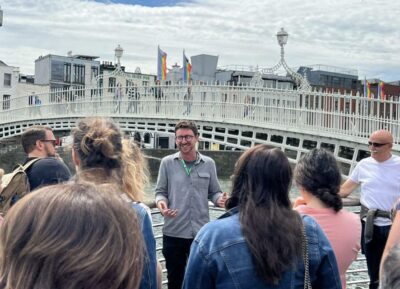
Browse the lists this tour appears in