
Reviewed · WALKING TOURS
Small Group Bucket List Sights Walking Tour with a Local Guide
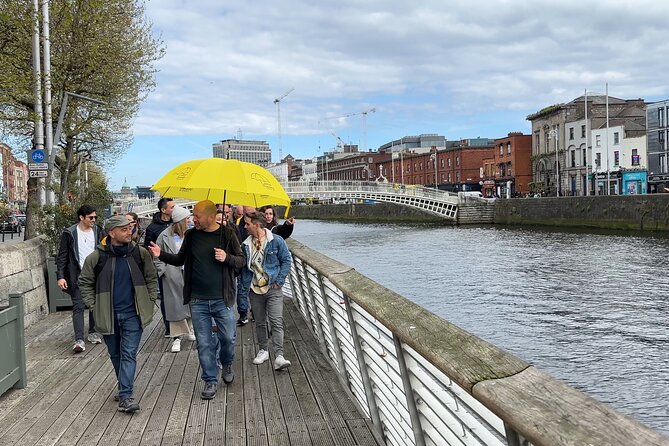
Dublin in two hours, minus the guesswork. This small-group walking tour gives you a street-level feel for the city, with a local guide tying together the big landmarks and the people and politics behind them. You get a smooth, doable route through the historic core without needing to plan each turn.
I especially like the smart pacing and frequent Q and A. It is not just facts dumped while you walk, it is a guided explanation that helps you connect each stop to what Dublin became, and what it still is. The other standout for me is how the tour uses the city itself as a timeline, from Viking arrivals at Long Boat moorings to modern identity along the river and bridges.
One thing to consider: several of the major sights are outside views, and key venues like the cathedrals and Dublin Castle are not included if you want to go in. It is a great orientation walk, but it is not a ticketed, inside-everything tour.
In This Review
- Key Points You’ll Care About
- A Two-Hour Dublin Primer Built for First-Time Visitors
- Value for Money: What You Really Get for $20.52
- Where You Start, How You End, and Why That Helps
- Christ Church Cathedral: Viking Roots to Whiskey-Era Stone
- St Patrick’s Cathedral and the Guinness Renovation Story
- Dubh Linn Gardens and the Chester Beatty Library Area
- Dublin Castle and City Hall: Power, Government, and a Flag Lesson
- Temple Bar: Tudor Layout, Old Streets, and Modern Nightlife
- Millennium Bridge Views: Celts East, Silicon Docks West
- Ha’penny Bridge: The Duke of Wellington and the Shaking Problem
- Merchant’s Arch and College Green: Contrasts That Explain Dublin
- Molly Malone Statue and Trinity College: A Perfect Ending Point
- Who This Walk Is For (and Who Might Want a Different Plan)
- My Booking Recommendation: Should You Book This One?
- FAQ
- How long is the walking tour?
- Where does the tour start and end?
- What time does the tour begin?
- What is included in the price?
- Are admission tickets included for the major buildings?
- Is the tour group small?
- What language is the tour offered in?
- Is the meeting point near public transportation?
- Are service animals allowed?
- Can I cancel for a full refund?
Key Points You’ll Care About
- Small group size (max 25) makes questions easy and keeps the energy friendly.
- Two cathedral stops plus Dublin Castle give you the “power and faith” backbone of central Dublin.
- Viking, Norman, and 19th-century renovations show up repeatedly, so the city feels like one connected story.
- River-crossing viewpoints at Millennium Bridge and Ha’penny Bridge help you orient fast.
- Practical local context, including what the national flag stands for, helps you understand more than just buildings.
A Two-Hour Dublin Primer Built for First-Time Visitors
This is the kind of Dublin walk that works even if you have only a short trip, or you want to plan the rest of your days with confidence. You start in the historic river area, then move outward through the medieval-and-beyond core. The route is designed to give you both “wow” moments and useful context, so you understand where you are standing and why it matters.
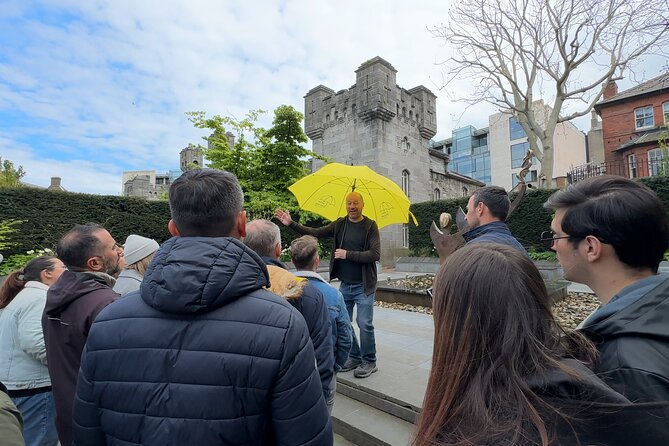
The small-group format matters. With a max of 25 people, you are not stuck behind a crowd wall. You can ask questions, and your guide can answer in a way that makes the next stop click instead of feeling like unrelated sightseeing.
More of Dublin crossed at walking pace:
Value for Money: What You Really Get for $20.52
At $20.52 per person for about two hours, the cost is reasonable because you are paying for more than walking between famous places. You are paying for a local guide who explains how Dublin’s identity formed, and who helps you connect architecture, religion, and government into one story.
Also, the tour is structured to keep you moving through high-impact locations without extra ticket costs for every single stop. Some locations are free to stand in and look around, like the garden area and several public streetscapes. But it is still smart to plan for optional paid entry if you want to go inside places like the cathedrals or Dublin Castle, since admission is not included for those stops.
If you like your sightseeing with a purpose, this is a good deal. If you want guaranteed interior access to everything, you may feel the difference right away.
Where You Start, How You End, and Why That Helps
You begin at 121 R137, Wood Quay, Dublin, and your walk ends at Fox House, 37 College Green, Dublin 2, right outside the front gate of Trinity College. This matters because it is easy to turn your tour into a seamless follow-up plan.
The tour also starts at 10:00 am, which is a nice time window. You get your orientation early, then you can use the afternoon for deeper museum time, a pub visit, or whichever neighborhood sounds most fun once you understand the city layout.
You’ll receive a mobile ticket, and the experience runs in English. Service animals are allowed, and it is listed as suitable for most travelers. It is also near public transportation, which is helpful if you are already moving through Dublin by bus or tram.
Christ Church Cathedral: Viking Roots to Whiskey-Era Stone
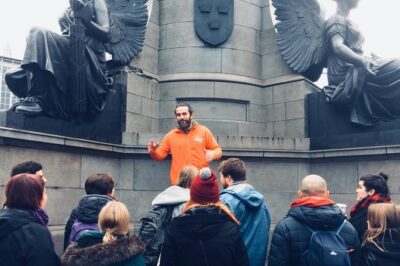
Your first big stop is Christ Church Cathedral, and the guide’s theme here is change over time. It started as a wooden structure associated with the Vikings, then Normans recast it in stone. Later, the cathedral was renovated in the 19th century using money described as whiskey money, a reminder that Dublin’s history is never only medieval, it is also tied to wealth and industry.
Why you’ll like it: this is a cathedral stop that feels like a history lesson you can see. The mix of eras helps you understand why Dublin’s buildings look the way they do, and why “old” in Ireland usually means more than one period stacked together.
A small consideration: admission is not included here. Even if you are not going inside, you still get an excellent payoff from the exterior and the explanation behind it. If you do want to enter, plan it as an add-on after you see what you are getting.
St Patrick’s Cathedral and the Guinness Renovation Story
Next up is St Patrick’s Cathedral, named after Ireland’s patron saint who is traditionally linked with driving snakes off the island. This stop brings you into another layer of Dublin’s religious identity and national mythology.
The standout detail is the renovation story tied to the Guinness family, specifically Sir Benjamin Lee Guinness in the 1860s. That matters because it connects faith to the people who funded major building work, shaping what visitors think of as “classic Dublin” for centuries to come.
Why it works on a short walk: it reinforces the pattern you are already seeing at Christ Church. The city keeps getting rebuilt, and money and power shape what survives. You finish this segment with a clearer sense of how Dublin balances legend, religious tradition, and real-world influence.
Again, admission is not included, so treat this as a strong exterior and storytelling stop unless you choose to pay for entry separately.
A few other Liffey-side days to consider
- Dublin to Glendalough, Wicklow and Kilkenny Full Day Guided Tour
★ 5.0 · 4,895 reviews - Dublin Book of Kells, Castle and Molly Malone Statue Guided Tour
★ 4.5 · 3,825 reviews - The Little Museum of Dublin Famous Guided Tour
★ 5.0 · 2,948 reviews - Dublin Jameson Distillery and Guinness Storehouse Guided Tour
★ 4.5 · 2,608 reviews
Dubh Linn Gardens and the Chester Beatty Library Area
After the cathedrals, you shift to Dubh Linn Gardens, described as a secluded spot tied to the Chester Beatty Library nearby. This is where the walk slows down emotionally, even if the pace stays steady.
The Viking connection is the headline: the gardens connect to where Vikings moored their longboats when they arrived in Dublin in the 9th century. This is a clever break in tone because you go from dramatic stone religious architecture to a calmer landscape that still points to early arrival and settlement.
Why you’ll like it: you get a chance to reset. The garden setting also helps the guide’s story feel grounded, not abstract.
Good news for value: admission is listed as free here, so you can enjoy the surroundings without thinking about ticket costs.
Dublin Castle and City Hall: Power, Government, and a Flag Lesson
Then comes Dublin Castle, described as the center of British government in Ireland for 700 years. That is a huge chunk of time, and it helps explain why the site matters so much. You also get a sense of the architectural blend, described as medieval, Georgian, Gothic, and modern.
If you are curious about how power changes a city, this is your anchor stop. It turns Dublin from a set of pretty sights into a place shaped by administration, control, and political shifts.
Right beside it, near City Hall and outside the front gate of the castle, the guide explains the significance of the national flag: peace between Catholic and Protestant, North and South. This is one of those moments where a landmark lesson becomes real-world understanding. You are standing in a location that sits at the crossroads of identity and history, and the explanation gives that context meaning beyond symbolism.
Consideration: admission is not included for Dublin Castle itself, so focus on the outdoor views and the guide’s political and social framing unless you plan additional paid entry.
Temple Bar: Tudor Layout, Old Streets, and Modern Nightlife
You move to Temple Bar, one of Dublin’s oldest areas, now famous for pubs and nightlife. The tour keeps it from becoming only a “party zone” stop by explaining how the area was laid out during the Tudor conquest of Ireland.
Why this is useful: if you go to Temple Bar without context, you can miss the fact that the street pattern and neighborhood form are historical artifacts. With the guide’s explanation, you understand Temple Bar as a location where governance, change, and daily life overlapped.
Admission is listed as free for this stop, and for a neighborhood like this, that makes sense. You are walking streets and looking at the city’s face, not paying to enter something.
Potential drawback: because Temple Bar is well known, it can feel busy. If you want quiet, treat this as a “get the vibe, then move on” segment rather than expecting a tranquil pause.
Millennium Bridge Views: Celts East, Silicon Docks West
Next is Millennium Bridge, where you cross from the south to the north over the River Liffey. This is not just a crossing. The guide frames it like a long-distance viewpoint onto Dublin’s layered timeline.
From the east side, you hear about where Celts built their settlement about 2,100 years ago. From the west side, the story shifts to how Americans inspired the Silicon Docks about 21 years ago. In one bridge moment, you get ancient continuity and modern reinvention.
Why I like this part of the walk: it helps you orient yourself geographically. The river is Dublin’s spine, and a guided viewpoint gives you a mental map you can use later when you explore on your own.
Admission is not included for this stop, but that is normal for a bridge viewpoint. You get the payoff from the perspective and explanation, not from ticketed entry.
Ha’penny Bridge: The Duke of Wellington and the Shaking Problem
You cross back to the south over Ha’penny Bridge, one of the icons you likely have seen in photos. The tour adds two specific bits of character.
First, it notes the bridge was originally called after the Duke of Wellington. Second, it tells you you can thank Harland and Wolff that the bridge no longer shakes when you walk over it. That kind of practical engineering story makes the city feel lived in, not just photographed.
Why this matters: it gives you something memorable to tell yourself while you are standing there, which makes your later self-guided exploration easier. You will know where you are relative to the river’s bends, and you will understand why this crossing is famous.
No admission is included here, but you also do not need it. The value is in the story and the view.
Merchant’s Arch and College Green: Contrasts That Explain Dublin
Then you reach Merchant’s Arch, where the city’s contrasts come through. The explanation focuses on how Dublin can look one way at one end of a street and completely different at the other, with Crown Alley and the brutalist Stephenson Tower at the far end.
This stop is a reminder that Dublin is not frozen in “old Europe.” It is an evolving city, and the architecture tells you that if you know how to read it.
From there you shift to College Green, a key government and finance area. The tour highlights the buildings around it and explains that this was the center of government and finance in a city that considered itself among the major players in the empire.
Admission is listed as free for this stop, which fits the setting. You are outside, learning the city’s layout while still taking in the buildings.
If you like political history as much as architecture, College Green is where the walk makes the most sense. It ties the earlier Dublin Castle message to what you can see in the streets now.
Molly Malone Statue and Trinity College: A Perfect Ending Point
You wrap up with Molly Malone Statue. The tour treats her as Dublin’s favorite daughter, a friendly, informal stop that keeps the walk from feeling like a lecture the whole way through. If you want an easy photo moment and a quick cultural reference, this is it.
Then you finish outside Trinity College Dublin, at Fox House on College Green. The guide points you to the fact that Trinity is home to the famous Book of Kells exhibition. Even if you do not go inside right away, this gives you a clear next step if you want a high-profile cultural visit.
Admission is listed as not included for Trinity College in this tour segment, so consider it an orientation ending plus a useful pointer for what to tackle next.
Who This Walk Is For (and Who Might Want a Different Plan)
This walking tour is ideal if you:
- want a fast orientation to central Dublin with minimal guesswork
- enjoy history that connects streets to government, religion, and identity
- like small groups where you can ask questions and get answers
It may be less ideal if you:
- want guaranteed inside visits to cathedrals and Dublin Castle
- prefer a slow, sit-down tour with lots of time at one museum
My Booking Recommendation: Should You Book This One?
Yes, I would book this if your goal is to understand Dublin, not just check boxes. For $20.52 and about two hours, you get a high-impact route through Christ Church, St Patrick’s, Dublin Castle, Temple Bar, two major bridges, College Green, and Trinity’s area, with a guide who turns those points into a coherent story.
Book it especially if you are short on time and want a plan that makes the rest of your trip easier. Also, with the tour commonly booked around 61 days ahead and limited to a maximum of 25 people, it makes sense to lock it in early if your dates are fixed. If you are the kind of traveler who likes to come home with both photos and a clearer sense of place, this is a strong way to start.
FAQ
How long is the walking tour?
The tour runs for about 2 hours.
Where does the tour start and end?
It starts at 121 R137, Wood Quay, Dublin, Ireland, and ends at Fox House, 37 College Green, Dublin 2, Ireland, outside the front gate of Trinity College.
What time does the tour begin?
The start time is 10:00 am.
What is included in the price?
The price is $20.52 per person, and it is a guided walking tour with a mobile ticket.
Are admission tickets included for the major buildings?
No. Admission is not included for stops like Christ Church Cathedral, St Patrick’s Cathedral, and Dublin Castle. Some areas are free, such as Dubh Linn Gardens, City Hall, Temple Bar, and College Green.
Is the tour group small?
Yes. The tour has a maximum of 25 travelers.
What language is the tour offered in?
The tour is offered in English.
Is the meeting point near public transportation?
Yes, it is listed as near public transportation.
Are service animals allowed?
Yes, service animals are allowed.
Can I cancel for a full refund?
Free cancellation is available up to 24 hours in advance for a full refund. If you cancel less than 24 hours before the start time, the amount paid will not be refunded.
Just in from the Liffey side






Walking Tours, compared.
Dublin Highlights and Hidden Gems Guided Walking Tour
Read our review →
90 Minute Dublin Walking tour and Sightseeing tips
Read our review →

Historical 2-Hour Guided Walking Tour of Dublin
Read our review →
Dublin Traditional Irish 3 Course Meal Walking Tour with Local
Read our review →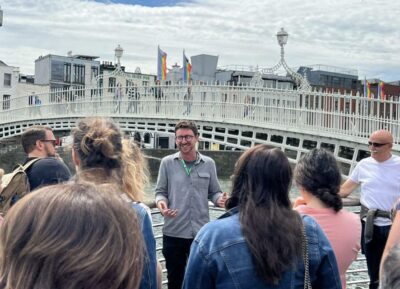
Browse the lists this tour appears in