
Reviewed · WALKING TOURS
Dublin: Sightseeing Walking Tour in German
Dublin feels instant when you walk it with a guide. I love how this small-group route gives you major landmarks fast, then slows down for the kind of stories that make the city feel real. You also get a German-speaking guide who explains the what and the why in a way that stays easy to follow.
I particularly like that the walk covers both sides of the River Liffey, so you are not stuck in one postcard zone. You will see big names like Dublin Castle, City Hall, O’Connell Street, and Trinity College, plus plenty of offbeat stops that even people who have lived here might miss.
One consideration: most visits are external only, so you will not be going inside the major sites as part of the tour. If you want interiors, plan to return on your own after the walk ends.
In This Review
- Key highlights to look forward to
- Why this 2.5-hour walk is a smart Dublin first day
- Meeting at the Tree of Gold on Dame Street
- From the Viking and Medieval quarter to Dublin Castle and Christ Church
- Temple Bar corners, Fishamble Street, and the quick route across town
- Italian Quarter streets and St Mary’s, now a famous café or bar
- O’Connell Street and the 1916 Rising story at the General Post Office
- The former Parliament House and your finish outside Trinity College
- The quirky Dublin details that make the stories stick
- Price and value for a German-speaking guide at $34
- Who should book this Dublin German walking tour
- Should you book it?
- FAQ
- Is the tour in German?
- How long is the walking tour?
- Are the stops inside attractions?
- Where do you meet the guide?
- What are the main places you will see?
- Is the tour wheelchair accessible?
Key highlights to look forward to
- Small-group pacing that stays relaxed while still hitting Dublin icons
- German-speaking guidance with clear, friendly explanations
- Two sides of the River Liffey, from the medieval lanes to the northside streets
- A stop-by-stop storyline tied to 1916 and Ireland’s independence transition
- Quirky, practical surprises like a wobbly bridge tale and unusual photo-worthy stops
- Trinity College area finish with the Book of Kells as your last big landmark
Why this 2.5-hour walk is a smart Dublin first day
This tour is built for getting your bearings fast, without turning Dublin into a checklist. In about two and a half hours, you cover central sights in a logical flow, so you understand where things are and how the city shaped itself over time.
What I like most is the balance between famous places and the small weird details around them. You get plenty of landmarks to anchor your trip, and you also learn the kinds of human stories that make the city feel less like architecture and more like lived life.
The small-group size helps here. It keeps the pace comfortable and gives the guide room to answer questions without turning everything into a rush-job. If you value a calm, guided walk, this format is a good fit.
More of Dublin crossed at walking pace:
Meeting at the Tree of Gold on Dame Street
You start at the Tree of Gold statue, called Crann an Óir, at Central Plaza on Dame Street, Dublin 2, at the corner of Dame Street and Fownes Street Upper. It is a clear, central meeting point, and it makes sense because the route is designed to move out from the city center.
The tour is wheelchair accessible, which matters in a city where cobblestones and turns can be a challenge. Even so, bring comfy shoes. You are walking for a sustained stretch, including transitions between streets and across the river area.
Since the visits are external only, your timing does not depend on entrance lines. That is a real advantage when Dublin weather is unpredictable, or when you want to keep your day moving.
From the Viking and Medieval quarter to Dublin Castle and Christ Church
After you get going on Dame Street, the route winds through the former Viking and Medieval quarter. This is where Dublin starts to make sense, because you are surrounded by layers of older city fabric rather than only later streetscapes.
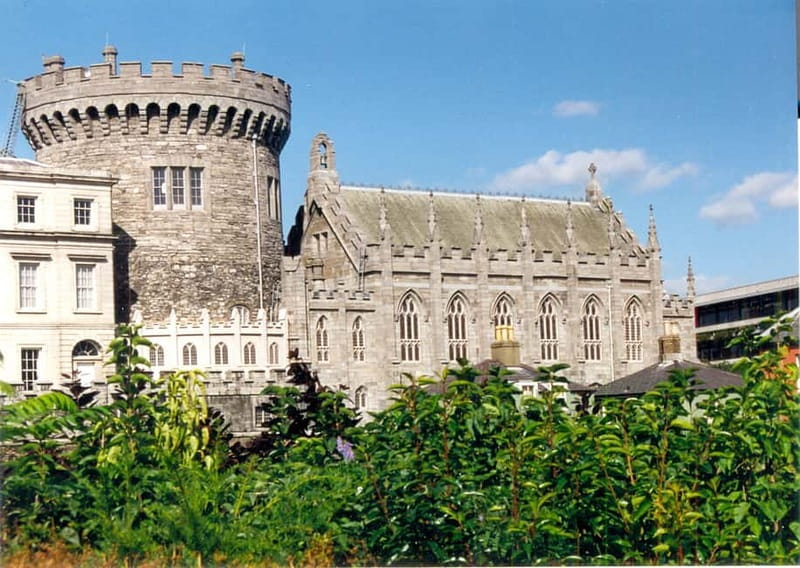
You will pass Dublin Castle, with its grounds and gardens. Even from the outside, it is a strong anchor point because it signals where power and administration clustered for centuries. Your guide also connects the site to the wider story of Dublin, so it is not just name-dropping.
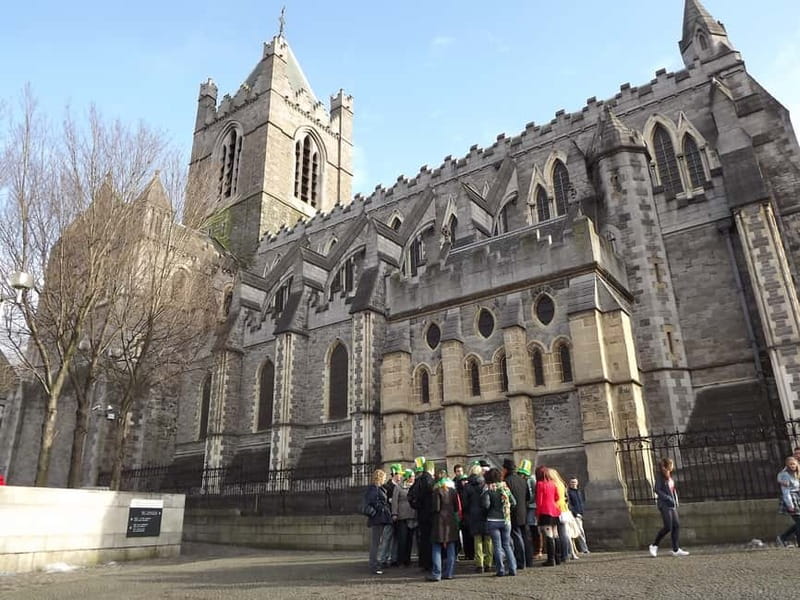
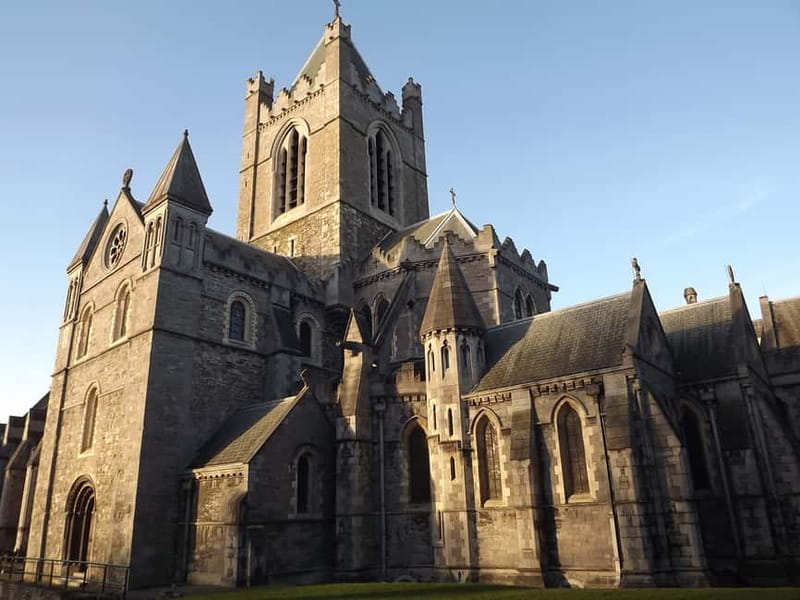
Next comes Christ Church Cathedral. Again, the focus is on what you can see from the street, but the explanation helps you read the setting instead of just photographing it. The cathedral area also sets you up for narrow lanes and smaller streets that feel more medieval than modern.
If you like walking through older city texture, this section does the job quickly. If you were hoping for a lot of inside sightseeing, keep expectations aligned, since the emphasis is exterior views.
Temple Bar corners, Fishamble Street, and the quick route across town
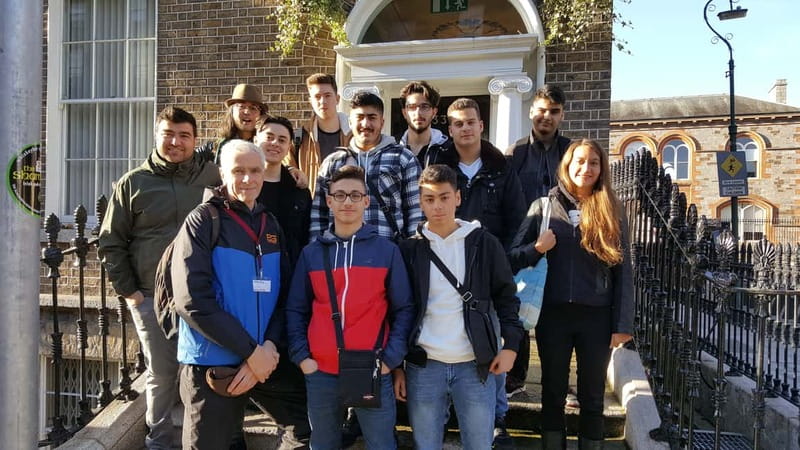
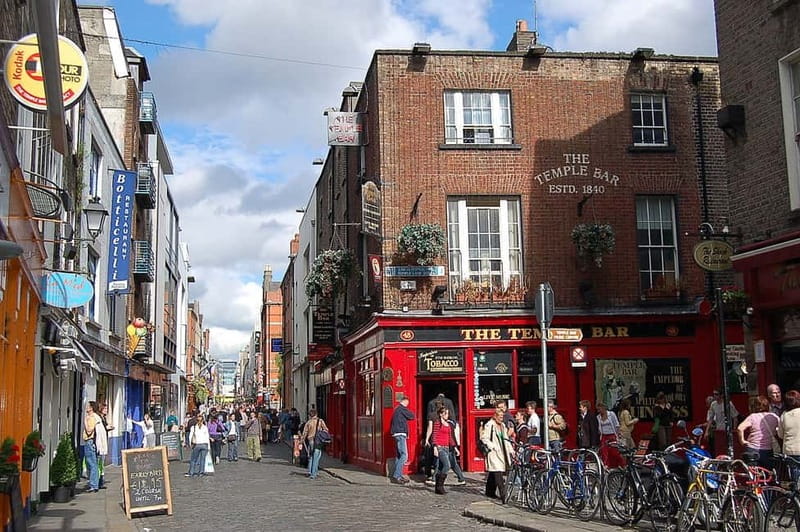
Once you leave the medieval core, you swing around toward the Temple Bar area. You pass Fishamble Street and Smock Alley, then reach Meeting House Square in Temple Bar. This is the zone where Dublin starts to look like a living stage set, but the tour keeps it grounded with context.
There is a neat trick the guide uses here: you get orientation first, then a story that helps you remember what you are looking at. That matters in a walk like this, because without a thread, the city can feel like a string of stops.
You also cross toward the River Liffey, reaching Millennium Bridge. Even if you are not spending time in the river walk spaces, Millennium Bridge is an easy landmark to spot and helps you understand the city’s split. The river becomes a mental divider, and suddenly northside vs southside feels more than a map label.
Italian Quarter streets and St Mary’s, now a famous café or bar
After the river, you head into the Italian Quarter. This part of the tour is more about how neighborhoods shift in feel than about one single monument.
As you move along Henry & Moore Streets and nearby areas, you will also come to St Mary’s Church, which is now a famous café or bar. That is a classic Dublin surprise: buildings change use over time, but the bones remain. You can see how the city keeps its character while repurposing space for modern life.
If you like architecture, even at a distance, this section helps you notice details you might otherwise skip: doorways, street rhythm, and how a “former” space becomes something social again.
Because the tour stays external, you are not being rushed inside. Instead, you get a chance to look, walk, and listen, which is a nice way to keep things comfortable.
Another way the same day could go from Dublin:
- Dublin to Cliffs of Moher, including Wild Atlantic Way and Galway
★ 5.0 · 23,331 reviews - From Dublin: Cliffs of Moher, Burren & Galway City Day Tour
★ 4.8 · 18,888 reviews - Dublin: Guinness Storehouse Entry Ticket
★ 4.6 · 16,863 reviews - Dublin to Cliffs of Moher, Burren, Wild Atlantic Way, Galway Tour
★ 5.0 · 12,924 reviews
O’Connell Street and the 1916 Rising story at the General Post Office
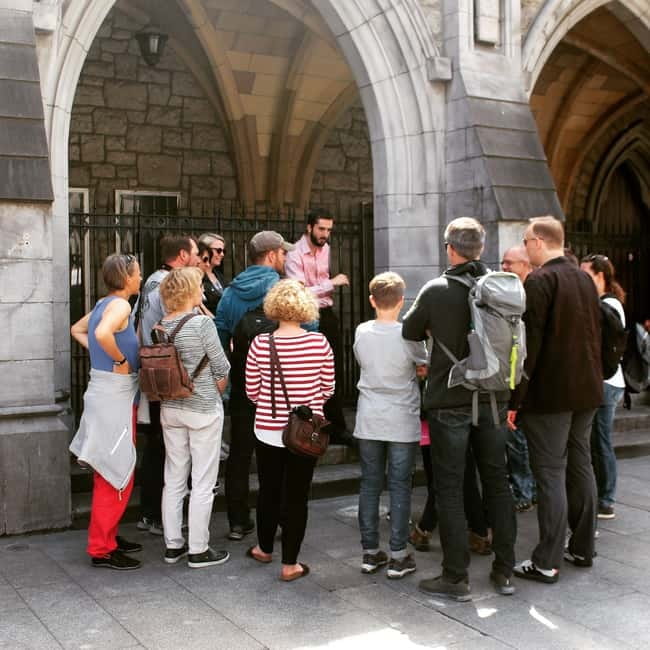
O’Connell Street is one of the clearest “main artery” streets in central Dublin, and the tour uses it well. You pass O’Connell Street, then you go by the General Post Office, which is a key site tied to the 1916 Rising.
Here is where the guide’s storytelling turns a landmark into a lesson. The tour explains that the GPO housed the headquarters of the rebels, and that the aftermath caused major destruction, including almost the entire street and surrounds. Whether you know the history already or not, the walk makes it tangible because you can see how central that street is.
You also reach the O’Connell Monument area. It is a strong stop for understanding how memorials and public space shape how a city tells its story to newcomers.
A practical tip for this section: keep an eye on where your group is stopping to listen. O’Connell Street is active, so it helps to plan your photos quickly, then rejoin the guide when the group tightens up.
The former Parliament House and your finish outside Trinity College
You pass the former Parliament House, now the Bank of Ireland. This is one of those spots where a modern banking building sits on top of a much older political role. The guide’s framing helps you understand how power moved through these central locations over time.
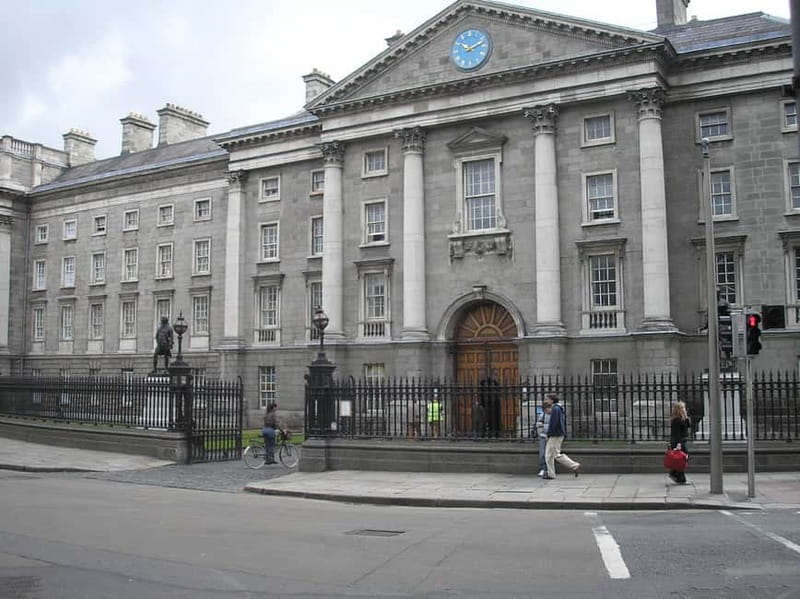
Then you finish around Trinity College with its famed Book of Kells outside. You will not be visiting inside as part of the tour, but finishing here is smart. It gives you a major Dublin “want to return” anchor at the end of the walk.
The route is described as ending back at the meeting point area as well, so expect a closing stretch that ties back to central Dublin. Either way, the important part is that your last big visual is Trinity, which makes the entire route feel like it has a destination.
The quirky Dublin details that make the stories stick
This tour earns its high rating because the guide does not just hand you dates. You get odd, memorable details that connect places to humor and identity, which is exactly how people remember cities.
During the walk, you are introduced to things like:
- Dublin’s first but now defunct full-time cinema
- A church that is not a church
- A former Lisbon tram now serving as a café
- A funny representation of a da Vinci painting
- The bounce and story behind a wobbly bridge
- The tale of a post-box connected to Ireland’s transition to independence
- A stark representation of a very famous 18th century composer
Even if you do not care about every specific detail, the pattern is useful. It trains you to look at buildings and streets as clues. That helps you explore more confidently after the tour, because you start noticing the same kind of human touches everywhere.
This is one of the best reasons to do a guided walk early. You end with more than photos. You end with a way of reading Dublin.
Price and value for a German-speaking guide at $34
At $34 per person for a two and a half hour walking tour, the value comes from what you get for the time. You are paying for a professional, well trained guide, plus a route design that links major landmarks with lesser-known street-level surprises.
The pricing makes more sense when you compare it to paying separately for individual experiences just to learn orientation. With this walk, you get a big geographic sweep, and you get explanations you can use while planning the rest of your trip.
Also, you are not stuck waiting in lines for interiors. Since the tour focuses on external viewing, it keeps the time efficient. That matters if you only have a day or two in Dublin.
If you are solo, the small-group format still gives you the benefit of guidance without turning the experience into a crowded bus ride.
Who should book this Dublin German walking tour
Book it if you:
- Want an easy first Dublin walk that covers the core sights in central areas
- Prefer a calm small-group pace over a sprint between attractions
- Would enjoy a guide who explains in German and ties history to everyday city details
- Like learning through stories, including the funny and unusual stuff
Skip it if you:
- Want mostly indoor visits and guaranteed ticketed entry to major attractions
- Are looking for a long, slow neighborhood deep study where you spend lots of time sitting in one place
Should you book it?
If your goal is to get oriented and learn Dublin without spending the whole day on museums, I think this is a strong choice. The combination of landmark coverage and story-led surprises makes it feel worth the time, even though everything is external.
I would book it especially if you like guided walking and you want a German-speaking experience that is friendly and easy to follow. Just go in knowing you are viewing from the outside, then use what you learn to decide what to see indoors later.
FAQ
Is the tour in German?
Yes. The live tour guide speaks German.
How long is the walking tour?
It runs for 2.5 hours.
Are the stops inside attractions?
All visits are external. You will have opportunities for visits after the tour, if you choose to go inside on your own.
Where do you meet the guide?
You meet at the Tree of Gold statue, Crann an Óir, Central Plaza, Dame Street Dublin 2, at the corner of Dame Street and Fownes Street Upper.
What are the main places you will see?
You will pass Dublin Castle grounds and gardens, City Hall, Christ Church Cathedral, Fishamble Street and Smock Alley, Meeting House Square in Temple Bar, Millennium Bridge and the River Liffey, the Italian Quarter, St Mary’s Church (now a famous café or bar), Henry and Moore Streets, O’Connell Street, the General Post Office, O’Connell Monument, and the former Parliament House (Bank of Ireland), finishing around Trinity College with the Book of Kells outside.
Is the tour wheelchair accessible?
Yes, the tour is listed as wheelchair accessible.
Just in from the Liffey side




Walking Tours, compared.
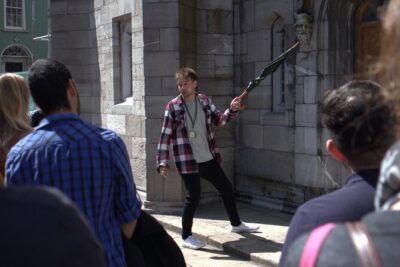
Dublin Highlights and Hidden Gems Guided Walking Tour
Read our review →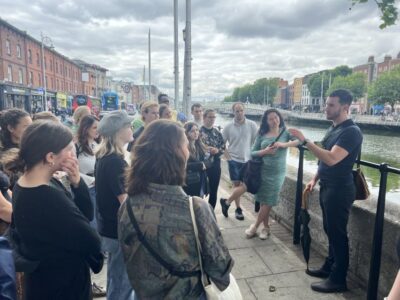
90 Minute Dublin Walking tour and Sightseeing tips
Read our review →

Historical 2-Hour Guided Walking Tour of Dublin
Read our review →
Dublin Traditional Irish 3 Course Meal Walking Tour with Local
Read our review →
Browse the lists this tour appears in