
Reviewed · HISTORICAL TOURS
Dublin: Macabre History Walking Tour
Dublin has a darker side. This macabre history walking tour takes you off the main lanes near O’Connell Street, with stops that range from famous figures like Cuchulainn to grim Dublin trade and punishment. I love the way the route crosses both sides of the river while still feeling focused, and I love how guides like Peter and Rob turn the stories into clear scenes you can picture as you walk.
One thing to plan for: this is not a kid-friendly tour (it’s not suitable for children under 18), and while it is dark, it may not feel nonstop gory to everyone. If you want constant blood-and-bones shock value, you might find it a bit more story-driven than stomach-churning.
In This Review
- Key highlights to look for
- Meeting Under the Spire, and Finding the Yellow Umbrella
- Why This 2-Hour Walk Works: Pace, Structure, and Your Time Budget
- Old City Streets and the River: Dublin on Both Sides
- Cuchulainn’s Death Statue: When Irish Myth Gets Grim
- Medieval Quarantines and Public Executions: Fear in Public Places
- Grave Robbing by the Mortuary: The Dark Side of Science and Survival
- Mummified Corpses and the Urban Detail Your Eyes Miss
- Legless Serial Killer and Man-Eating Rats: Legends With Real City Energy
- The Finish by the Cathedral: Dublin’s Famous Brothel Keeper
- What You’ll Get From the Guides (Peter and Rob Lead the Way)
- Price and Value: Is $19 Worth It?
- Who Should Book This Tour (and Who Might Skip It)
- FAQ
- FAQ
- Where does the tour start?
- How long is the tour?
- How much does it cost?
- What language is the tour guided in?
- Is the tour wheelchair accessible?
- Is it suitable for children?
- What is included in the price?
- Can I cancel for a refund?
- Should You Book This Macabre History Walk?
Key highlights to look for
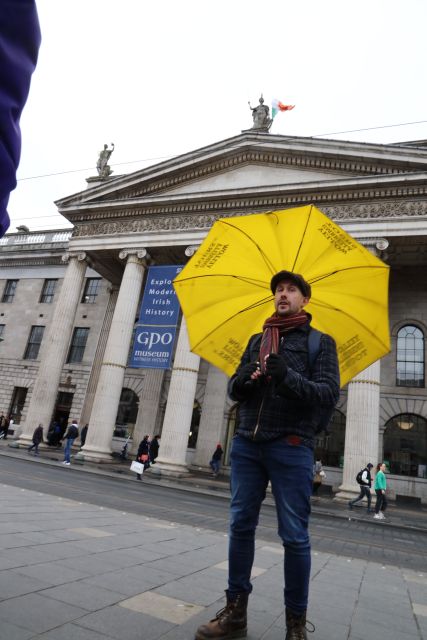
- Meet at the Spire on O’Connell Street and follow the guide’s yellow umbrella
- Cuchulainn’s Death statue moment, where myth meets macabre storytelling
- Medieval quarantines and public executions with context for why fear took over
- 19th-century grave robbing stories beside the city mortuary area
- Legless serial killer and man-eating rats, the urban legends Dublin loves
- A dramatic finish by the cathedral, tied to Dublin’s most famous brothel keeper
Meeting Under the Spire, and Finding the Yellow Umbrella
You start in the middle of O’Connell Street, by the Spire. The instruction is simple: look for the yellow umbrella. It’s such an easy meet-up point that you can spend less time wandering around and more time watching your surroundings start to change as the tour begins.
One practical note: if you arrive early, you might see more than one yellow umbrella. Don’t panic. Match the guide’s group and timing, then get yourself oriented so you can settle into the walk without stress.
This is also a good start point if you’re already in the city center. You don’t need hotel pickup, and the tour ends back at the same meeting place.
More of Dublin crossed at walking pace:

Why This 2-Hour Walk Works: Pace, Structure, and Your Time Budget
At 2 hours, this tour fits neatly into a day plan. You’re walking through old city areas, hearing layered stories from different eras without needing to hop between far-flung neighborhoods. That matters in Dublin, where weather can change fast and you may want to keep your schedule flexible.
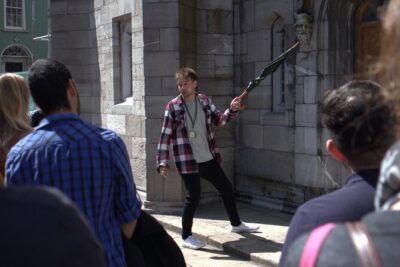
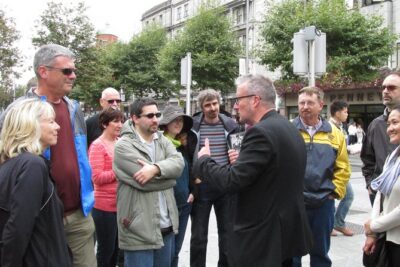
The structure is a classic walking-tour setup: you follow your guide, you stop at key spots, and you get stories that connect those locations to Dublin’s darker side. The best part is that it’s not just name-dropping. The guides (including Peter and Rob) are described as engaging, funny, and willing to answer questions, which keeps things from turning into a lecture you zone out from.
If you’re doing other sightseeing later, this tour also gives you a different lens. It helps you notice alleys, river edges, old wall-adjacent areas, and places you’d otherwise walk past without a second glance.
Old City Streets and the River: Dublin on Both Sides
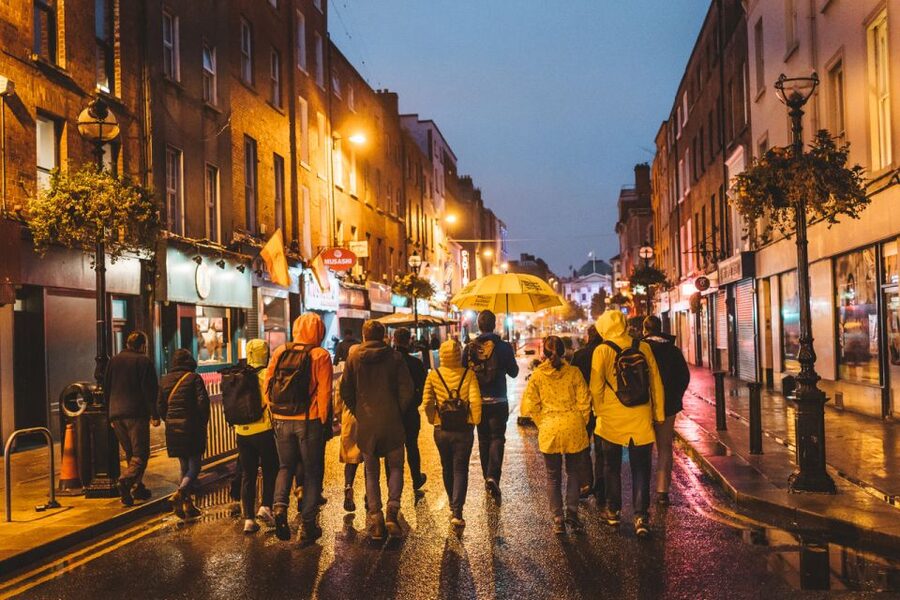
A big part of what makes this tour satisfying is that you don’t stay in one straight line. You’ll walk the old city center and you’ll stroll along the riverside, hearing stories that span both sides of the river.
That choice does two helpful things. First, it gives your brain map points, so the city starts to feel connected instead of random. Second, the river becomes more than scenery. It frames why certain parts of the city attracted attention, fear, and rumor in different time periods.
You’ll also get close to old city walls. That’s where the stories start to feel less like dark trivia and more like lived geography. Even if the details vary by era, the physical setting helps the narrative stick.
Cuchulainn’s Death Statue: When Irish Myth Gets Grim
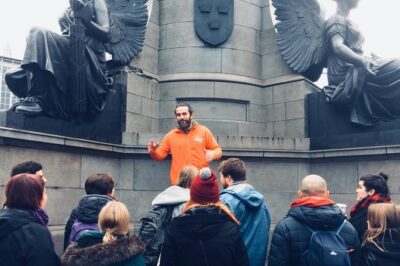
One of the stated highlights is the Statue of Cuchulainn’s Death. If you only associate Irish mythology with hero tales and battlefield glory, this stop is a useful pivot. It’s where the story is framed in macabre terms, including the detail about the warrior having his eyes pecked out by the raven on his shoulder.
What I like about this kind of stop is how it broadens what macabre means in Dublin. You’re not only dealing with crime and punishment. You’re also seeing how older stories can carry frightening imagery, and how later audiences keep retelling them with their own tone.
This matters because it shapes how you experience the rest of the walk. Once you’ve seen myth treated as something eerie and physical, the later urban legends and punishment stories land with more meaning.
Medieval Quarantines and Public Executions: Fear in Public Places
The tour includes stories tied to medieval quarantines and public executions. Those topics can sound heavy in the abstract, but on a walking tour they become easier to understand because you’re hearing them beside the city spaces that would have felt public, crowded, and unavoidable.
Quarantines, in particular, are a reminder that disease and fear often traveled together. You get a sense of how communities responded when they thought they could contain outbreaks, even if the results were imperfect and disruptive.
Executions bring another angle. This is where the tour’s tone tends to feel most direct. Dublin’s darker past is tied to punishment, spectacle, and the idea that public acts were meant to send messages. If you like history that explains human behavior under stress, you’ll probably enjoy these segments.
More of the rising and the years after:
- Dublin Historical Centre Food Tour with 8 Food Tastings & Drinks
★ 5.0 · 1,718 reviews - 2-Hour Historical Walking Tour from Dublin
★ 5.0 · 875 reviews - Historical 2-Hour Guided Walking Tour of Dublin
★ 4.7 · 865 reviews - Dublin to Cork, Blarney Castle & Cóbh Heritage Centre by train
★ 4.5 · 510 reviews
Grave Robbing by the Mortuary: The Dark Side of Science and Survival
One of the most specific pieces of information is the story about a thriving 19th-century business of grave robbing beside the city mortuary. That detail is exactly the kind of real-world horror that turns a walking tour from spooky entertainment into something you can think about later.
Why this is valuable for you: it shows that macabre history is not always about monsters. Sometimes it’s about economics, desperation, and the demand for bodies. The tour’s framing makes it easier to understand how people rationalized actions while still doing something profoundly unsettling.
It also changes the way you interpret the city around you. When you walk past old institutional zones, cemeteries, and service areas in cities like Dublin, you start to connect the dots between what was built for care and what was exploited through fear.
Mummified Corpses and the Urban Detail Your Eyes Miss
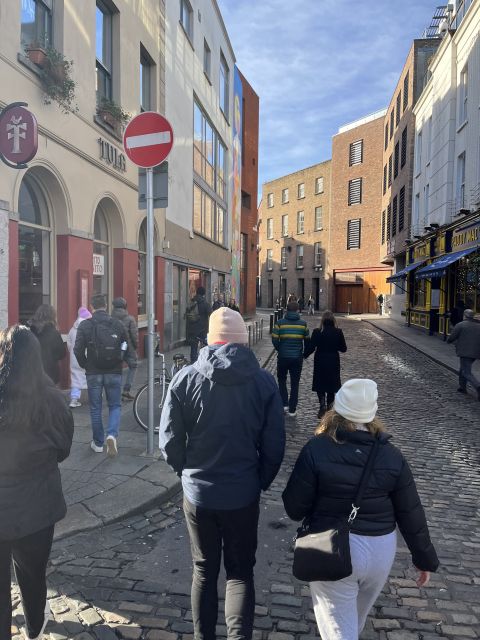
The tour promises stories of mummified corpses, and you’ll hear them in areas near old city walls and in lesser-known streets. You’re not just getting a single spooky fact. You’re getting a sense that Dublin had corners where survival, poverty, illness, and secrecy could overlap.
This is where the best tour guides do something clever. They give enough detail for the story to feel grounded, and then they pull back just enough for you to notice the street itself. The result is practical sightseeing. You’ll walk away thinking, I never would have looked at that alley, wall line, or river edge twice on my own.
If you’re the type who likes seeing the city’s texture, not just its main monuments, these stops can be the most memorable part of the walk.
Legless Serial Killer and Man-Eating Rats: Legends With Real City Energy
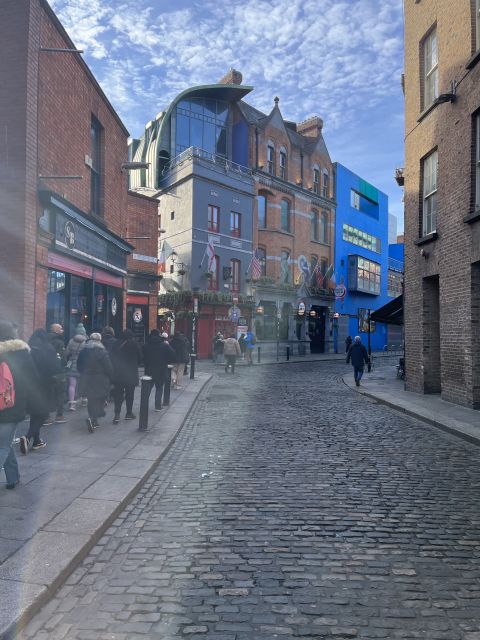
Yes, the tour includes the Legless Serial Killer and man-eating rats. Those are straight-up headline-worthy items, but here’s how they become more useful than just shock value. They show how cities process fear. When something frightening happens, rumor spreads, names form, and the stories start sticking to particular streets and communities.
This is also where the guides’ humor and delivery really matter. In the reviews, Peter and Rob are praised for acting out stories and keeping things moving without making them feel chaotic. That style matters when the material is dark, because it keeps the narrative understandable and makes you want to keep walking instead of tuning out.
And if you’re worried about being overwhelmed, the balance is part of the pitch. The tour mixes macabre content with explanations that help you place it in time and place, so the legends feel like a map tool, not just a collection of creepiness.
The Finish by the Cathedral: Dublin’s Famous Brothel Keeper
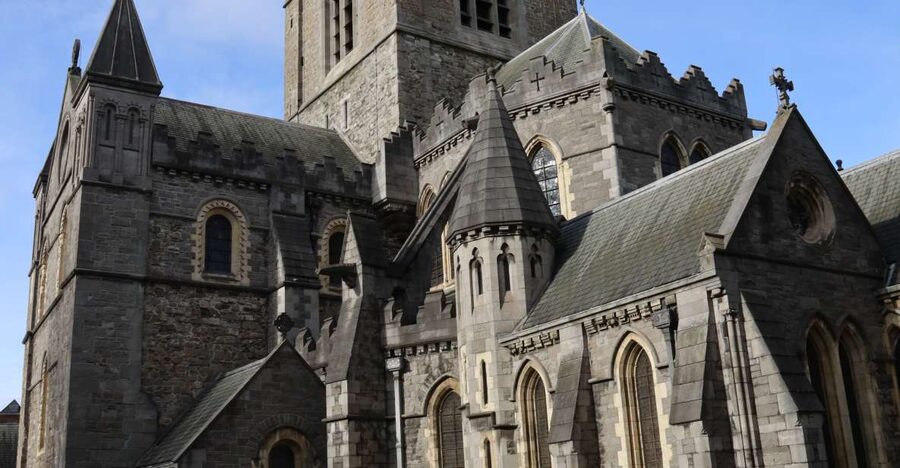
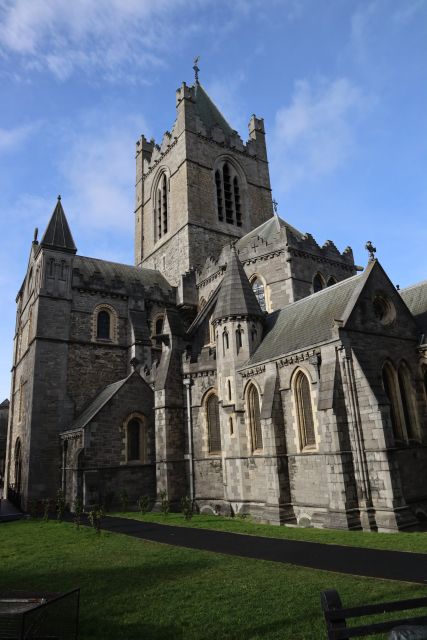
The tour ends beside the cathedral with stories connected to Dublin’s most famous brothel keeper and her untimely demise by fire at the stake. This ending works well because it doesn’t just stop with one person. It ties into how reputation, power, and punishment collided in older Dublin.
Fire-at-the-stake details can be intense. But the tour’s format helps: you’re near a major landmark at the end, so you get that sense of closure. You also leave with a clearer mental snapshot of where the story sits in the wider city map.
If you like tours that end with a story beat you can remember, this finish is designed for that. You’ll come back to the meeting area feeling like you just walked through several chapters of Dublin instead of ticking off a few sites.
What You’ll Get From the Guides (Peter and Rob Lead the Way)
A lot of walking tours rise or fall on the guide. Here, the names Peter and Rob come up again and again in the best ways. They’re described as personable, funny, and able to answer questions without making you feel rushed.
There’s also a strong theme of clear storytelling. One thing I appreciate is when a guide can mix humor with details and still keep the thread easy to follow. From the comments on pacing and Q and A, that seems to be the guiding style. Some people even describe the experience as feeling VIP, especially when the group is very small.
Group size isn’t guaranteed, but you can be optimistic. When tours run with just a few people, the story delivery tends to feel more personal, and you get more chances to ask your own Dublin questions.
Price and Value: Is $19 Worth It?
At $19 per person for a 2-hour walking tour, you’re paying for a local guide plus a route that takes you into lesser-known streets. That’s key for value. If your goal is to see the city in a more narrative way, the guide is the product, not just the walking.
Compared with bus tours, you get more time in the actual streets and fewer minutes staring at a window. Compared with museum-only time, you get stories that connect sites to behavior, punishment, rumor, and survival.
Also, the group pace and question time can make the experience feel like more than a simple overview. When guides are praised for clarity and responsiveness, that’s usually a good sign the price is doing its job.
Who Should Book This Tour (and Who Might Skip It)
This tour is a strong match if you want:
- Dublin sights with a darker, story-forward angle
- A walk that connects myth, crime, fear, and city life across eras
- Guides who talk clearly, add humor, and let you ask questions
- A compact 2-hour plan that doesn’t swallow your whole day
It may not be your best choice if:
- You’re sensitive to disturbing themes, such as executions and crimes
- You expected constant gore and shock rather than atmosphere and explanation
- You’re traveling with kids, since it’s not suitable for children under 18
FAQ
FAQ
Where does the tour start?
The meeting point is beside the Spire, the big needle, in the middle of O’Connell Street. Look for the yellow umbrella.
How long is the tour?
It lasts 2 hours.
How much does it cost?
The price is $19 per person.
What language is the tour guided in?
The live tour guide speaks English.
Is the tour wheelchair accessible?
Yes, this activity is wheelchair accessible.
Is it suitable for children?
No. It is not suitable for children under 18.
What is included in the price?
The tour includes the walking tour and a guide. Hotel pickup and drop-off are not included.
Can I cancel for a refund?
Yes. You can cancel up to 24 hours in advance for a full refund.
Should You Book This Macabre History Walk?
If you like Dublin with a twist, I think this is an easy yes. The price fits well, the 2-hour length respects your schedule, and the story-focused stops are the kind that make the city feel alive after you leave.
Just go in with the right expectation: it’s dark history told in a guided walking format, not a kid-friendly show, and not everyone will find it maximally bloody. If you want humor and clear storytelling wrapped around gruesome themes, this one is built for you.
Just in from the Liffey side






Historical Tours, compared.

Dublin Historical Centre Food Tour with 8 Food Tastings & Drinks
Read our review →
Historical 2-Hour Guided Walking Tour of Dublin
Read our review →
Dublin to Cork, Blarney Castle & Cóbh Heritage Centre by train
Read our review →
Jeanie Johnston Tall Ship Irish Famine History Tour
Read our review →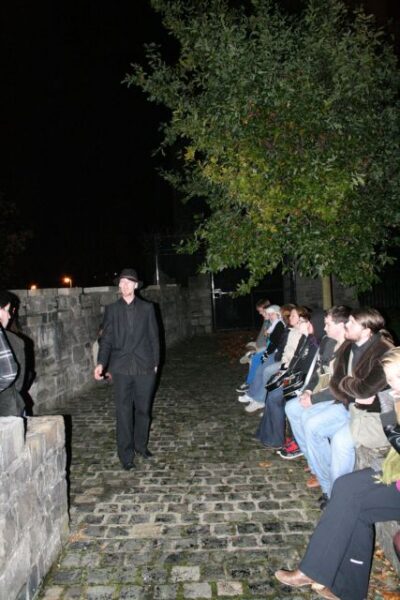

Deliciously Dublin: The Artisan Donut Walking & History Tour
Read our review →
Hidden Dublin: Haunted History Walking Tour v2.0 2026
Read our review →Browse the lists this tour appears in