
Reviewed · WALKING TOURS
Dublin: Highlights and Hidden Corners Walking Tour
Dublin can feel big fast, but this walk makes it click. I like how the route strings together major landmarks and then keeps nudging you into smaller, odd street corners with a guide who actually tells stories. You get a quick sense of how Dublin has shifted from medieval days to modern city life.
What I really like is the small group size and the guide-led pacing. In past groups with guides such as Joe Brennan, John O’Flynn, Jacob, Katie, and Dave, the tone is friendly, and the explanations come with humor and solid detail. I also appreciate that you stay mostly outside, so you can keep moving and still cover a lot in 2.5 hours.
One possible drawback: it is a walking tour, and the pace may feel brisk if you want lots of loitering time. If you prefer a slower rhythm, plan to ask the guide to slow down a bit during photo stops.
In This Review
- Key highlights to look for
- Starting at the Tree of Gold on Dame Street
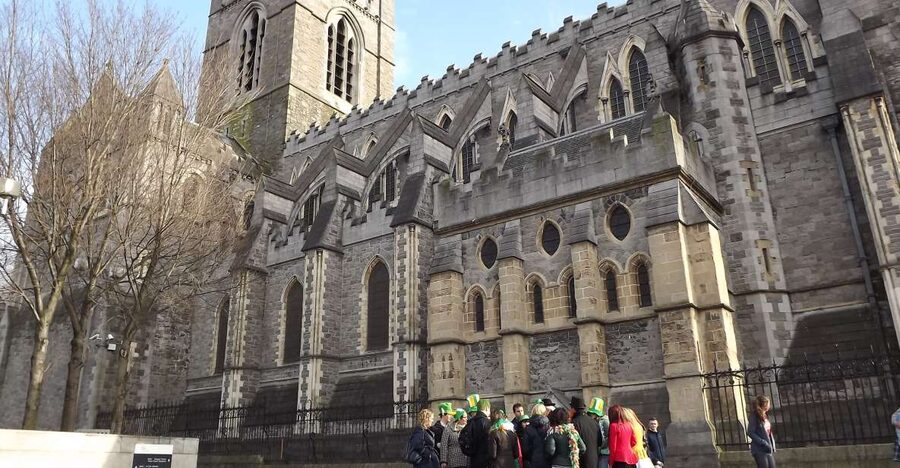
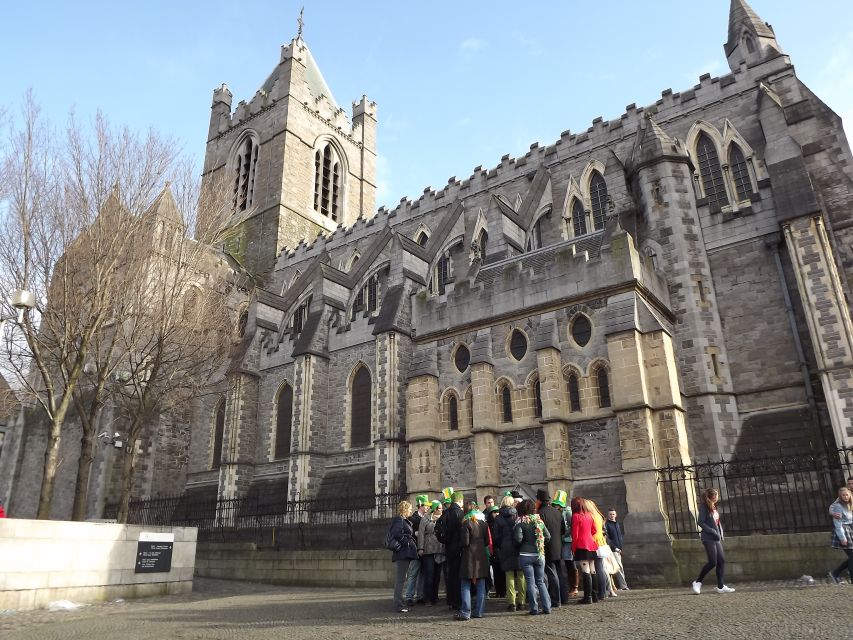
- Dublin Castle grounds and Christ Church Cathedral, seen from street level
- City Hall, Temple Bar meeting points, and the lanes you do not find on your own
- Across the River Liffey: Millennium Bridge and the wobbly-moment stop
- Italian Quarter streets and St Mary’s Church turned café or bar
- O’Connell Street, the GPO, and the 1916 Rising fallout
- Trinity College finish and an easy next step for the Book of Kells
- Small-group comfort, walking pace, and why 2.5 hours works
- Price value: what $31 buys you in Dublin center
- Who this tour suits best
- Should you book this Dublin walking tour?
- FAQ
- Where does the tour start?
- How long is the Dublin Highlights and Hidden Corners Walking Tour?
- What size is the group?
- Are you able to go inside the sights?
- Is the walking tour wheelchair accessible?
- What are some of the key stops on the route?
- Is the tour guide available in English?
- Is there free cancellation, and can I pay later?
Key highlights to look for
- Small group limits (max 16, often fewer) so you are not lost in a crowd
- Professional guides who mix landmarks with human stories
- Outside-only sightseeing with the fun oddities spotted along the way
- Both sides of the River Liffey, so you see more than one “same old” loop
- Finish near Trinity College for an easy next step toward the Book of Kells
Starting at the Tree of Gold on Dame Street
The tour begins at the Tree of Gold Statue (Crann an Óir) on Central Plaza, Dame Street. It’s a straightforward meetup at the corner of Dame Street and Fownes Street Upper, which helps if you are arriving by foot from nearby hotels or transport hubs.
From there, the walk gets you into the center fast. You start in the former Viking and medieval quarter zone, where Dublin’s layout and architecture start making sense. This is one of those tours where the guide turns what looks like random streets and stone facades into a simple story you can remember later when you explore on your own.
You can also expect a crowd-control advantage here. With a max of 16 people, you actually hear the guide without craning your neck. And the route is built for a 2.5-hour overview, so you are not stuck doing a long, all-day slog just to see the basics.
More of Dublin crossed at walking pace:
Dublin Castle grounds and Christ Church Cathedral, seen from street level
The early part of the walk focuses on big, recognizable stops like Dublin Castle grounds and Christ Church Cathedral. One practical thing: all visits are external, so you are looking at buildings from outside rather than doing interior tours on the spot.
That outside-only approach is not a downgrade. It’s part of why the tour stays easy-going and efficient. You can absorb what the buildings look like today, then let the guide’s stories explain what they meant in different eras. If you want to step inside later, the tour info notes that you may have chances after the tour for visits like that.
This segment also helps you orient yourself in the city. Once you connect Dublin Castle grounds with Christ Church Cathedral in the right order, you get a mental map of where major threads run through Dublin’s old core. Then the walk pivots and changes mood, which is exactly when most first-timers start to feel like they are “getting” the city.
City Hall, Temple Bar meeting points, and the lanes you do not find on your own
After the medieval core, the tour widens. You’ll pass City Hall, then work toward the Temple Bar area and nearby squares and streets, including Fishamble Street and Smock Alley.
This is where the guide’s storytelling matters most. The tour is designed to keep you moving but also noticing details you would normally ignore. As the group shifts into the Temple Bar neighborhood, you are not just chasing crowds. You’re listening for the quirky contrasts, the stuff that makes Dublin feel like it has a sense of humor.
The info also flags several fun “spot the oddity” moments along the way, including:
- a church that is now used as a café or bar
- a former cinema that is no longer doing the same job
- a former Lisbon tram now serving as a café
You do not need to be a “history person” to enjoy this part. It works because the guide makes it human, not just date-and-dead-reckoning.
Across the River Liffey: Millennium Bridge and the wobbly-moment stop
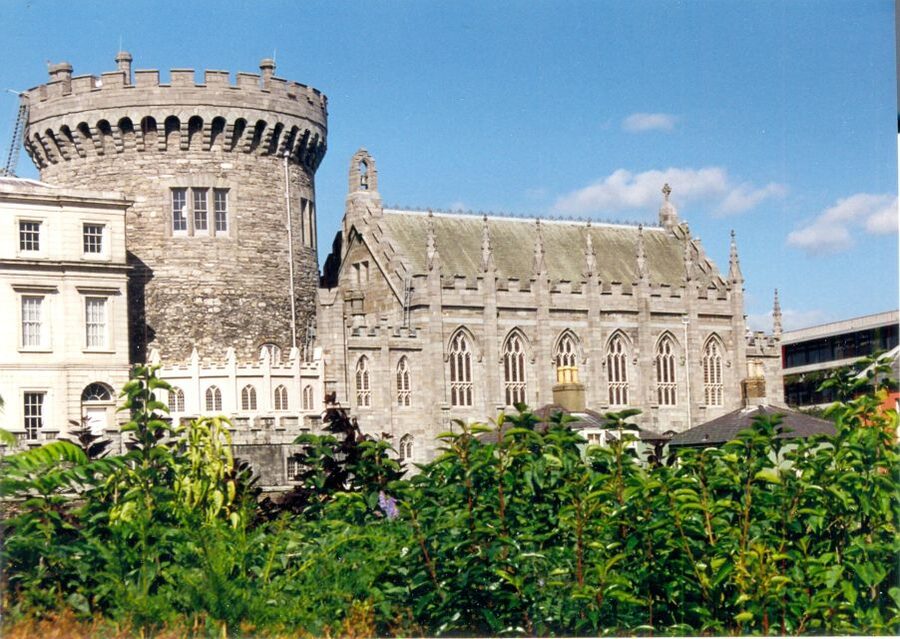
One of the most memorable practical sections is the crossing to the northside of the city via Millennium Bridge and along the River Liffey. Even if you have seen photos of the bridge, this is the kind of spot where it lands better in person. You feel how the river divides Dublin, then how the center reconnects on the other side.
The route also includes small, memorable physical moments that make it feel less like a lecture. The tour description mentions feeling the bounce of a wobbly bridge, and I think that’s a great example of why walking tours work. Your body is part of the experience, so you remember what you noticed instead of just hearing it.
Along the river and into the city streets, your guide points out the more playful public art and representations too, including an amusing representation connected to da Vinci and a stark-naked representation of a very famous 18th-century composer. You might not plan to stop for stuff like that on your own, which is exactly why it is worth having a guide at least once.
Italian Quarter streets and St Mary’s Church turned café or bar
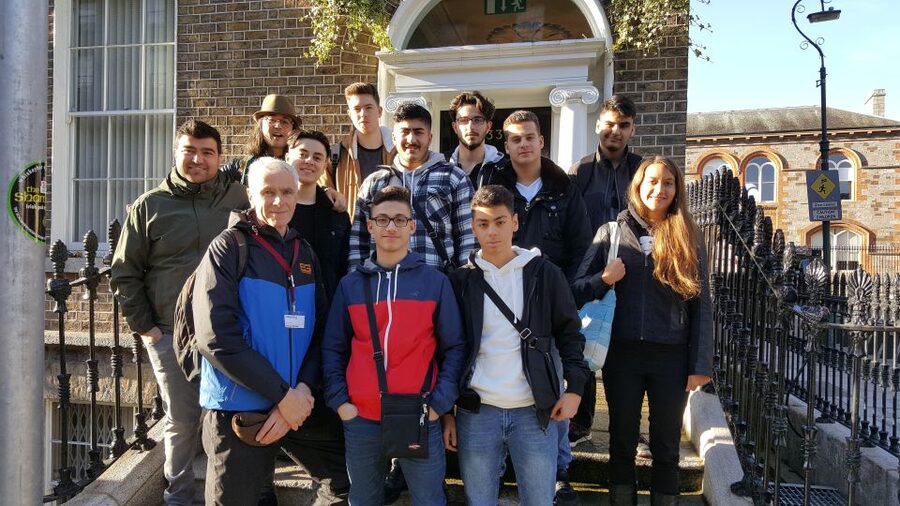
Next, you’ll pass through the Italian Quarter area, then continue toward St Mary’s Church, which is now used as a famous café or bar. You also walk past Henry and Moore Streets.
These are good moments to reset your attention. After the big formal sights, the tour shifts into Dublin’s everyday character: buildings that have changed jobs over time, streets where the city’s layers are visible in how old structures are used today.
Because the tour is outside-only, you’ll mainly be reading the city through what is visible: facades, street layouts, and the locations where the guide tells you what used to be there. That approach is especially useful if you are short on time, because you still get the “before and after” story without paying for several separate entry tickets.
If you like tours that teach you where to look next, you will probably enjoy this section. It gives you a shortlist of places to revisit later when you want to linger.
Another way the same day could go from Dublin:
- Dublin to Cliffs of Moher, including Wild Atlantic Way and Galway
★ 5.0 · 23,331 reviews - From Dublin: Cliffs of Moher, Burren & Galway City Day Tour
★ 4.8 · 18,888 reviews - Dublin: Guinness Storehouse Entry Ticket
★ 4.6 · 16,863 reviews - Dublin to Cliffs of Moher, Burren, Wild Atlantic Way, Galway Tour
★ 5.0 · 12,924 reviews
O’Connell Street, the GPO, and the 1916 Rising fallout
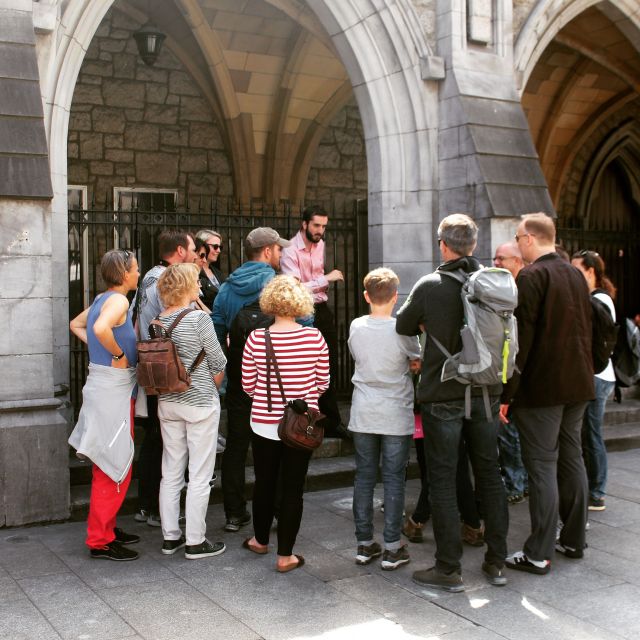
No Dublin intro walk is complete without O’Connell Street and the 1916 Rising story. This tour passes by the General Post Office, then moves toward the O’Connell Monument and other historic civic buildings, including the former Parliament House, now the Bank of Ireland.
Here’s what makes this stop set feel worth your time: the guide connects landmarks to human consequences. The description notes that the GPO housed the headquarters of the rebels of the 1916 Rising, and that the building’s destruction and damage affected the street and surrounding area. When you understand that, the street stops feeling like just a wide avenue. It becomes a map of decisions and repercussions.
O’Connell Street itself also acts like a “timeline spine.” You start to see how Dublin’s identity gets expressed through public space. The monument and civic buildings are not only scenery. They are Dublin’s way of recording what happened and what it tried to learn afterward.
If you are visiting Dublin for the first time, I think this is the part that helps you ask better questions once you’re off the tour. You will notice what is official, what has been repaired, and what changed because of history.
Trinity College finish and an easy next step for the Book of Kells
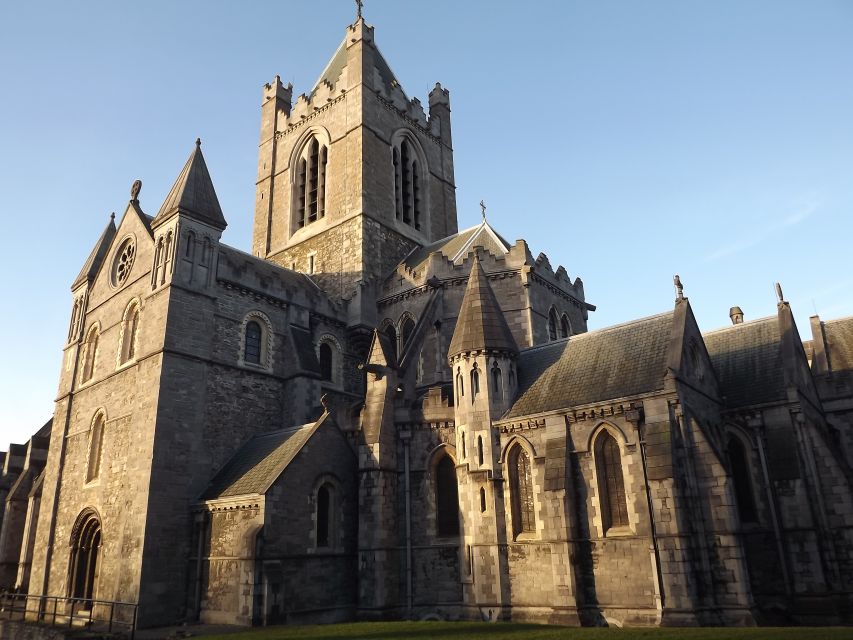
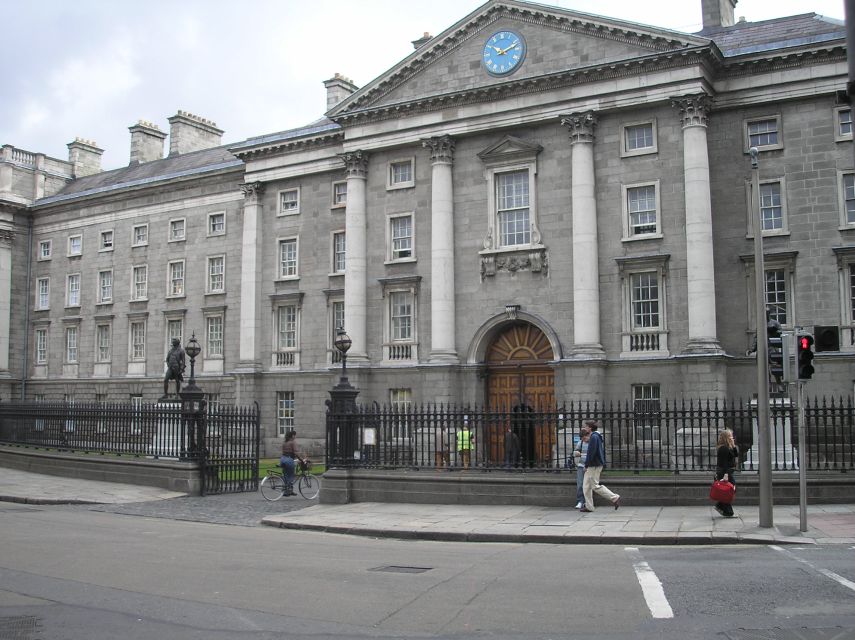
The walk finishes outside Trinity College, near the area associated with the Book of Kells. This is a smart closing move. You end at a major anchor point that makes it easy to turn your walk into a full afternoon.
Even though the tour is outside-only, ending near Trinity gives you a direct path to your next activity. The Book of Kells is the kind of attraction where having the city orientation from the walk makes the experience feel more grounded, not like a standalone ticket you just collected.
One scheduling tip: the tour description says it finishes around Trinity College, but the activity page also mentions ending back at the meeting point. When you book, check your exact confirmation for the final drop-off area so you are not surprised at the end.
Small-group comfort, walking pace, and why 2.5 hours works
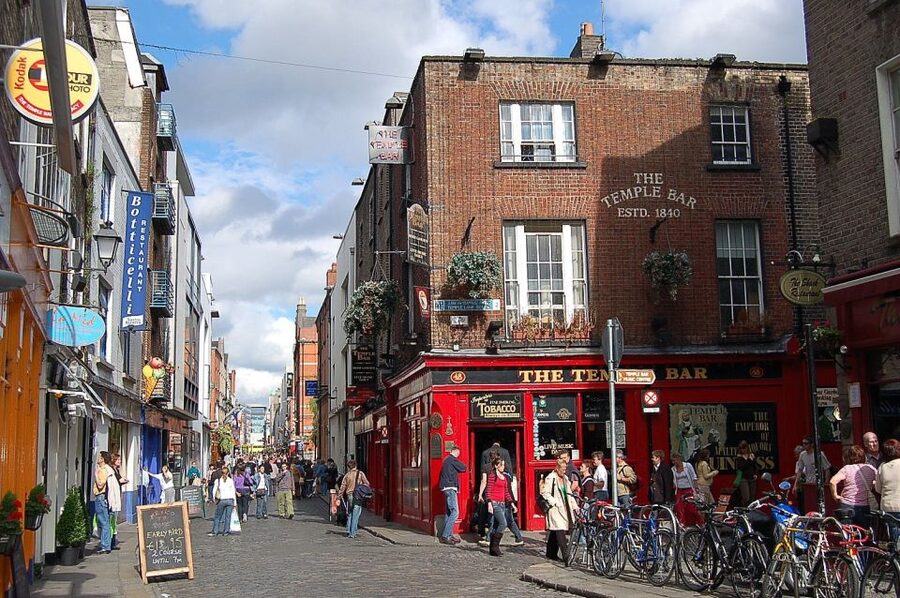
The whole route is built for 2.5 hours of active sightseeing. That length is long enough to cover both sides of the River Liffey and hit the biggest landmarks, but short enough that you still have energy left for an actual Dublin evening plan.
The small-group format matters here. With a maximum of 16 people and often fewer, the guide can answer questions without turning the walk into a standoff. Several guides are noted for pacing that feels just right, and some descriptions emphasize that the walk is organized and structured.
That said, one review theme to keep in mind is pace. If you prefer slower walking, you may want to mention it early. This is not a tour for people who want to stay glued to every stop for 20 minutes. It is more like a well-timed city sampler, with occasional quick photo and question moments.
Wheelchair access is listed as available too. Since the route involves walking, what “easy” means for you will depend on your comfort level, but the operator does flag it as accessible.
Price value: what $31 buys you in Dublin center
At about $31 per person, the value is pretty clear once you compare it to the cost of doing multiple separate self-guided stops with a pile of guesswork. You are paying for a trained guide to stitch together:
- Dublin Castle grounds and Christ Church Cathedral
- City Hall
- Temple Bar area connections
- River Liffey crossings and Millennium Bridge
- O’Connell Street, the GPO, and civic sites around the 1916 Rising aftermath
- A Trinity College area finish
The guide is the included piece, and that is the main value engine. A good guide saves you time and helps you understand what you are looking at, so you can spend your money and energy where it counts after the tour.
Also, the group size keeps this from feeling like a “mass tour.” When you are not packed in, you get better attention for the same price.
Who this tour suits best
This is a strong fit if you want a Dublin intro without overplanning. You’ll like it if you enjoy:
- city landmarks tied to real stories and changes over time
- street-level wandering with a sense of where things are
- short “spot the oddity” moments that break up the more serious history
It also suits solo visitors and couples who want structure. Instead of trying to build a map in your head, the guide gives you a route that makes Dublin feel coherent.
If you are the kind of traveler who hates walking tours or needs lots of interior stops, you might find the outside-only format limiting. But if you’re okay seeing facades and courtyards from the street, this tour is a smooth way to start your trip.
Should you book this Dublin walking tour?
Yes, if you want a high-impact first Dublin day and you like learning through streets, not museums. The small-group size, the guide’s humor, and the mix of major landmarks with offbeat public details make it a practical city orientation. At $31 for a 2.5-hour route, you are getting a lot of guidance for a reasonable price.
If you know you need a slower pace or you want mostly interior visits, consider either asking the guide about pacing preferences or choosing a different style of tour. For everyone else, this is one of those “do it early” options. You’ll understand more on your next walk around town.
FAQ
Where does the tour start?
It starts at the Tree of Gold Statue (Crann an Óir), Central Plaza, Dame Street, Dublin 2, at the corner of Dame Street and Fownes Street Upper.
How long is the Dublin Highlights and Hidden Corners Walking Tour?
The duration is 2.5 hours.
What size is the group?
The tour is a small group with a maximum number of 16 people, and it is often less than that. Additional guides may be provided where required.
Are you able to go inside the sights?
All visits are external. The tour description notes that opportunities may be available for internal visits after the tour.
Is the walking tour wheelchair accessible?
Yes, the activity is listed as wheelchair accessible.
What are some of the key stops on the route?
You’ll see City Hall, Dublin Castle grounds and gardens, Christ Church Cathedral, Fishamble Street and Smock Alley, Meeting House Square in Temple Bar, Millennium Bridge and the River Liffey area, the Italian Quarter area, St Mary’s Church (now a famous café or bar), Henry & Moore Streets, O’Connell Street, the General Post Office, the O’Connell Monument, the former Parliament House (Bank of Ireland), and you finish outside Trinity College.
Is the tour guide available in English?
Yes. The live tour guide language is English.
Is there free cancellation, and can I pay later?
The tour offers free cancellation up to 24 hours in advance for a full refund. It also offers reserve now and pay later.
Just in from the Liffey side






Walking Tours, compared.
Dublin Highlights and Hidden Gems Guided Walking Tour
Read our review →
90 Minute Dublin Walking tour and Sightseeing tips
Read our review →

Historical 2-Hour Guided Walking Tour of Dublin
Read our review →
Dublin Traditional Irish 3 Course Meal Walking Tour with Local
Read our review →
Browse the lists this tour appears in