
Reviewed · WALKING TOURS
Dublin: Hidden Gem Walking Tour with Local Guide
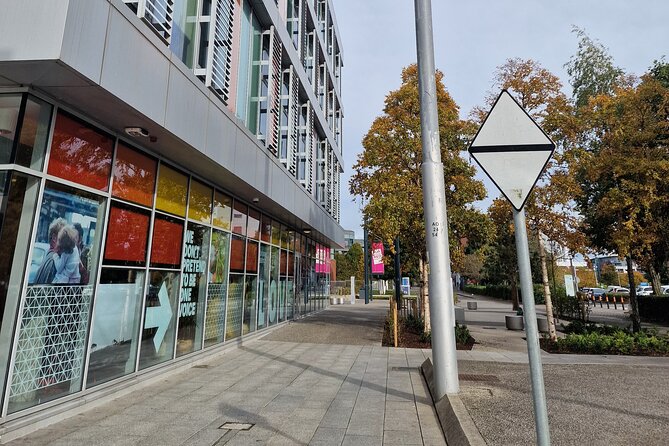
Tallaght can feel off the main track, until you do this walking tour. What I like is how it turns everyday streets into a people-first timeline of Ireland, starting with Kingswood Heights and ending in Tallaght Village. You also get a local guide who brings stories to life with shared letters, notes, and bilingual bits, so the history feels human, not dusty.
The tradeoff is simple: you are outside for about two hours and the tour needs good weather. If it is pouring or icy, you may need to switch dates or opt for a refund, so plan with that in mind.
In This Review
- Key highlights worth your attention
- Why Tallaght’s small streets beat the usual Dublin loop
- Price, pace, and practical logistics you should know
- Kingswood Heights: Tallaght’s beginnings and the ancient Irish thread
- Whitehall and Katharine Tynan: literary circles in Tallaght
- Belgard Road and William Howard Russell, the war correspondent
- Irish mythology on Belgard Road: Oisín in the Land of Youth with a view
- Tallaght Aerodrome, Urney Chocolates, and how brands shape towns
- TU Dublin Tallaght: fast growth in the 1970s and 1980s
- St Maelruain’s Church of Ireland: monastery roots and the two eyes of Ireland
- Alice Furlong at St Maelruain’s: poetry, activism, and language
- Village Green and the Fenian Rising of 1867, plus Dickens
- Ending in Tallaght Village: cottages, steam trams, and a few Irish words
- How Sophie’s approach makes the stories stick
- Who should book this Tallaght walking tour
- Should you book this tour?
- FAQ
- How long is the Dublin Tallaght walking tour?
- Is the tour offered in English?
- Do I need a printed ticket?
- How big is the group?
- Where does the tour start and end?
- What if the weather is bad?
Key highlights worth your attention
- Tallaght goes literary, with Katharine Tynan connected to W.B. Yeats and AE
- War correspondence, up close, via William Howard Russell and his reporting for The Times
- Irish mythology plus views, including Oisín I dTír na nÓg with a mountain-side perspective
- Local landmarks, not big monuments, from a former Tallaght aerodrome to brand stories like Urney Chocolates
- Language practice at the end, with basic Irish taught and a bilingual café right nearby
- Small group size, up to 12 people, which keeps questions easy and the pace comfortable
Why Tallaght’s small streets beat the usual Dublin loop
If you already know Dublin’s postcard highlights, this tour is a smart change of pace. Tallaght has layers that most visitors never see, and the route is built around those layers: writers, reporters, Irish-language advocates, rebellion-era history, and places that used to be rural before the town grew fast.
I love that the story keeps moving forward instead of getting stuck in one era. You go from early Irish-era beginnings and monastery ground, to 19th-century politics, to 20th-century war and urban change. And you will notice something else as you walk: Tallaght’s growth is not abstract. It shows in how the landmarks sit now, and what used to be there before.
Best of all, this is a street-level tour. You are not waiting for bus rides between major attractions. You learn as you walk, then you stand in specific spots that match the stories.
More of Dublin crossed at walking pace:
Price, pace, and practical logistics you should know
At $18.05 per person for about 2 hours, this is strong value for a guided experience. The stops are designed so you are not paying for museum entrances, since the listed admissions are free at each part of the route. You also get a small group (maximum 12), which makes it easier to ask questions and hear the guide clearly.
It’s offered in English, and you receive a mobile ticket. The tour starts in Kingswood Kilnamanagh and ends in Tallaght Village, next to a bilingual Irish/English café. Public transportation is nearby, so you are not stuck in the middle of nowhere.
Do plan your footwear like you would for any city walking tour. It is not labeled as strenuous, and most travelers can take part, but the route is still several short walks between stops.
Kingswood Heights: Tallaght’s beginnings and the ancient Irish thread
You start in Kingswood Heights, then the guide frames Tallaght with a quick introduction to its roots. The focus is not on big dates you must memorize. It is on the idea that Tallaght did not begin as an urban sprawl, it began with deeper Irish history.
This first section is short, around 5 minutes, but it matters. It sets expectations for the rest of the walk, because the guide keeps returning to the same theme: people and place connect. Once you have that foundation, later stops about legends, monasteries, and political movements feel more coherent.
If you prefer tours that jump right into names and stories, this opener might feel like a preface. But it is a useful one, especially if you are new to Tallaght.
Whitehall and Katharine Tynan: literary circles in Tallaght
From Kingswood, you move to a spot outside the former residence linked with Katharine Tynan, called Whitehall. Here you get the kind of history that surprises people: Tallaght had a direct line into the Irish and English literary world.
The guide connects Katharine Tynan’s life to friendships and circles including W.B. Yeats and George William Russell (AE), and she shares letters between Katharine and these figures. You also learn how AE described Katharine in a way that points to her role in the imagination behind the Irish Renaissance.
This stop runs about 15 minutes, so it gives time to absorb names without rushing. If you like literary history, this is one of the most satisfying parts of the route because the guide shows you the relationships, not just the résumé.
A small practical note: since this is conversation-driven and document-based, it helps to have your listening volume up and your phone light off.
Belgard Road and William Howard Russell, the war correspondent
Next comes William Howard Russell, born in Jobstown, Tallaght. The guide treats him like a thread that runs through major conflicts, because Russell became one of the earliest war correspondents and gained a reputation through decades of reporting.
You will hear the arc from early life in Tallaght to a very long career connected with The Times. The stops’ story points to major events, including coverage tied to Daniel O’Connell’s meetings, the Great Famine, the Crimean War, and the American Civil War. Russell’s connections do not stay in Ireland either, since the guide also briefly references his friendship with Charles Dickens.
This segment is around 10 minutes. For a tour length like this, it is a solid hit of context. The value is that you leave with a sense of what war correspondence looked like before modern photojournalism took over. It also makes Tallaght feel global in a way that is easy to grasp from a single walking stop.
A few other Liffey-side days to consider
- Dublin to Glendalough, Wicklow and Kilkenny Full Day Guided Tour
★ 5.0 · 4,895 reviews - Dublin Book of Kells, Castle and Molly Malone Statue Guided Tour
★ 4.5 · 3,825 reviews - The Little Museum of Dublin Famous Guided Tour
★ 5.0 · 2,948 reviews - Dublin Jameson Distillery and Guinness Storehouse Guided Tour
★ 4.5 · 2,608 reviews
Irish mythology on Belgard Road: Oisín in the Land of Youth with a view
Then the tour shifts from writers and journalists to myth and place. On Belgard Road, the guide gives a brief setup to Irish mythology and then focuses on Oisín I dTír na nÓg, also known as Oisín in the Land of Youth.
You get a bilingual version in Irish and English, plus a connection made to the Dublin Mountains. This is one of those rare moments where the tour uses a viewpoint to teach meaning, not just to show off scenery.
That part is around 10 minutes. If the weather is clear, you will enjoy the visual contrast: modern streets in Tallaght, and the mountain line in the distance. If it is grey or windy, you will still get the story, but the view will be less rewarding.
Tallaght Aerodrome, Urney Chocolates, and how brands shape towns
At Belgard Retail Park, the tour moves into 20th-century Tallaght. The guide explains the former Tallaght Aerodrome, including its role across World War I, the Irish War of Independence, and the Irish Civil War.
Then the story turns to everyday life through business history. You will hear how the Gallagher family brought Urney Chocolates into being, and how Urney Chocolates became part of Tallaght life for decades before closing in 1980. The guide also touches on how the brand lives on, and briefly mentions Jacob’s as another well-known brand that operated in Tallaght.
There is a clever payoff here. These stops show that “history” is not only rebellions and famous names. It is also work, factories, local commerce, and the brands that people associate with memory. The stop is about 15 minutes, long enough for the guide to connect the dots.
If you like local culture, you will likely feel a small jolt here, like, oh right, this town had its own industrial and commercial identity, not just housing and commuters.
TU Dublin Tallaght: fast growth in the 1970s and 1980s
Next you reach TU Dublin, Tallaght Campus, where the guide zooms out to how Tallaght transformed in a few decades, especially during the 1970s to 1980s. The emphasis is on urban growth and what it did to the people living there.
The tour notes that Tallaght became one of the fastest growing urban centres in Western Europe during the 1980s, and it frames that growth against a rough economic background in Ireland: unemployment, high emigration, and pressure on communities. This stop is about 15 minutes, which is just enough time to understand the cause-and-effect without turning the walk into a lecture.
The value for you is perspective. Once you hear this, you will read Tallaght differently. Even if you have driven through the area before, you start noticing that today’s streets and institutions sit on top of a major social shift.
St Maelruain’s Church of Ireland: monastery roots and the two eyes of Ireland
The tour then leans into early religious history at St Maelruain’s Church of Ireland. The guide explains that the church now stands where an older monastery once mattered greatly in ancient Ireland. It also references that this monastery was part of a pair known as the two eyes of Ireland, with another monastery at Finglas.
This stop is short, around 5 minutes, but it is packed with meaning. The guide is using the churchyard as a physical anchor for the idea that Tallaght’s story is older than most people expect.
Even if you are not a church-history person, you will probably appreciate the structure here. The walk has moved from legends to war to business, and then you get a reminder that spirituality and learning were also community pillars.
Alice Furlong at St Maelruain’s: poetry, activism, and language
Next is another part of St Maelruain’s Church grounds, focused on Alice Furlong, buried there. The guide shares that she was once lost to time until more recently, which adds a sense of recovery to the tour: stories can vanish, then reappear.
You learn about her involvement as a founding member and vice-president linked with Inghinidhe na hÉireann (Daughters of Ireland). The tour also highlights her work as a talented poet and writer, plus her Irish-language advocacy. The guide shares some of Alice’s poetry, with works in Irish and professional translations into English.
This is about 15 minutes, and it is one of the more emotional stops because the guide treats language like a lived choice, not an academic topic. If you enjoy Irish literature or language revival history, you will likely leave with a new name to remember.
Village Green and the Fenian Rising of 1867, plus Dickens
At Village Green, you see a plaque commemorating the Fenian Rising of 1867, and the guide explains Tallaght’s role in that event. The tour also brings in Charles Dickens again, this time linked to writings about this period of history in Tallaght.
This stop runs about 10 minutes. It is a useful pivot point because it connects local uprising history to a famous international writer. It helps the story feel less isolated. Tallaght is not only Irish local history; it was also part of the wider narrative that outsiders wrote about.
If you tend to like political history, this section will help you put names and places into a bigger context. If you prefer culture and literature, Dickens connections still make it easier to follow.
Ending in Tallaght Village: cottages, steam trams, and a few Irish words
The tour finishes back at Tallaght Village, where the guide points out cottages designed by architect Thomas Joseph Byrne, described as influential for that period. Then you get a short chat about the Dublin and Blessington Steam Tramway (DBST), including that it ran through the area before closing in 1932.
To close, the guide teaches you basic Irish. The idea is practical and fun, not academic. You are also encouraged to use those phrases in a local café right in Tallaght Village at the end, since it is bilingual Irish and English.
This ending section is about 20 minutes, which feels generous for a finish. It is also the part that makes the tour feel like a complete experience instead of a straight line of stops.
If you want a small plan for after the tour, this is it: grab a coffee or snack at the bilingual café and repeat a phrase or two before you forget it.
How Sophie’s approach makes the stories stick
One theme shows up again and again in the tour format: conversation plus documents. The guide shares letters connected to Katharine Tynan and war correspondent William Howard Russell, plus bilingual text linked to Oisín. That means you are not just hearing a story, you are seeing a piece of it.
You will also notice the pace. Each stop is short, then followed by another, so you keep moving through time. It avoids the classic problem of walking tours where you get stuck for 30 minutes at one spot and start losing the thread.
From the reviews, the guide is also willing to answer questions and share extra material like historical photographs. That kind of added context is useful because it lets you go from facts to understanding fast, even if you started the tour with limited Tallaght knowledge.
Who should book this Tallaght walking tour
This tour is a great match if you want:
- A quieter side of Dublin, focused on Tallaght’s transformation and notable local figures
- Literature and reporting history, from Katharine Tynan to William Howard Russell
- Irish language curiosity, since you get bilingual elements plus a bit of basic Irish at the end
- A small-group guide-led walk that stays conversational, not rigid
It is also a good idea if you like learning from a local perspective. The guide’s Tallaght focus makes it feel like you are borrowing someone else’s map of the area.
Should you book this tour?
I think you should book if you want something that feels distinctly Dublin, but not the Dublin that most people rush through. At $18.05 for roughly two hours, with free admissions and a small group size, it is easy to justify. Add in the mix of Katharine Tynan, William Howard Russell, Alice Furlong, and Oisín, and you get a route with variety that stays connected by Tallaght’s place in Irish story.
Skip it only if you strongly dislike walking in the outdoors or you know you cannot handle a weather-dependent schedule. Otherwise, this is exactly the kind of local, street-level tour that makes a city feel bigger than you thought.
FAQ
How long is the Dublin Tallaght walking tour?
It runs for about 2 hours.
Is the tour offered in English?
Yes, the tour is offered in English.
Do I need a printed ticket?
No, you receive a mobile ticket.
How big is the group?
The tour has a maximum of 12 travelers.
Where does the tour start and end?
It starts in Kingswood Kilnamanagh, Dublin, County Dublin, and ends in Tallaght Village R819, beside a bilingual Irish/English café.
What if the weather is bad?
The experience requires good weather. If it is canceled due to poor weather, you are offered a different date or a full refund.
Just in from the Liffey side



Walking Tours, compared.
Dublin Highlights and Hidden Gems Guided Walking Tour
Read our review →
90 Minute Dublin Walking tour and Sightseeing tips
Read our review →
Historical 2-Hour Guided Walking Tour of Dublin
Read our review →
Dublin Traditional Irish 3 Course Meal Walking Tour with Local
Read our review →
Browse the lists this tour appears in