
Reviewed · WALKING TOURS
A Self Guided Walking Tour of Dublin’s Docklands
Dublin’s Docklands tell a story fast. This self-guided walking tour is built like an audio-guided stroll, with offline maps and audio so you can move confidently street to street. I also like the manageable length, roughly 50 minutes to 1 hour 10 minutes, which makes it easy to fit into a day without rushing your photos.
You will mostly be following Dublin’s riverfront and port landmarks, from the grand face of the Custom House to the bridges and memorials that mark maritime and national history. One thing to keep in mind: you have to bring your own smartphone and headphones, since nothing is included besides the tour itself.
In This Review
- Key Things I’d Pay Attention To
- Finding Your Way: Start at the Custom House, Then Let GPS Lead
- Custom House to Quayside: Maritime Dublin Starts Big
- Labor, Commuters, and Big Institutions: A Route With Real City Energy
- Triumphal Arch to Lift Bridges: Engineering Details That Make You Look Twice
- Famine Memory and Seafaring Remembrance: Emotion in the Middle of the Walk
- Crossing the Liffey: Seán O’Casey Bridge to Samuel Beckett Bridge
- Modern Venues and Maritime Legends: From Convention Centre to Admiral William Brown
- Diving Bell and Sea Lock: When Port Work Becomes Visible
- Grand Canal Docks to Grand Canal Square: End With a Public-Space Feel
- Price and Value: Why $11.99 Makes Sense for an Offline Walk
- How to Use It Smoothly: Setup, Headphones, and a Calm Pace
- Should You Book This Dublin Docklands Audio Tour?
- FAQ
- How long is the Dublin Docklands walking tour?
- How much does the tour cost?
- Do I need data or an internet connection during the walk?
- What language is the tour in?
- What do I need to bring with me?
- Where does the tour start and where does it end?
- Is this tour part of a group?
Key Things I’d Pay Attention To

- Offline audio and maps keep you moving even with spotty signal along the waterfront
- Local-insider narration helps ordinary street scenes feel connected and readable
- A clear stop-by-stop route takes you from maritime industry to modern business space
- Lots of bridges in one walk, so you get skyline views without a whole separate trip
- History with variety, from labor landmarks to famine memory to engineering details
Finding Your Way: Start at the Custom House, Then Let GPS Lead
You start at the Custom House area on North Wall in Dublin 1, right by the river. The start point is also a practical walk from central spots like O’Connell Street (about 10 minutes) and College Green (about 15 to 20 minutes). If you’re arriving by transit, it’s close to Busáras and the luas and bus stops, and you can also reach it from the Tara Street DART station.
Once you begin, you are not chasing a group. You follow a self-guided GPS tour, using the audio track as your timing. This is the big advantage of an audio route like this: you can slow down for a photo, step aside to read signage, then hit play again when you’re ready. For Docklands, where streets and sightlines can feel repetitive if you just wander, this structure is a gift.
Practical note: the itinerary runs for about 50 minutes to 1 hour 10 minutes. That’s long enough to feel like a real walk, but short enough that a late start or a slower pace still stays reasonable.
More of Dublin crossed at walking pace:
Custom House to Quayside: Maritime Dublin Starts Big
The first stretch frames the Docklands as Dublin’s former trading heart. The audio starts right at the historic Custom House, a neoclassical landmark that once acted like the center of Irish trade and commerce. Even if you only catch a partial view at first, you’ll understand why the building matters once the narration sets it in context.
Then you move along the quayside, where historic warehouses sit next to newer development. This mix is one of the best ways to read Docklands without a museum ticket. The street-level contrast tells you what changed, and it also shows what stayed. If you like cities where you can see “then and now” within a few minutes, this section delivers.
A drawback to be aware of here is simple: waterfront walks can be windy. If the weather is rough, plan on a slower pace along the open stretches so you do not feel like you are fighting the air the whole time.
Labor, Commuters, and Big Institutions: A Route With Real City Energy
After the maritime-introduction phase, the walk turns toward labor and civic landmarks. You pass a memorial honoring James Connolly, a key figure tied to Ireland’s independence movement and workers’ rights. In a short audio tour, this kind of stop is valuable because it anchors the waterfront not just to ships, but to people and politics.
Next comes the Liberty Hall Theatre, a recognizable landmark linked to Dublin’s labor movement history. It’s one of those stops that helps you notice how often Irish public life is layered with themes of work, organizing, and struggle.
From there, the route gets more practical and modern. You pass Busáras, Dublin’s central bus station, and then Connolly Train Station, one of the city’s main railway hubs. These stops matter because Docklands is not a museum bubble. It is a working area, and the audio route helps you see transit corridors as part of the district’s evolution.
You also walk through the IFSC area, Dublin’s financial hub. If you have only seen the Docklands from a distance, this is where you understand the shift: shipping and trade space has become corporate and finance space. You get the sense of Dublin’s economy changing role over time, without needing to look up anything on your phone.
Triumphal Arch to Lift Bridges: Engineering Details That Make You Look Twice
The route includes the Triumphal Arch, tied to Dublin’s maritime heritage and economic prosperity. This kind of monument works best when you’ve already been hearing about the port, because it reads like a headline. Without that first setup, it might feel like just another piece of city architecture.
Then comes one of the more eye-catching segments: the Scherzer Rolling Lift Bridges. Audio tours can get a little too abstract, but engineering landmarks tend to pull you back to the real world. You’ll get a sense of how these mechanisms once supported maritime traffic, and why they mattered when ships needed safe, timed passage.
If you love practical history, this portion is a highlight. The Docklands are full of functional infrastructure, not just famous buildings, and this route calls attention to that.
Famine Memory and Seafaring Remembrance: Emotion in the Middle of the Walk
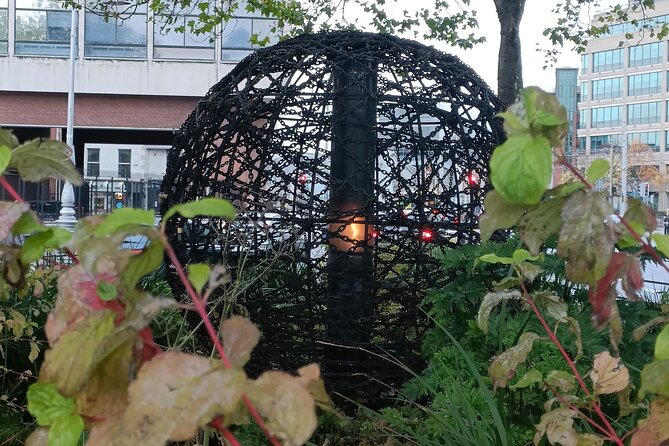
The audio does not avoid tragedy. You pass the Famine Memorial, a poignant tribute to those who suffered during Ireland’s Great Famine in the 19th century. It is easy to miss memorials when you’re just moving along a route. Here, the narration helps you slow down mentally, even if your feet are still walking.
Then you reach another memorial honoring Irish seafarers who lost their lives at sea. That stop keeps the maritime theme grounded in human cost.
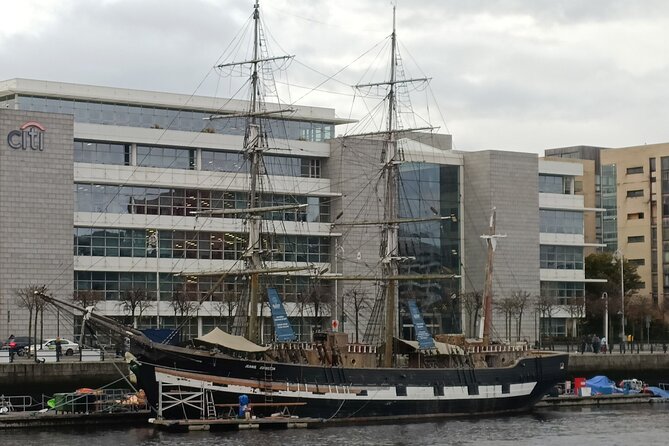
A unique stop follows: you’ll see a replica of The Jeanie Johnston, the historic ship that carried Irish emigrants to North America during the Great Famine. Even though it’s a replica, the idea is the point. It visually connects the narration about departure and survival to something you can point at with your own eyes.
A few other Liffey-side days to consider
- Christ Church Cathedral Entrance Ticket & Self-Guided Tour
★ 4.6 · 773 reviews - Dublin Ghost Hunt Exploration Game and Tour
★ 4.0 · 34 reviews - Private Dublin Treasure Hunt Self Guided Tour
★ 4.5 · 14 reviews - Dublin Self-Guided Murder Mystery Tour by Temple Bar
★ 3.5 · 12 reviews
Crossing the Liffey: Seán O’Casey Bridge to Samuel Beckett Bridge
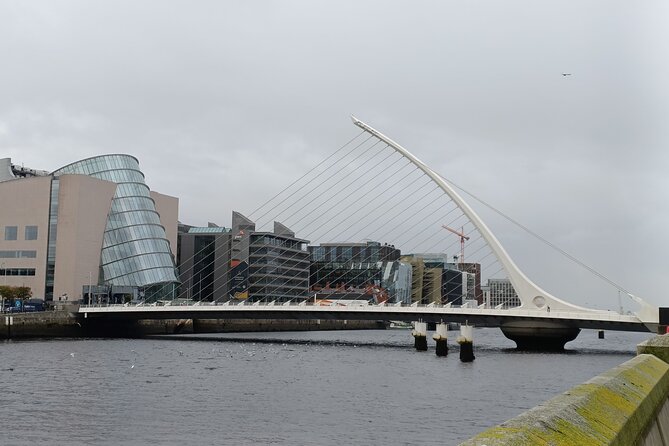
The walk crosses the river via Seán O’Casey Bridge, and this is a place where the audio format pays off. You’re moving through the city’s layers, and then suddenly you’re given a view that stitches the waterfront to the broader skyline.
You later pass the Samuel Beckett Bridge, an iconic modern bridge named after the writer. The tour keeps these bridges from feeling random by framing them as part of Dublin’s ongoing change. You might start noticing how the riverfront has multiple “eras” of infrastructure, from port-focused design to modern urban crossing.
This is also one of the best times to adjust your pace. If you want photos, give yourself an extra minute or two on the river crossings. You do not need long detours, just breathing room.
Modern Venues and Maritime Legends: From Convention Centre to Admiral William Brown
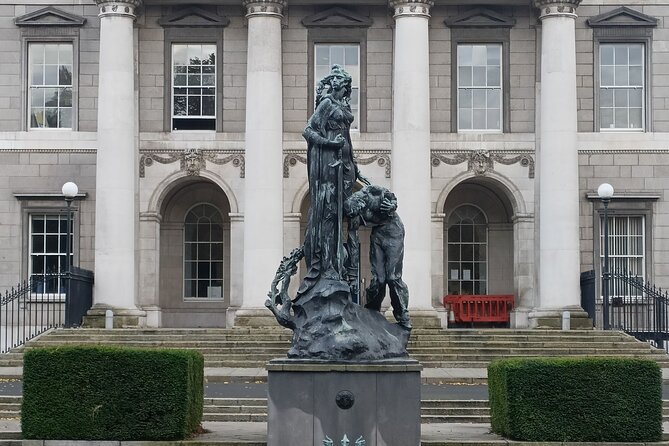
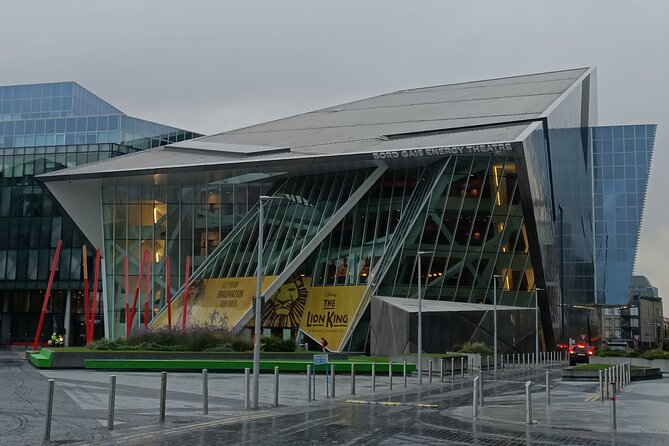
After the bridges, you pass the Convention Centre Dublin, described in the route as a state-of-the-art venue for conferences and events. That stop signals you are now looking at the Docklands as a place for gatherings and business, not just shipping.
Then you walk past a statue of Admiral William Brown, an Irish-born naval officer who founded the Argentine Navy. This is a fun kind of “wait, what?” detail. It broadens the Docklands story beyond Ireland, showing how maritime Ireland created connections around the world.
These stops are short, but they’re memorable because they add personality. The walk is not only about grim markers or old buildings. It also includes people whose stories reached beyond Dublin’s shoreline.
Diving Bell and Sea Lock: When Port Work Becomes Visible
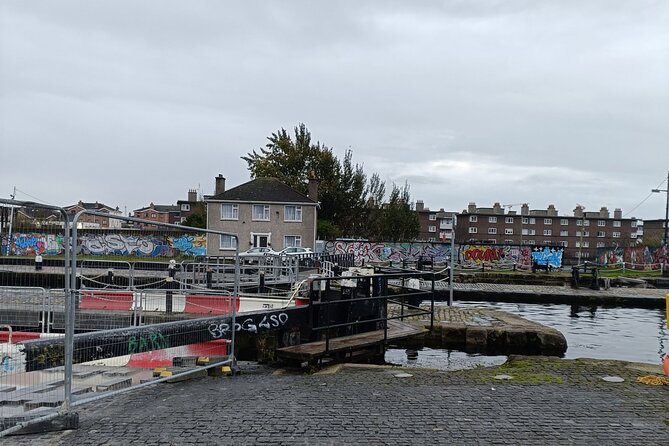
Two stops bring you to the nuts and bolts of dock operations. You’ll see the historic Diving Bell, once used for dock maintenance in Dublin’s port. And you’ll also walk by the sea lock, a crucial part of the maritime infrastructure that regulates water levels in the docks.
If you like history that feels mechanical and real, this section is a keeper. Even without deep technical background, these are clear objects tied to daily work. You get the sense that port life is not only ships and cranes, it is also maintenance and water management.
A small consideration: these are the kinds of stops where your attention matters. If you rush, you might miss what you’re supposed to look for. The audio helps, but you still need to pause for a moment.
Grand Canal Docks to Grand Canal Square: End With a Public-Space Feel
As the walk continues, you see signs for the Grand Canal Docks area, including a stop marked by the Grand Canal Docks sign. The route then passes Hanover Quay, a waterfront stretch mixing residential and commercial development.
You also pass Hanover Quay Studios, a recording studio complex that is frequented by musicians and artists. That adds a modern creative layer. It’s a nice switch after the more formal landmarks and memorials, and it makes the Docklands feel like a living district with culture, not only history.
The tour ends at Grand Canal Square, with the route listed as ending at Red Sticks Dublin on the Grand Canal. This is a smart finish point because it’s open and public. You can walk a few minutes further for a drink or simply sit and decompress.
If you want a practical souvenir from the walk, look for the artistic touch of Red Sticks Dublin as you reach the end. It gives your route a visual period at the finish.
Price and Value: Why $11.99 Makes Sense for an Offline Walk
At $11.99 per person, this audio experience is priced for people who want structure without paying for a guided group tour. The value is not only the low cost, it’s what you get with the format:
- Unlimited, lifetime use of the tour, usable both before and after your booking date
- Virtual playback, so you can listen like an audiobook from anywhere
- Offline access to audio, maps, and geodata, which matters for budget and battery life
If you already know you like self-guided city walking and you hate paying for another whole-day tour, this fits. You also get something you can repeat. If you want a slower re-listen later, you can.
Is it for everyone? If you only enjoy face-to-face interaction, you may miss the back-and-forth of a live guide. But for a route like Dublin Docklands, where the “story” is tied to what you see outside, an audio guide is a strong match.
How to Use It Smoothly: Setup, Headphones, and a Calm Pace
Before you start, plan for the equipment you supply. Bring your smartphone and headphones. The good news is the tour is designed for offline use, so you can load your materials ahead of time and then keep your data usage down.
Timing tip: start when you have at least an hour. If you’re trying to squeeze it into 40 minutes, you’ll feel rushed, especially around memorials and river views.
Another tip: treat it like a guided walk, even though it is self-guided. Meaning, don’t stop the audio every time you get curious. Let the narration carry you between major landmarks, then pause intentionally when you want to read or photograph.
Lastly, wear walking shoes you trust. Docklands is flat in most sections, but you still have pavement, bridges, and waterfront weather.
Should You Book This Dublin Docklands Audio Tour?
Book it if you want a short, well-paced route that turns Docklands from scenery into story. I’d especially recommend it if you care about how Dublin changed from maritime trade to modern business and public life, and you like learning by walking with offline narration.
Skip it if you only enjoy guided tours where someone answers questions on the spot, or if you don’t want to carry a phone and headphones. Also, if wind and long waterfront exposures bother you, plan your timing and pace accordingly.
Overall, this is a smart value choice for Dublin days when you want history that’s close to the ground, not locked behind museum walls.
FAQ
How long is the Dublin Docklands walking tour?
The tour is designed to take about 50 minutes to 1 hour 10 minutes.
How much does the tour cost?
It costs $11.99 per person.
Do I need data or an internet connection during the walk?
No. You get offline access to the audio, maps, and geodata, which helps if your signal is weak.
What language is the tour in?
The tour is offered in English.
What do I need to bring with me?
You need to bring your own smartphone and headphones. Service animals are allowed.
Where does the tour start and where does it end?
It starts at the Custom House, North Wall, Dublin 1, and it ends at Red Sticks Dublin on the Grand Canal in the Dublin Docklands area.
Is this tour part of a group?
It is listed as a private tour or activity, so only your group participates.
Just in from the Liffey side




Walking Tours, compared.
Dublin Highlights and Hidden Gems Guided Walking Tour
Read our review →
90 Minute Dublin Walking tour and Sightseeing tips
Read our review →

Historical 2-Hour Guided Walking Tour of Dublin
Read our review →
Dublin Traditional Irish 3 Course Meal Walking Tour with Local
Read our review →
Browse the lists this tour appears in