
Reviewed · CYCLING TOURS
Bike Tour Along The Historic Waterways Of Dublin
Cycling Dublin by bike feels like getting a shortcut through the city’s best stories. You’ll roll along waterways and cycle lanes, with stops that range from nature spots to big Irish institutions like Croke Park. It’s a smart way to see more than the usual photo circuit without spending your day in traffic.
What I like most is the mix of “wow views” and local context. One minute you’re by Dublin Bay on a coast route, the next you’re learning how an 1800s sea wall ties into Captain Bligh’s story at Bull Island. Another standout is how often the tour slows down for meaning, like the World War 1 remembrance at Irish National War Memorial Gardens.
One thing to consider before you book: the ride is urban and you need a reasonable fitness level. Also, at least one rider noted the bike was a bit worn (gears and seat padding), so if you’re picky about bike comfort, bring your own expectations and let the guide know.
In This Review
- Key things you should know before you go
- Pedal Dublin’s waterways, not just its tourist streets
- Capel Street meeting, private group energy, and what the day timing really means
- From Dublin Bay to Bull Island: sea wall stories and a café with character
- The Guinness-owned park stretch and Croke Park under 83,000 seats
- Glasnevin Cemetery and the real feel of a public tour
- Lunch energy at John Kavanagh The Gravediggers
- Tolka Valley Park and Phoenix Park: big-city nature with history baked in
- Saluting 49,400 at the Irish National War Memorial Gardens
- Kilmainham Gaol outside view, then Royal Hospital Kilmainham
- Croppies Acre: a memorial in front of Collins Barracks and Guinness
- Price and value for $198.25 per person
- Bike comfort and fitness: the only two real watch-outs
- Should you book this Dublin bike tour?
- FAQ
- How long is the Bike Tour Along The Historic Waterways Of Dublin?
- How much does the tour cost?
- What is included in the tour price?
- Is lunch included?
- Are tickets for Glasnevin Cemetery included?
- Are tickets for Kilmainham Gaol included?
- Where does the tour start?
- Is pickup offered?
- Is the tour private?
- What happens if the weather is poor?
- Is free cancellation available?
Key things you should know before you go
- You’ll cover a lot in one go: Dublin Bay, major landmarks, and multiple parks, all on a guided route designed for cycling.
- History comes with your pedaling: the guide ties sites to transport infrastructure, sports culture, rebellion, and remembrance.
- Some entries need extra tickets: Glasnevin and Kilmainham Gaol are not included, so plan for that cost.
- Expect guided stops, not a museum marathon: most stops are short and practical, with one longer cemetery visit.
- You get real safety gear: you’re provided a helmet and high-visibility vest for urban riding.
- Bike comfort can vary: one review flagged older bike hardware, so if you’re sensitive to saddle comfort, be ready.
Pedal Dublin’s waterways, not just its tourist streets
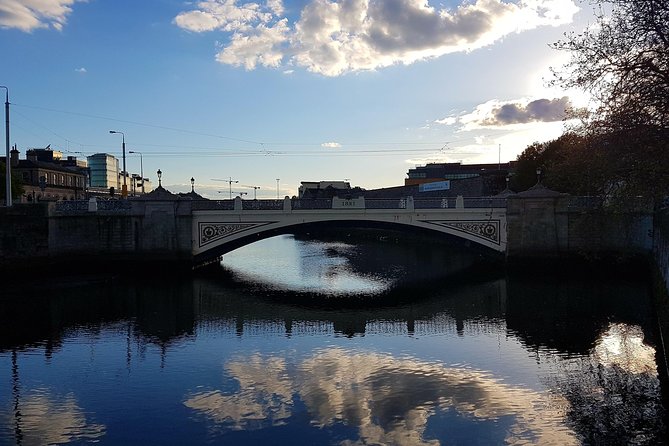
If you like cities where the roads feel busy and cars feel impatient, biking is a relief. This tour is built around moving through Dublin on safer-feeling paths and through parks, with water views and coast air part of the rhythm.
The route starts by heading along a newly completed cycle lane. The guide talks about how transport infrastructure shaped this area, and you’ll get sea views toward Dublin Bay while you ride. It’s one of those “you’re traveling and learning at the same time” stretches that makes the whole day feel purposeful.
Then the itinerary swings into parks and neighborhoods where you can pause, walk a little, and actually look around. That balance is the point. You’re not rushing nonstop, but you are steadily covering ground.
More of the rising and the years after:


Capel Street meeting, private group energy, and what the day timing really means
The tour meets at 37 Capel St, North City. If your accommodation is within 1 km of the start, pickup can be arranged up to 20 minutes prior to the scheduled time, and the guide walks you to the start point.
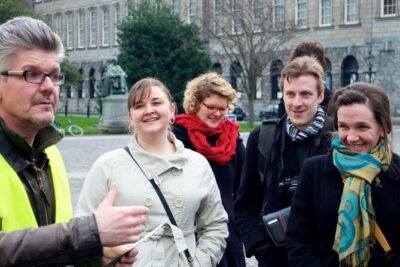
It’s also a private tour, meaning only your group goes. That matters more than people expect, because the guide can pace you better and adjust to comfort levels without juggling strangers.
Timing is listed as 5 to 8 hours. Practically, that wide range usually means the guide’s pacing and the length of the stops can shift with conditions and group needs. Since some locations involve ticketed entries you might add (like Glasnevin and Kilmainham Gaol), plan extra time if you want to linger.
One more practical note: you should have the fitness to cycle in an urban setting. This isn’t a leisurely park loop the whole day, and the route includes enough city riding that you should feel comfortable with stopping, starting, and sharing space.
From Dublin Bay to Bull Island: sea wall stories and a café with character
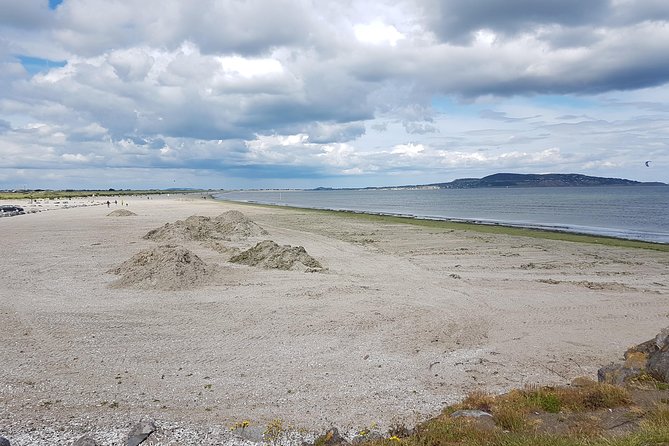
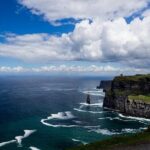
Early on, you get that coastline transition. You’re out along the cycle lane, absorbing the view of Dublin Bay and the sea air, while the guide sets up the transport history behind how people move through this part of Dublin.
Stop 1: Bull Island is where the day gets fun and unexpected. You’ll sit with a cuppa and a snack at a café that’s perched on a 200-year-old sea wall. That sea wall connects to Captain Bligh of Mutiny on the Bounty fame, which gives you a real “wait, what?” moment that you can’t get from just reading a guidebook.
You’ll also learn how one of Ireland’s major nature reserves formed accidentally. Even if you don’t have time to wander far, the story changes the way you look at the place. It becomes less like scenery and more like a living outcome of history.
This stop is about 30 minutes, with admission listed as free for the stop. It’s a good reset for the rest of the ride.
The Guinness-owned park stretch and Croke Park under 83,000 seats
After Bull Island, you cruise through an elegant park connected to the Guinness family. The tour moves along tree-lined laneways at an easy pace, which is a nice contrast to the coast stretch.
You’re doing two things at once here. First, you’re building stamina for later, bigger sights. Second, you’re getting Dublin’s “green between buildings” feel instead of only seeing monuments.
Stop 2: Croke Park Stadium is a short stop, around 15 minutes, but it’s packed with cultural context. You park and stand beneath the stadium, which holds 83,000 capacity and is described as the third largest in Europe. That size is hard to picture until you’re there.
The guide shares the history of the Gaelic Athletic Association (GAA), framed as the lifeblood of Irish communities. You’ll also hear a tragic story about a nearly forgotten man who helped kickstart and shape the organization that now has clubs, members, and followers worldwide.
For many people, this is the standout “identity” stop. You’re not just seeing a stadium, you’re hearing why it matters.
Admission is listed as free for this stop, so you’re paying mainly for the guided storytelling and time efficiency.
Glasnevin Cemetery and the real feel of a public tour
Stop 3: Glasnevin, Ireland’s National Cemetery is the first longer stop at about 1 hour 30 minutes. The admission ticket isn’t included, so you’ll want to budget for that separately if you plan to go through the public tour.
This is a place where the tone gets quieter. You’ll hear stories about famous and lesser-known characters, described as quirky and sombre. That mix matters. It helps you understand that Irish history is not only public heroes and dates, but also the odd, personal, and sometimes unsettling lives around those events.
If you don’t do well in emotionally heavy spaces, give yourself a little extra time to step out and breathe. The guide’s job here is interpretation, not forcing you to rush.
A few other Liffey-side days to consider
- Cycle Dublin – Bike & ebike Tours
★ 5.0 · 748 reviews - Dublin Panoramic e-Bike Tour with Howth Adventures
★ 5.0 · 544 reviews - Dublin: Bike & E-Bike Tour with a Local Guide
★ 4.6 · 477 reviews - E-Bike & Bike Tour with a Local Guide in Dublin
★ 5.0 · 412 reviews
Lunch energy at John Kavanagh The Gravediggers
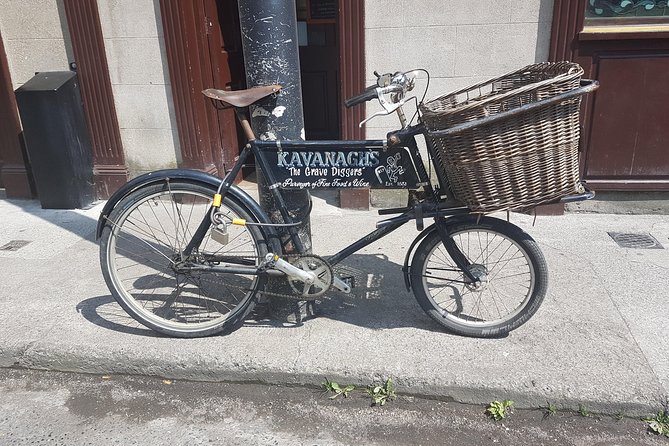
After Glasnevin, you go to John Kavanagh The Gravediggers. The stop is about 45 minutes, and admission is listed as free for the stop.
This pub is named after the hard-working folks who have been frequenting it since it opened in 1833. The name alone tells you the place is connected to the cemetery area. It’s the kind of stop that feels practical, but also helps you keep the story thread going from earlier.
Lunch is not included on the tour, so treat this as your chance to grab food on your own. If you’re sensitive to timing, try to order quickly when you get inside so you don’t lose your place for the next cycling segment.
Tolka Valley Park and Phoenix Park: big-city nature with history baked in
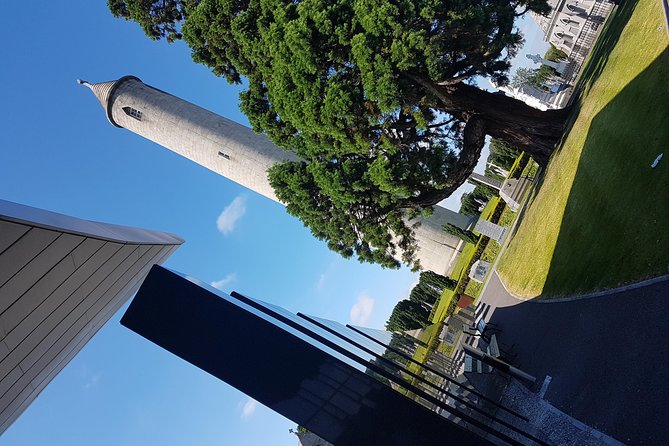
Stop 4: Tolka Valley Park is a quick, about 10 minutes break. You’ll explore a cycle path through lush green foliage, which is exactly the kind of pause you want after a longer learning stop like Glasnevin.
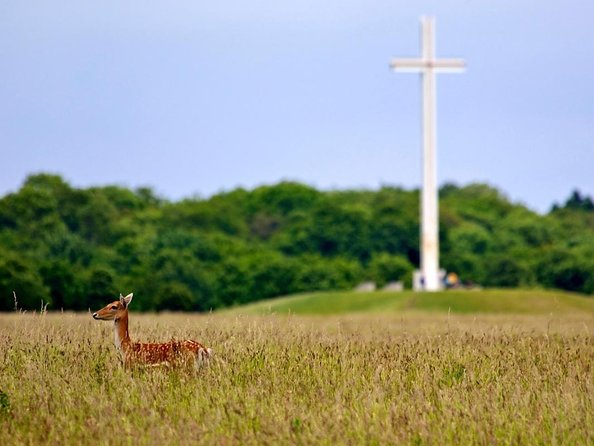
Then comes the bigger nature moment: Stop 5: the large enclosed capital-city park. The tour describes it as the largest enclosed park of any capital city in Europe. It also ties the story to red deer beginning in 1662, with deer still roaming today.
That detail is useful because it changes what you’re looking at. You’re not just admiring open space, you’re seeing a centuries-old management story about how the city and nature have been forced to share space over time.
If the weather is good, this is where the ride starts to feel genuinely “open.” You’ll still be cycling, but the mindset shifts toward wandering, watching, and letting the city air clear your head.
Saluting 49,400 at the Irish National War Memorial Gardens
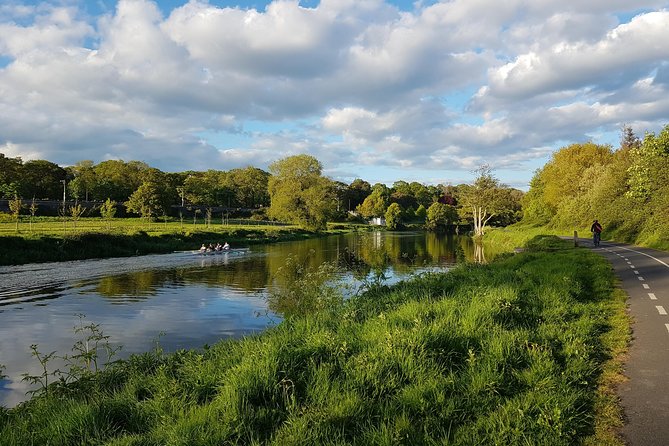
Stop 6: Irish National War Memorial Gardens sits along the River Liffey cycle route. You’ll watch rowers pull in the river as you ride, which is one of those small moments that makes a place feel alive, not just memorial.
The stop lasts about 10 minutes, and admission is listed as free for this segment. Here, you salute 49,400 Irishmen who fought in World War 1, including people noted as often forgotten or worse in times past.
The guide also shares a little known story of how a well-known Irish nationalist escaped execution through cunning and guile. It’s the kind of detail that makes remembrance feel specific instead of generic. There’s also mention of the significance of two swans, which is the sort of symbol moment guides remember to explain, because it’s easy to overlook on your own.
If you prefer a day that balances emotional moments with lighter scenery, this is your halfway stabilizer. It’s serious, but it’s paired with an active riverside setting.
Kilmainham Gaol outside view, then Royal Hospital Kilmainham
Stop 7: Kilmainham Gaol is a brief pause of about 10 minutes outside the 18th Century gaol. Admission is not included, and you’ll hear the story of the prison’s uses over time, including public executions through the Great Famine era, and the executions of the leaders of the 1916 Rising.
Because you’re stopping outside, this isn’t replacing a full on-site visit. It’s more about framing what you’ll see if you choose to go in on your own later. If you want the deepest understanding, plan to add the ticketed visit, since the tour stop itself is designed as a quick context anchor.
Next is Stop 8: Royal Hospital Kilmainham for about 5 minutes. You get a picturesque view over pristine public gardens that are described as a replica of the original laid out in the 17th century. Nearby is the former military hospital, which is now tied to the Irish Museum of Modern Art.
That view matters. Even in a short stop, you’re learning how spaces shift roles over centuries, from military use to cultural use. It’s a practical reminder that cities keep changing purpose even when buildings remain.
Croppies Acre: a memorial in front of Collins Barracks and Guinness
Stop 9: Croppies Acre Memorial Park is your final stop, about 5 minutes, and admission is listed as free. The tour references legend that it was a mass burial grave for victims of the 1798 Rebellion.
What makes this stop different is its positioning. You’re looking at the backdrop of Collins Barracks National Museum on one side and the world-famous Guinness Brewery on the other. You’re seeing two big Dublin anchors facing each other, with a memorial space tucked between their gravity.
Even with a short stop, the guide’s job is to help you connect the physical setting to the story. This is where the day’s “many Dublin versions” feel like they snap together.
Price and value for $198.25 per person
At $198.25 per person, this is not a budget “rent a bike and go” option. But you’re also not buying just wheels. You’re paying for guided interpretation plus a route that handles the heavy lifting of planning, timing, and sequencing.
Here’s what you do get:
- Use of a bicycle
- Helmet and high-visibility vest
- Multiple stops with free listed admission (Bull Island café stop listed as free, Croke Park free, war gardens free, several memorial/park stops free)
- A private group format
- Pickup within 1 km if you want it
- A mobile ticket and group discount option
What you should plan for:
- Lunch is not included
- Glasnevin Cemetery ticket is not included
- Kilmainham Gaol ticket is not included
That’s the value equation. If you’re the kind of person who enjoys context, this price starts to make sense fast because the tour covers a lot of sites where reading alone can leave you with “I saw it, but did I get it?” The guide’s role is to give you the “why” behind the “what.”
Also, the reviews you’ll find online mention Ben as a standout guide, with riders calling him safe, communicative, and strong on history and language. Even if you don’t get Ben, that kind of guide experience is exactly what makes a bike tour work.
Bike comfort and fitness: the only two real watch-outs
I’ll be straight with you: this tour asks you to cycle in an urban environment and you should be in strong physical fitness shape. If you’re recovering from injury or you hate stop-and-go riding, you might find the pace frustrating.
The second watch-out is bike comfort. One rider flagged an older bike with gear trouble and a seat that lacked padding for a long day. Since the itinerary can run up to 8 hours, comfort matters.
What you can do:
- Tell the guide early if your bike feels off
- Ask about seat adjustment right away
- Bring a water bottle and consider a simple snack if you get hungry between food stops
And yes, it’s also weather dependent. The tour requires good weather, so expect a change in date if the skies don’t cooperate.
Should you book this Dublin bike tour?
Book it if you want a guided bike day that connects Dublin Bay, major landmarks, and meaningful memorial sites into one manageable loop. It’s a great fit for history lovers who like moving, not just standing, and for anyone who wants to skip the stress of navigating traffic.
Don’t book if you’re looking for a totally gentle ride with zero city cycling, or if you need guaranteed top-tier bike condition and cushioning. The itinerary is packed with stops, and the best experience comes when you’re comfortable pedaling and staying alert.
FAQ
How long is the Bike Tour Along The Historic Waterways Of Dublin?
The tour lasts about 5 to 8 hours, depending on pacing and the day’s conditions.
How much does the tour cost?
The price is $198.25 per person.
What is included in the tour price?
You get use of a bicycle, plus a safety helmet and a high-visibility vest.
Is lunch included?
No. Lunch is not included.
Are tickets for Glasnevin Cemetery included?
No. Glasnevin admission ticket is not included.
Are tickets for Kilmainham Gaol included?
No. Kilmainham Gaol admission is not included.
Where does the tour start?
The start location is 37 Capel St, North City, Dublin, D01 X2E5, Ireland.
Is pickup offered?
Pickup is offered if your hotel or accommodation is within 1 km of the start location. The guide can meet you up to 20 minutes before the scheduled start time and walk you to the start.
Is the tour private?
Yes. It is private, and only your group participates.
What happens if the weather is poor?
The experience requires good weather. If it’s canceled due to poor weather, you’ll be offered a different date or a full refund.
Is free cancellation available?
Yes. You can cancel for a full refund up to 24 hours in advance of the experience’s start time.
Just in from the Liffey side



Cycling Tours, compared.
Dublin Panoramic e-Bike Tour with Howth Adventures
Read our review →

E-Bike & Bike Tour with a Local Guide in Dublin
Read our review →
Private Dublin Historical and Heritage Tour by Bike
Read our review →Browse the lists this tour appears in