
Reviewed · CRUISES & BOAT TOURS
Dublin: River Liffey Sightseeing Cruise
Dublin clicks from the River Liffey. On this 45-minute sightseeing cruise, you glide past landmarks with a live story that runs from Viking arrivals to today’s Docklands. It’s a fast way to get your bearings without having to do deep planning.
I love the live local guides, with guides like Gerry, Peter, and Lucy bringing the facts to life with humor and clear storytelling. I also like that you hit major sights up close from the water, including Ha’penny Bridge and the Custom House.
The biggest catch is time, the 45 minutes can feel like it ends right when you are getting comfortable. Also, the sailing can be affected by tides, so a route tweak or alternative sailing is possible.
In This Review
- Key things to know at a glance
- River Liffey in 45 Minutes: Why This Cruise Works So Well
- Boarding at The Sean O’ Casey Footbridge: Simple, but Timing Matters
- Jeanie Johnston and Docklands: Seeing Dublin’s Working Side
- Ha’penny Bridge, Custom House, and the Built-World Details
- Dublin Port and Where the City Meets the Sea
- Canals, Cromwell, Bligh, and Why the Timeline Matters
- Reclaimed Land, Trinity College, and the Spire From the Water
- Your Crew Makes It Better: Guides, Humor, and Getting Your Seat Right
- Price and Value: Is $23 a Good Deal for This Much Seeing?
- Who Should Book This Liffey Cruise, and Who Might Skip It
- Should You Book This Dublin River Liffey Cruise?
- FAQ
- How long is the Dublin River Liffey sightseeing cruise?
- How much does the cruise cost?
- Where is the meeting point for the cruise?
- Do I need hotel pickup or drop-off?
- Is the boat all-weather and how many passengers does it hold?
- Is there a live guide, and what language is it in?
- Is the cruise wheelchair accessible?
- What kinds of sights will I see during the cruise?
- Can the sailing time or route change due to conditions?
- Are there toilets on board?
Key things to know at a glance
- Live English guide commentary that links what you see to Dublin’s timeline, from Vikings to reclaimed land
- All-weather 48-passenger boat, built for river views even when the weather is not perfect
- Landmarks in sequence: Ha’penny Bridge, Custom House, Jeanie Johnston, and the edge of Dublin Port
- Stories with real names and dates, including Oliver Cromwell and Captain William Bligh
- No on-board toilets, so it’s smart to use facilities across the road before you board
River Liffey in 45 Minutes: Why This Cruise Works So Well
If you only have a short window in Dublin, a river cruise is one of the quickest ways to understand the city’s shape. This one runs on the River Liffey, so your view stays wide and your stops feel like chapters instead of random photo spots.
What makes it especially useful is the way the commentary ties places together. You are not just being shown bridges and buildings. You are getting the why behind them, from Viking-era arrivals to Dublin’s growth in the 18th and 19th centuries, then later decline and Docklands redevelopment. That context is what makes your Dublin walks later feel more informed.
I also like the “starter pack” feel. In under an hour, you’ll see the areas that first-time visitors usually circle by foot, like the historic center, Dublin Port edge, and the canal system story that loops into later Dublin development. You’ll leave with names you can actually use when you point and say, I know what that is.
One more practical detail: it’s an all-weather boat. Ireland weather loves surprises. Even if it is misty or cool, you still get to stay on the water and keep moving, instead of bouncing between indoor attractions.
More hulls leaving the Liffey and the bay:
Boarding at The Sean O’ Casey Footbridge: Simple, but Timing Matters
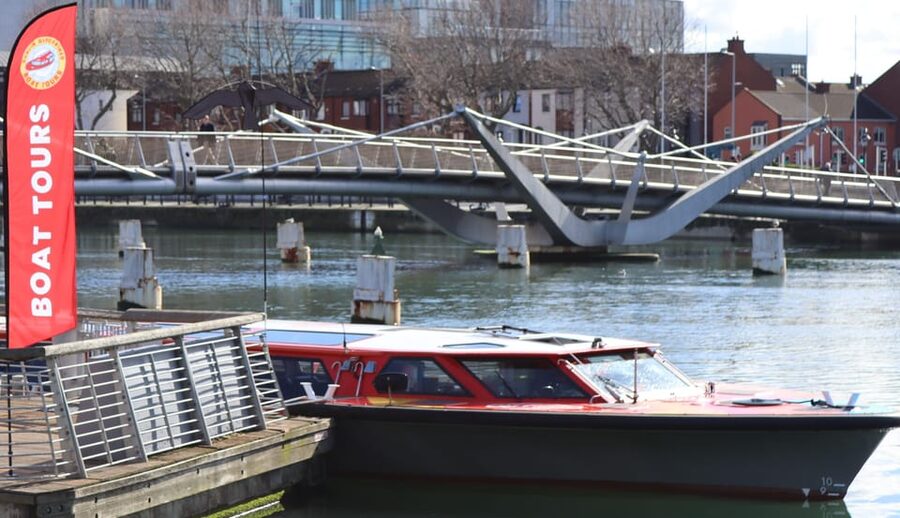
The meeting point is easy to find once you know where to look. All cruises start and end at the Pontoon at The Sean O’ Casey Footbridge, on the north side of the river at Custom House Quay, opposite the CHQ building.
Your best move is to arrive early. The crew asks you to be there about 10 minutes before your booked time so they can check you in and get you set. That buffer matters because Dublin Port area can be a little awkward if you are coming from elsewhere on foot or by bus.
This is also where you should think about comfort. You’ll be sitting on a river boat for about 45 minutes, so it helps to dress for wind off the water. Even when the forecast looks fine, the Liffey can feel cooler than the streets.
And yes, there’s a clear reason to plan ahead for basic needs. The guidance is that you should use toilets across the road before the trip, since there are no toilets on board. That one tip saves you stress later, especially if you are traveling with kids or anyone who gets uncomfortable waiting.
Jeanie Johnston and Docklands: Seeing Dublin’s Working Side
A big part of the appeal is that you do not just get the postcard center. You also get Dublin in its “worked-the-river” form.
One of the standout highlights is sailing past Jeanie Johnston. It’s one of those Dublin landmarks that makes sense when you see it from the Liffey, because it anchors the story of shipping, migration, and the river’s role in connecting Dublin to the wider world.
Then comes Docklands. You’ll see the area from the water and hear about the shift from a period of decline to the redevelopment that shaped what you can explore today. From street level, it can feel like a modern district with old edges. From the river, it reads more clearly as a former industrial zone that got reworked.
If you like cities where history is layered instead of locked behind museum walls, this section is your payoff. It also helps you understand why Dublin Port and the surrounding areas matter, even if you are mainly sightseeing along the Liffey.
Ha’penny Bridge, Custom House, and the Built-World Details
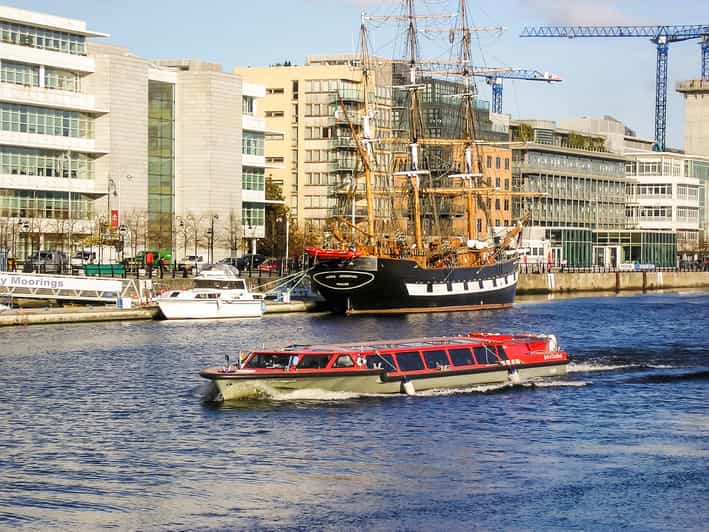
Dublin’s bridges and civic buildings are some of the best “you have to see it” objects in the city. This cruise lines them up in a way that makes them easy to remember.
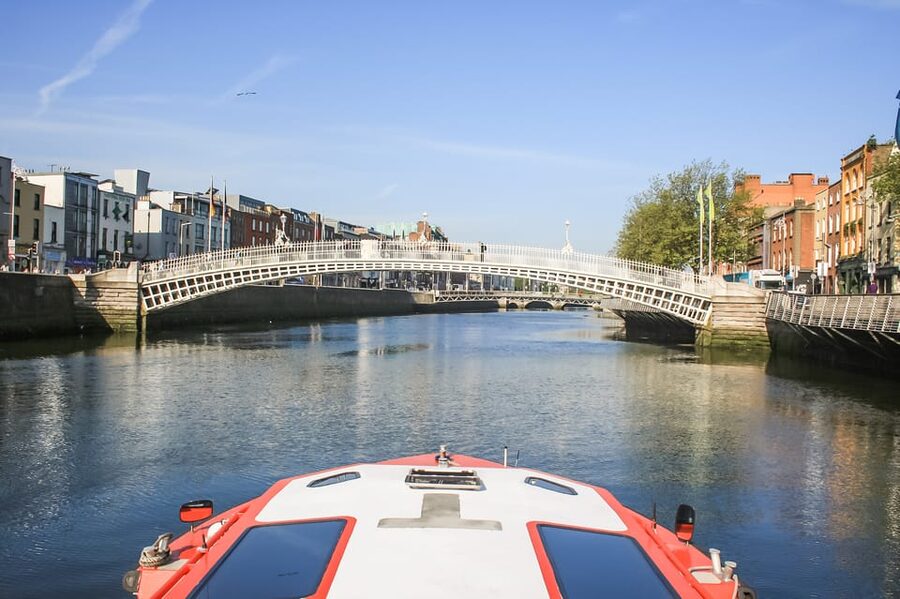
You’ll pass Ha’penny Bridge, an iconic crossing people photograph nonstop. From the water, the bridge is not just a subject, it’s a scale marker. You get the sense of how the river divides and connects neighborhoods.
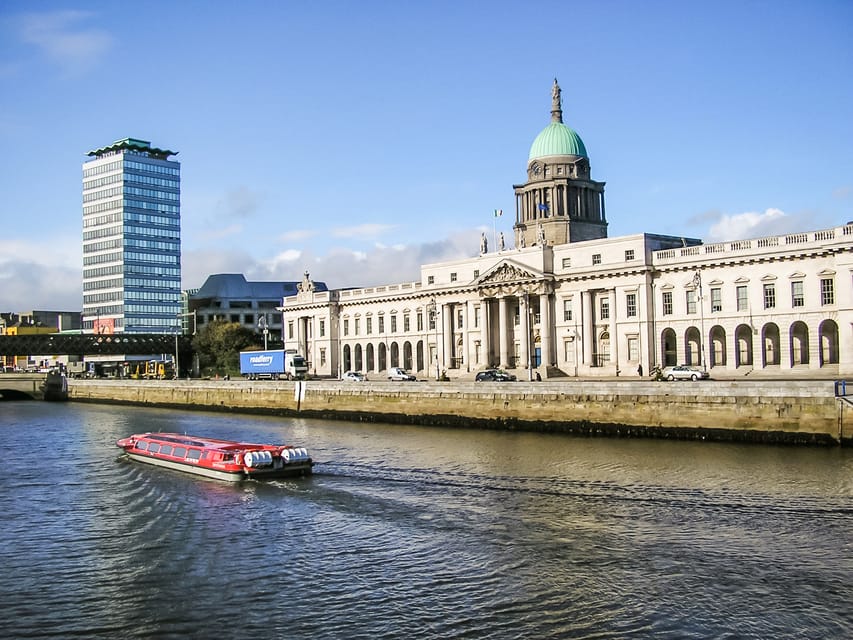
You’ll also get views connected to Gandon’s masterpiece Custom House. Even if you have seen photos before, it hits differently when you are moving alongside the building. You can take in the facade details and the river setting without needing to stand in one crowded spot for a long time.
This part of the cruise is also a good lesson in how Dublin’s “storytelling through architecture” works. The commentary ties the river to the city’s growth and changing priorities over centuries, including the booming period in the 18th and 19th centuries.
Dublin Port and Where the City Meets the Sea
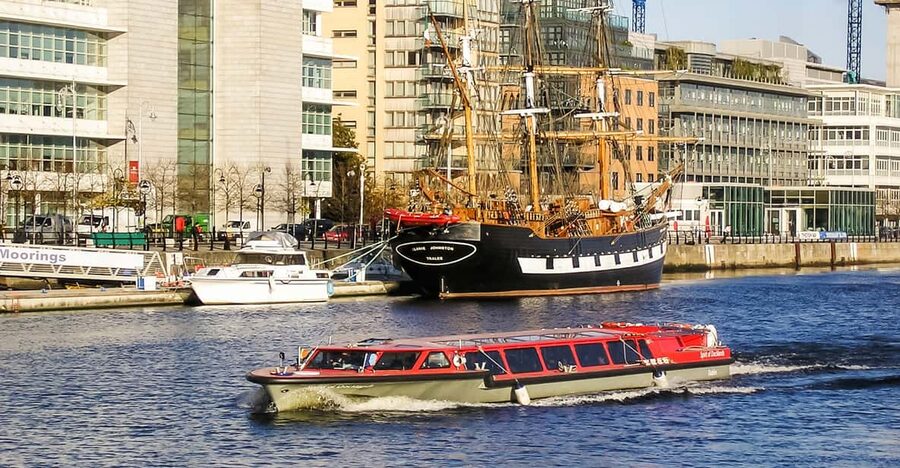
This cruise goes all the way toward the edge of the city where the River Liffey meets the bigger maritime picture. One of the highlights is seeing Where the City meets the Sea at the edge of Dublin Port.
That segment is valuable because it changes your perspective. Instead of thinking of the Liffey as a city river, you start seeing it as a working channel that links inland Dublin to ocean travel and trade.
It’s also a great moment for photos and for simply getting the “map in your head” right. If your next plan is to explore by foot, having that end-of-the-river view helps you understand where streets connect to the water.
Another way the same day could go from Dublin:
- Dublin to Cliffs of Moher, including Wild Atlantic Way and Galway
★ 5.0 · 23,331 reviews - From Dublin: Cliffs of Moher, Burren & Galway City Day Tour
★ 4.8 · 18,888 reviews - Dublin: Guinness Storehouse Entry Ticket
★ 4.6 · 16,863 reviews - Dublin to Cliffs of Moher, Burren, Wild Atlantic Way, Galway Tour
★ 5.0 · 12,924 reviews
Canals, Cromwell, Bligh, and Why the Timeline Matters
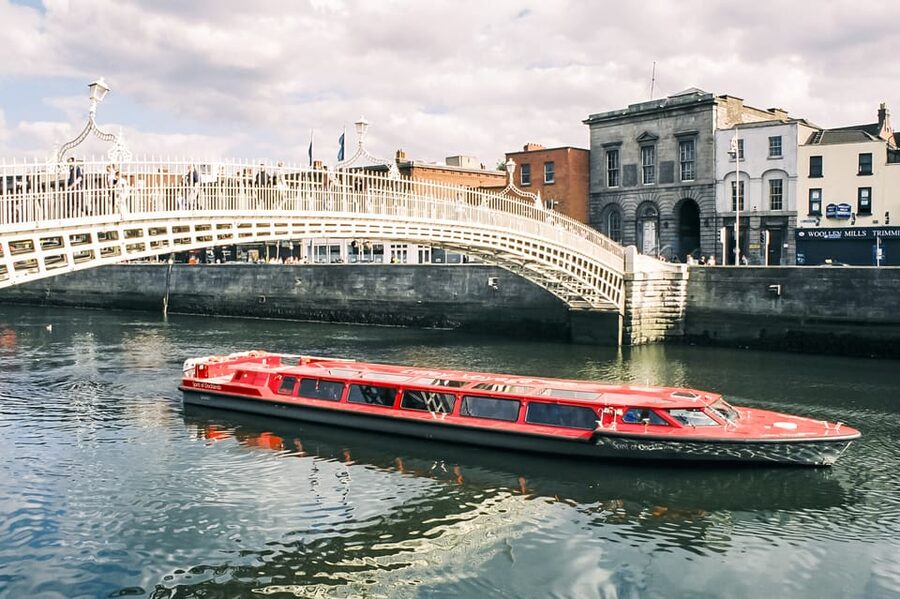
The best river guides do more than list facts. They connect details so you feel like you understand the city’s logic.
Here, the guide follows a timeline that includes the Royal and Grand Canals, plus major historical figures. You’ll hear about Oliver Cromwell landing in 1649, and you’ll also learn about Captain William Bligh surveying Dublin Bay in 1800. Those are big names, but what makes them worth hearing is how the commentary explains why they mattered to Dublin’s development and its relationship to water routes.
And then you get the story of reclaimed land. Present-day Dublin includes areas built on land reclaimed from the water, including Trinity College and the Spire on O’Connell Street. Seeing this from the Liffey makes the city feel less accidental and more designed, shaped by engineering and changing priorities.
I especially like that this cruise gives you those names in plain spoken context. When you later walk past the Spire or read about Trinity College, you’re not starting from zero.
Reclaimed Land, Trinity College, and the Spire From the Water
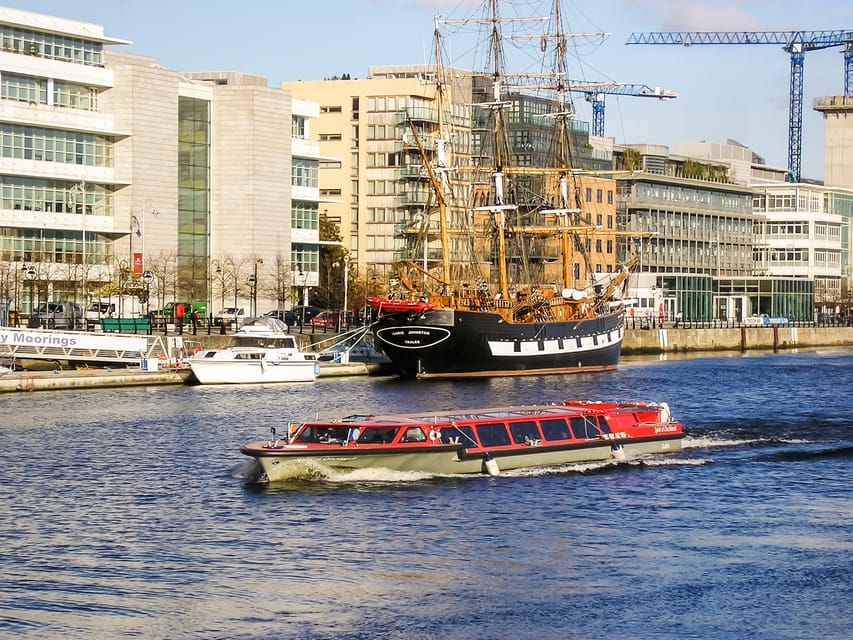
It can be tempting to treat the Spire as just a photo stop. But from the river, it becomes part of a larger story about where the city expanded and how the shoreline and land use changed.
You’ll see present-day Dublin that sits on reclaimed land, including Trinity College and the Spire in O’Connell Street. Even if you are not a history buff, this is one of those “oh, that makes sense” moments. You start connecting what you see above street level to the forces that shaped the ground beneath it.
For many first-time visitors, this is the hidden value of a short cruise. You get big references that help your planning. Next time you choose where to eat or where to stroll, your mental map already has anchors.
Also, if you love architecture, reclaimed land and historic development stories tend to make buildings feel more meaningful. It is not only what you are looking at, it’s how the city became itself.
Your Crew Makes It Better: Guides, Humor, and Getting Your Seat Right
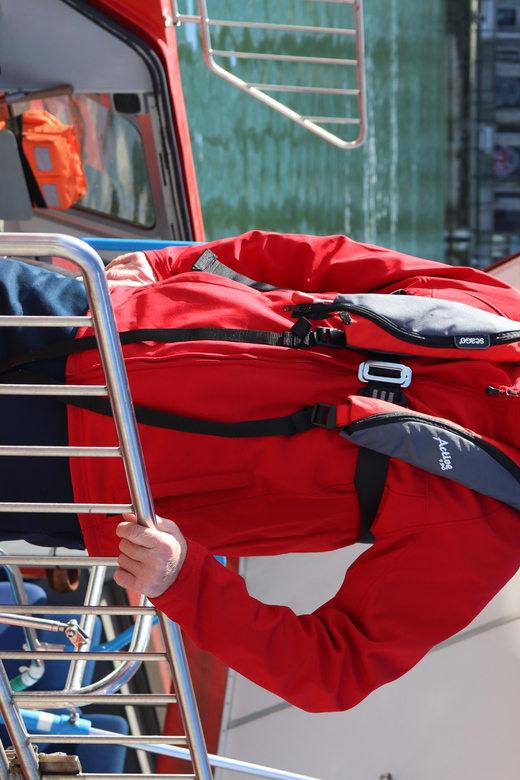
This cruise depends heavily on the guide. In the reviews, the pattern is very consistent: people loved the humor and the storytelling style.
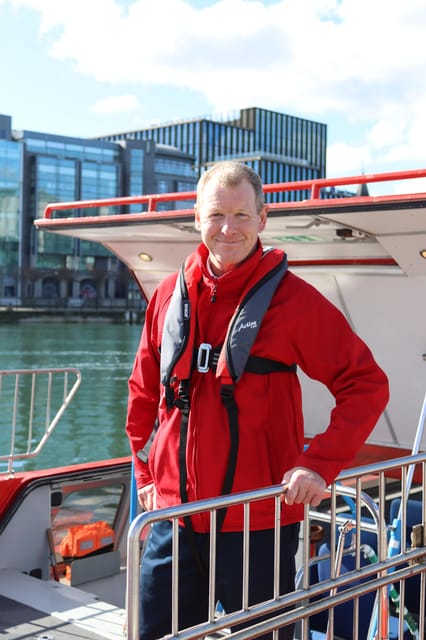
You’ll see named guides like Gerry, Tony, Jerry, Peter, and Lucy pop up in positive comments. The common thread is that the commentary feels conversational, not like a scripted lecture. Guides like these are also good at pacing, giving you enough information without dumping everything at once.
One practical tip based on the feedback: audio can be tricky if passengers talk loudly. A couple of people noted that other riders speaking over the guide made it harder to hear. You cannot control that, but you can improve your odds by picking a seat where you can face the guide.
The “crew” part matters too. The captain gets mentioned alongside the guide in multiple comments, including notes about a smooth trip and friendly help on board. That matters because on a small river boat, a calm captain makes the experience feel easy.
And if you are the type who cares about how close you get under bridges, here’s a real consideration. On a sailing that coincided with high tide, people mentioned that passing under the bridges felt very close to the top of the boat. That is not a problem, it’s just something to know if you do not love tight clearances.
Price and Value: Is $23 a Good Deal for This Much Seeing?
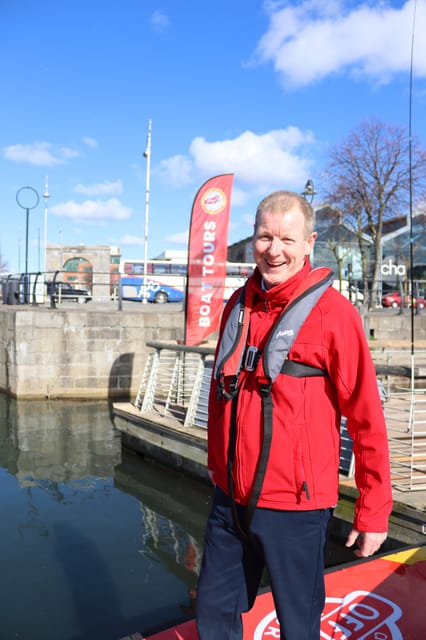
At $23 per person, this is priced like a practical add-on, not a big splurge. And for most people, the value is in three areas.
First, you’re buying time. 45 minutes is short, but it packs a lot: bridges, major civic landmarks, Docklands, the port edge, and historical context threaded across all of it. That matters if your Dublin days are already busy.
Second, you are getting interpretation. A river view is great, but the difference here is that the commentary explains what you’re looking at, including major figures and reclaimed land. That turns a photo trip into a “now I get Dublin” trip.
Third, you’re not paying for extras you may not want. The included part is the river cruise, and there’s no mention of extra add-ons like museum tickets. If your goal is just to get out on the water and learn fast, the pricing fits that simple plan.
The only value concern is the duration. If you crave long-form storytelling, you might wish it ran longer. But for an efficient overview, the short format is also a strength. You do not lose half your day to one activity.
Who Should Book This Liffey Cruise, and Who Might Skip It
I think this cruise fits best if you:
- Want a quick way to orient yourself in Dublin
- Like history told through places, not through timelines on paper
- Have limited time and want a “worth it” sightseeing hit
- Prefer an all-weather activity that keeps you moving
You might consider a different option if:
- You dislike short activities and prefer longer tours
- You are very sensitive to noise and do not want any chance of hearing issues from other passengers
- You strongly need on-board toilets, because the guidance is to use facilities across the road before boarding
For families, it can work well because it is simple, under an hour, and accessible via a wheelchair-friendly setup. For couples and solo travelers, it’s also a good “first day” activity. You’ll learn names and see directions that make later wandering easier.
Should You Book This Dublin River Liffey Cruise?
I’d book it if you want a fast, friendly, guided look at Dublin’s story from the water. The combination of clear landmarks (Ha’penny Bridge and Custom House), Dublin Port views, and a timeline that mentions Vikings, Oliver Cromwell, and Captain William Bligh gives you more than a standard sightseeing lap.
Make the call based on your tolerance for short tours. If you like getting the highlights and moving on, this is a solid choice for value at $23. If you want something that lasts much longer, you may prefer a longer guided walking or multi-hour experience.
One last practical nudge: plan a little buffer at the pier, and use the toilets before you board. Then sit back, listen for the story threads, and let the river do what it does best, show Dublin in motion.
FAQ
How long is the Dublin River Liffey sightseeing cruise?
The cruise duration is 45 minutes.
How much does the cruise cost?
The price is listed as $23 per person.
Where is the meeting point for the cruise?
All cruises depart from and return to the Pontoon at The Sean O’ Casey Footbridge on the north side of the river, on Custom House Quay, opposite the CHQ building.
Do I need hotel pickup or drop-off?
No, hotel pickup and drop-off are not included.
Is the boat all-weather and how many passengers does it hold?
The cruise uses an all-weather river boat for 48 passengers.
Is there a live guide, and what language is it in?
Yes, there is a live tour guide, and the tour is in English.
Is the cruise wheelchair accessible?
Yes, it is wheelchair accessible.
What kinds of sights will I see during the cruise?
You will see landmarks and historic neighborhoods along the River Liffey, including Docklands, Jeanie Johnston, the edge of Dublin Port (Where the City meets the Sea), Ha’penny Bridge, Gandon’s Custom House, and areas connected to the Royal and Grand Canals and reclaimed land such as Trinity College and the Spire in O’Connell Street.
Can the sailing time or route change due to conditions?
Yes. Bookings are subject to availability and tidal conditions, and if there is a problem with your selected date and time, you will be contacted to arrange an alternative sailing.
Are there toilets on board?
No. The guidance is to use toilets across the road before the trip because there are no toilets on board.
Just in from the Liffey side




Cruises & Boat Tours, compared.
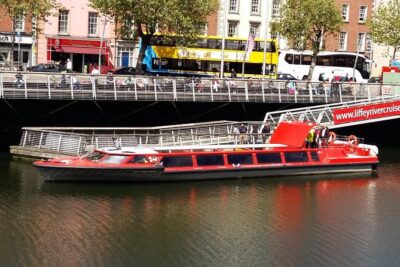
Dublin Sightseeing Cruise on River Liffey with Local Guide
Read our review →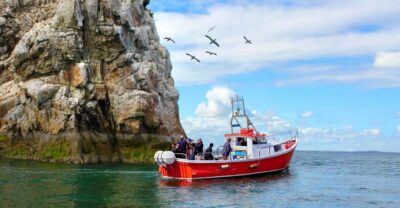
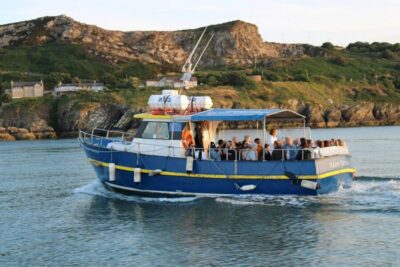
Howth Cliffs and Ireland’s Eye Ferry Boat Tour
Read our review →

Howth Coastal Boat Tour (Ireland’s Eye Ferries 50 mins trip)
Read our review →
Browse the lists this tour appears in