
Reviewed · WORKSHOPS
Dublin: Forge a Silver Ring Workshop on Drury Street
A few hours in Dublin and you walk out with metal. This sterling silver ring workshop turns you into a maker, from cutting your band to adding texture and polish, with instructors like Audrey and Sinead guiding every step. I love that it is hands-on all the way through, and I love that you leave with a real ring you customized for your finger. The main thing to consider is logistics: the studio has steep stairs, and you need decent English to follow the process.
You’ll start by choosing which finger you want, then mark and cut your silver, shape it on a mandrel, and get it soldered by the tutor. The class feels friendly and structured at the same time, and people often mention how clear and patient the coaching is, especially in small groups led by two instructors. One drawback to plan for: your workshop may move from Drury Street to Georges Street the day before, so check your message and give yourself extra time to arrive.
In This Review
- Key points that make this workshop worth your time
- A 2-hour Dublin workshop where you actually forge the ring
- Drury Street vs Georges Street, and how to plan your arrival
- From saw to mandrel: what happens during the forging session
- Personalizing your ring: curve, texture choices, and polish
- Why the instructors matter: clear coaching and real help
- What you take home, and why this souvenir feels different
- Who this Dublin ring forging workshop is perfect for
- Price and value: what $98 buys you in Dublin
- Quick practical tips before you book
- Should you book this Dublin silver ring workshop?
- FAQ
- How long is the Dublin silver ring forging workshop?
- What is the price per person?
- Where does the workshop start?
- If it moves, where is the alternate meeting point?
- What is included in the workshop price?
- What is not included?
- Is the workshop suitable for children?
- Does the workshop require English?
- Is it suitable for wheelchair users?
- How late can I arrive?
Key points that make this workshop worth your time
- Real forging steps in 2 hours: saw, mandrel shaping, soldering, filing, texturing, and finishing
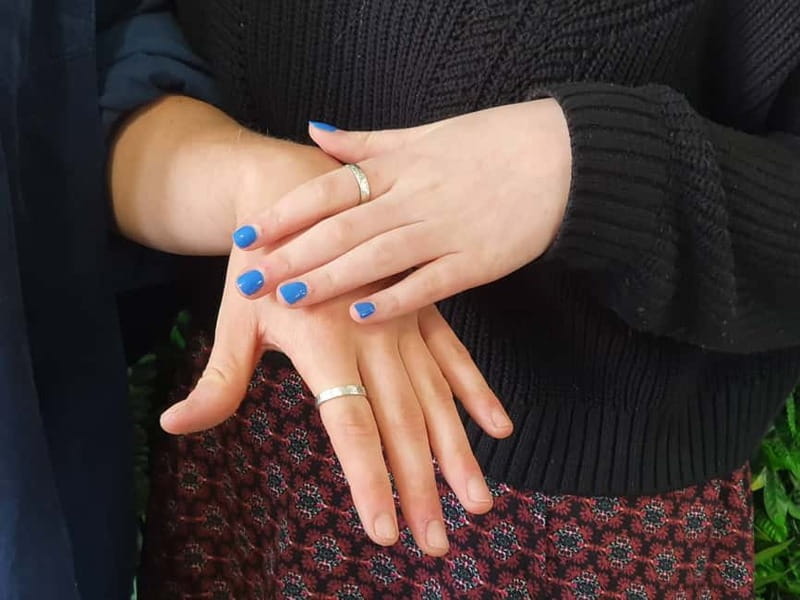
- Personalization is built in: you pick finger size, ring curve, texture option, and final polish look
- Two-instructor support: reviewers repeatedly praise the help when you are learning from scratch
- Central Dublin meeting points: Drury Street, with an alternate location a short walk away on Georges Street
- You get tea, coffee, and snacks: small comfort touches during the workshop
A 2-hour Dublin workshop where you actually forge the ring
This is not a sit-and-watch class. You’re standing at your own bench and learning the steps that turn a strip of sterling silver into a ring. In about two hours, you’ll move from measuring and cutting to shaping, soldering, and finishing. That speed matters, because you get the full satisfaction of creating something complete, without needing a multi-day course.
The best part is that the final result is genuinely yours. You choose the finger, you decide the curve, and you pick from different texture and polish options. That turns a souvenir into something you’ll wear. I also like that the tone is practical. The instructors are there to get you through each stage safely and clearly, not to talk at you for hours.
If you are bringing someone with you, this workshop works especially well for couples. Many people do matching rings for anniversaries or honeymoons, and the structure makes it easy to compare your choices at each step, without needing jewelry experience.
A few other Liffey-side days to consider
Drury Street vs Georges Street, and how to plan your arrival
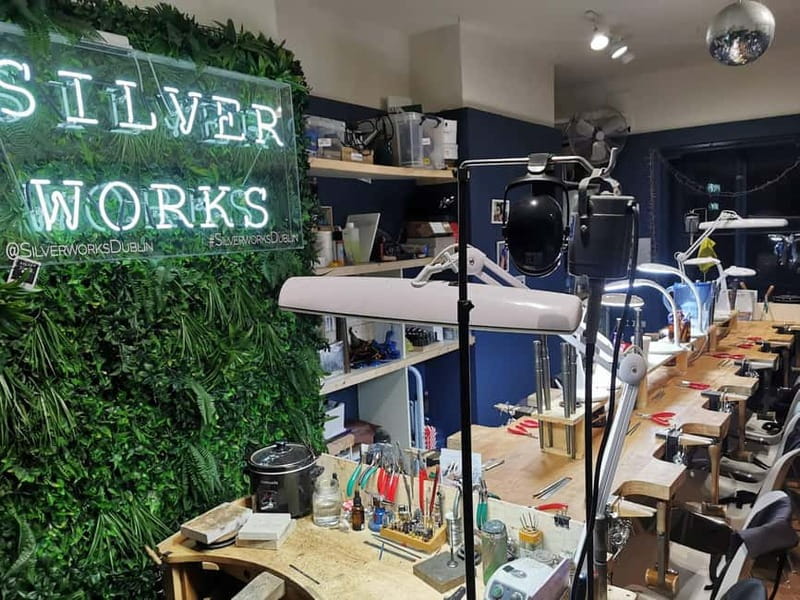
The workshop you book is for the Drury Street location, but you should know it might shift. Sometimes the class is moved to a second studio location about a two-minute walk away on South Great Georges Street. You’ll receive a message the day before with the location, so treat that message like part of your itinerary.
This sounds minor, but it can really affect your day. Dublin streets are compact and easy to wander, yet it only takes one wrong turn to make you late. The studio asks you to arrive at least 10 minutes early, and it cannot accept late attendees beyond 10 minutes after the class starts. If your travel plans are uncertain, give yourself buffer time. A delayed train or late bus plus a 10-minute window is not a great combo.
Also, plan for the studio itself. Both studios have steep stairs and are not suitable for wheelchair users. If you have mobility concerns, take that seriously before you book.
From saw to mandrel: what happens during the forging session
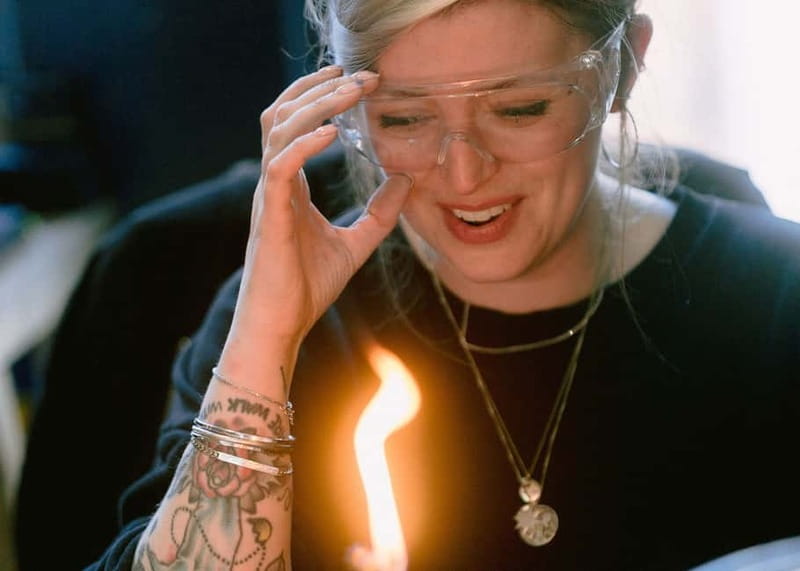
Here’s the core flow, in the order you’ll experience it. Think of it as a guided making process, with enough challenge to feel real and enough coaching to keep it from feeling scary.
First, you mark your silver to the length you need. The tutor starts you by having you choose the finger the ring is meant for. That choice is important because sizing is not one-size-fits-all. Once your length is marked, you cut it to size using a handsaw. Doing the cut yourself matters. It gives you immediate ownership of the project, and you understand the metal’s resistance right away, instead of just watching it happen.
Next comes shaping. You form the ring by shaping the band into a ring mandrel using a mallet. This step is where your ring starts to look like a ring instead of a flat piece of silver. It also helps you understand how a little pressure and correct alignment makes a big difference to the final shape.
Then your band gets soldered. The tutor solders your piece, and they guide you through the process so you know what is being done and why. This is a key moment because it is the point where your ring becomes one continuous piece. Without that, your finished ring would not hold together.
After soldering, you move into filing. You’ll file the ring using different hand files. Filing is the “make it smooth and wearable” phase, and it often turns beginners’ panic into confidence. People frequently mention that instructions are clear and the steps feel manageable, even if you’ve never touched metal before.
Personalizing your ring: curve, texture choices, and polish
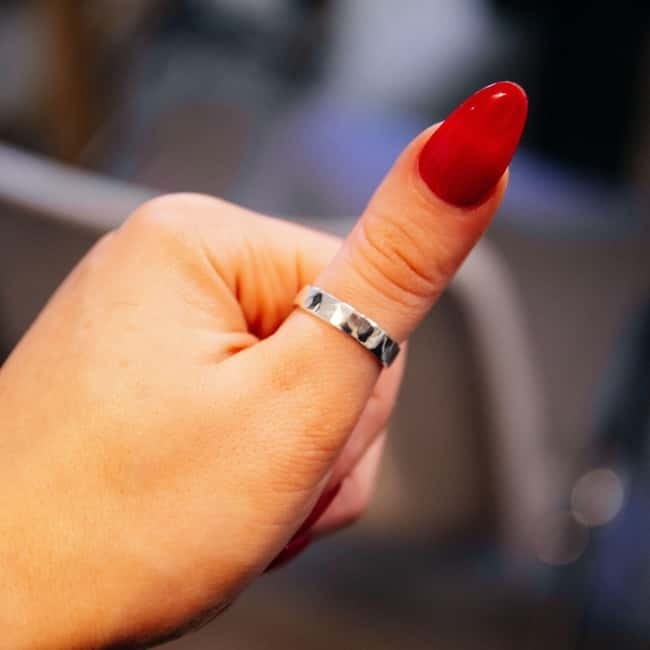
The workshop does more than teach technique. It builds in personalization, so your ring does not look like everyone else’s.
You start by deciding on the curve. That affects comfort and how the ring catches light when you move your hand. Small changes here can matter more than people expect. If you’ve ever tried on rings that feel slightly too flat or slightly too rounded, you already get the idea.
Then you choose from three different texture options. This is where the ring becomes visually yours. You use a planishing hammer to achieve the texture you want. Planishing is basically controlled shaping through repeated strikes. It’s hands-on and satisfying, and it gives the ring a surface character you can feel, not just a color you can photograph.
Finally, you select your polish. The finishing choice can give a look that ranges from flatter and shiny to other finish effects depending on your selection. One review specifically notes a flat, shiny finish, and multiple reviews mention different finish choices like shiny or matte. Either way, this is the moment you go from “it’s almost done” to “I made this.”
Tea, coffee, and snacks are included during the experience, which helps because the session is physical. You’re focused, you’re using tools, and you’ll appreciate a quick break without having to leave the studio.
Why the instructors matter: clear coaching and real help
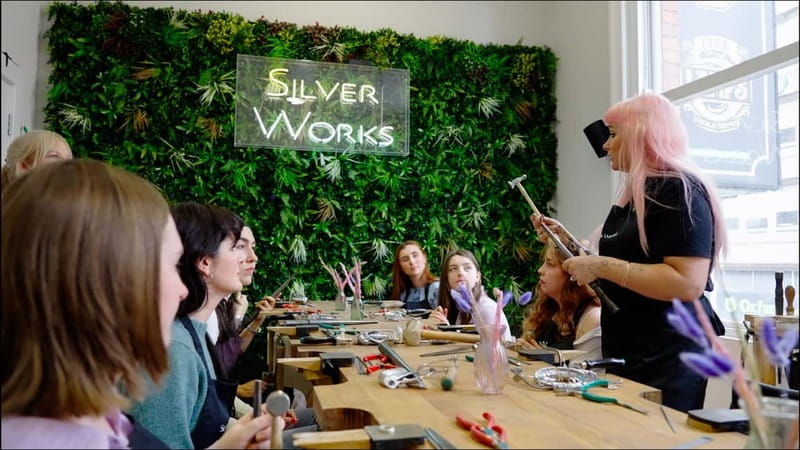
What really drives reviews here is instructor support. People keep bringing up two things: the coaching is clear, and the tutors are patient.
Names you may hear include Audrey, Sinead, Kat, Emily, Jill, Owen, and Claire. Different instructors lead different classes, but the pattern shows up again and again. You get help when you need it, and you still feel like the maker. Even people who describe themselves as total beginners report that the process stays easy to follow.
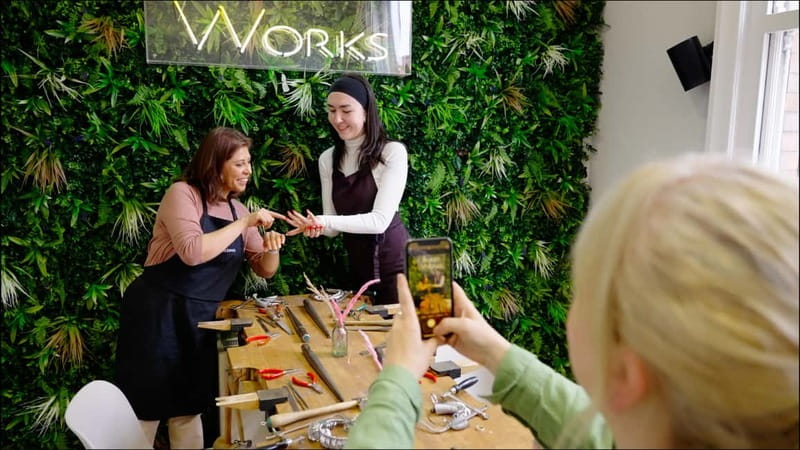
You also benefit from the small-group setup. Reviews repeatedly mention that the class is small and comfortable, with space to work. When a class is small, it is easier for the tutor to spot what you’re doing and correct mistakes early, before they become harder to fix.
That matters most in the filing and finishing steps. If the metal edges or shape aren’t right yet, it is the tutor who can help you correct direction, pressure, or alignment.
Some reviews also mention extra kindness beyond the ring itself, like adjusting ring sizing when someone thinks they made it slightly too big. That kind of small correction can make the difference between a ring you keep wearing and a ring you end up storing.
Another way the same day could go from Dublin:
- Dublin to Cliffs of Moher, including Wild Atlantic Way and Galway
★ 5.0 · 23,331 reviews - From Dublin: Cliffs of Moher, Burren & Galway City Day Tour
★ 4.8 · 18,888 reviews - Dublin: Guinness Storehouse Entry Ticket
★ 4.6 · 16,863 reviews - Dublin to Cliffs of Moher, Burren, Wild Atlantic Way, Galway Tour
★ 5.0 · 12,924 reviews
What you take home, and why this souvenir feels different
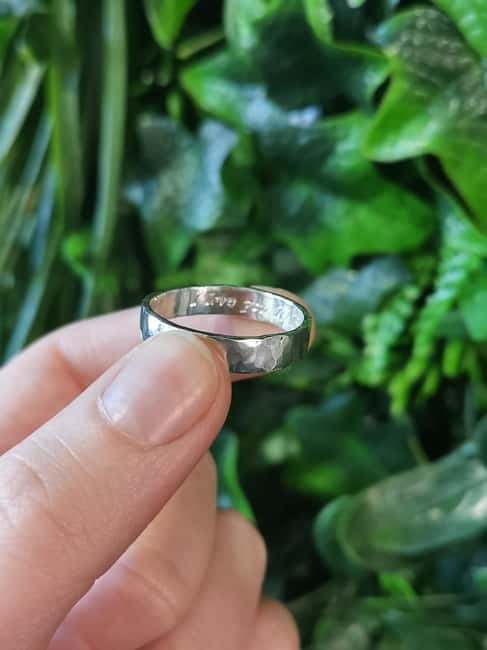
You take home an individual sterling silver ring you made during the workshop. That sounds obvious, but it’s worth underlining because many activities sell a craft experience while treating the finished object as secondary. Here, the process builds to a wearable end product.
It also helps that you choose personal details that affect the feel and look. Finger size choice, curve preference, texture style, and polish selection all mean the ring carries your decisions. When you wear it later, it will not just feel like a Dublin purchase. It will feel like the moment you shaped and finished metal in a city you came to visit.
Several reviews also mention engraving as part of personalization. The provided workshop description you have focuses on texture, curve, and polish. So treat engraving as something you might be able to do depending on how the session is set up. If you want engraving, ask at the start of the class, or message ahead to confirm what options are available for your date.
Who this Dublin ring forging workshop is perfect for
This is one of those activities that fits more travel styles than you’d expect.
Couples: It is a strong choice for anniversary trips and honeymoons because you can both make rings on the same day with a guided process. Matching rings come up often in feedback, and the workshop’s structure makes it straightforward to coordinate designs.
Solo travelers: If you like hands-on learning, this is a good solo activity. You are not stuck waiting while others do the work. You’re doing the work, and the tutor support helps you feel capable.
Beginners: The workshop is designed for people without prior metalworking experience. Reviews repeatedly mention it feels not scary and doable, with patient instruction.
Families with teens: It is suitable for children over 10. If someone is under 16, they must be accompanied by a paying guardian. If you’re traveling with a younger kid, confirm age eligibility early.
What I would not choose this for is a very mobility-limited traveler, due to steep stairs. Also, if you struggle with English, you may find it harder to follow instructions safely, since the workshop requires a good level of English.
Price and value: what $98 buys you in Dublin
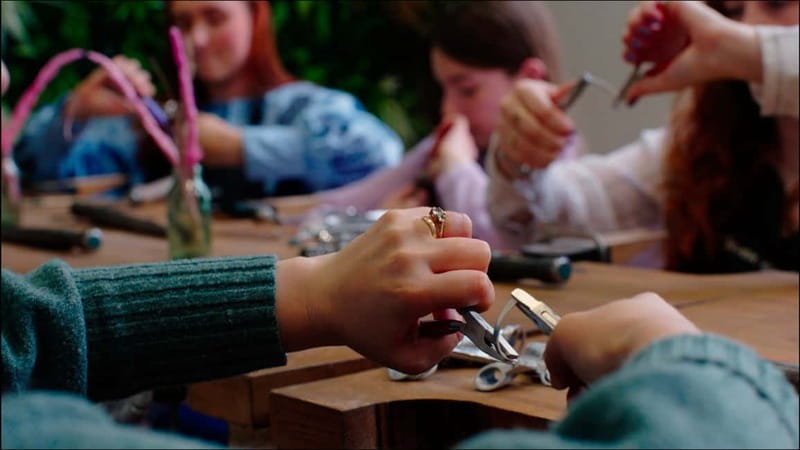
At $98 per person for about two hours, you might think, is this pricey? Dublin has no shortage of tours, and craft experiences can vary widely. Here’s how I judge the value.
First, you’re not just paying for instruction. You’re paying for a sterling silver ring you make yourself. That material cost is meaningful. Second, the workshop includes tea, coffee, and snacks. Not a big deal for some people, but it turns a workshop day into a comfortable experience instead of a quick stop.
Third, you’re paying for guided expertise during the steps where beginners can get stuck, like soldering and filing. You’re also paying for tools, a workshop space, and staff time to help you reach a wearable finish.
One review even notes that the price initially felt pricey, but made sense because you get a silver ring you made yourself, and it did not seem more expensive than other tours. That aligns with how I see it. If you want a wearable keepsake and enjoy active learning, the price tends to feel fair.
If you only want photos and do not care about owning a physical item, then it might feel less worth it. But for a true hands-on souvenir, it makes sense.
Quick practical tips before you book
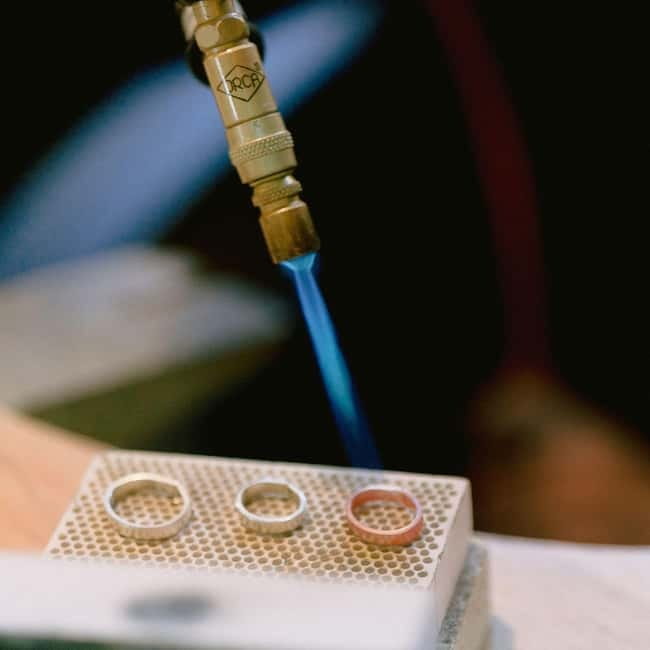
A few small moves will help your workshop go smoothly.
Arrive early. The class can’t accept late attendees beyond 10 minutes after start, so build extra time into your walk from your hotel.
Plan for location changes. Even though you book Drury Street, your class may shift to Georges Street. Save the alternate address, or take a screenshot of where you’re supposed to be.
Wear practical clothes. You’ll be handling tools and metalwork, so think comfortable and something you can focus in for two hours.
Bring a curious mindset. This workshop rewards attention. The steps are clear, but you will get the best results if you slow down and listen before you swing the hammer or file.
And if you’re going as a couple, talk about your finish choices early, before you arrive. It helps you decide textures and polish while you still have energy.
Should you book this Dublin silver ring workshop?
If you want a Dublin souvenir that is more than a postcard, I think this is a great booking. You’re not just watching a craft, you are building a real sterling silver ring step by step. The strong points for me are the hands-on forging process, the structured guidance from instructors, and the fact you leave with something wearable the same day.
I would only skip it if stairs are an issue for you, or if you know you won’t handle the English-led instructions comfortably. Otherwise, it’s an efficient, central activity that packs real making into a short time.
If you do book it, do one thing: message to confirm your studio location when you get the day-before update, then arrive early, and enjoy the fact that you get to leave Dublin holding your own work.
FAQ
How long is the Dublin silver ring forging workshop?
The workshop lasts about 2 hours.
What is the price per person?
The price is $98 per person.
Where does the workshop start?
The booking is for the Drury Street location, but some classes may be moved. You will get a message the day before telling you whether your class will be at the second location.
If it moves, where is the alternate meeting point?
The alternate location is 4 South Great Georges Street, D02NR59. It is about a 2 minute walk away.
What is included in the workshop price?
Included are the forging workshop, an expert tutor, your individual ring, tea or coffee, and snacks.
What is not included?
Hotel pickup and drop-off are not included.
Is the workshop suitable for children?
It is suitable for children over 10 years old. Anyone under 16 must be accompanied by a paying guardian.
Does the workshop require English?
Yes, a good level of English is required for all workshops. The instructor is English.
Is it suitable for wheelchair users?
No. The studios have steep stairs and are not suitable for people with impaired mobility, including wheelchair users.
How late can I arrive?
You should arrive at least 10 minutes before the class start time. Late attendees beyond 10 minutes after the class has started cannot be accepted.
Just in from the Liffey side






Workshops, compared.



Irish Craic & Cuisine: Cooking Class & Dinner in Central Dublin
Read our review →

Irish Baking Class: Granny’s Apple Cake, Traditional Scones
Read our review →

Jameson Distillery Whiskey Cocktail-Making Class
Read our review →
Private Cooking Class in a Modern Home with Sea Views in Skerries, Dublin
Read our review →Browse the lists this tour appears in